Get Full Government Meeting Transcripts, Videos, & Alerts Forever!
Get email alerts on the Pensions And Benefits topic
No spam. Unsubscribe anytime.
Controller: San Francisco—s unfunded retiree-health liability about $4.42 billion; committee seeks further study
Summary
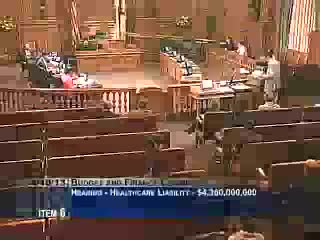
Controller Ben Rosenfield told the Budget & Finance Committee that the city—s accumulated unfunded actuarial liability for retiree health benefits stands at roughly $4.42 billion and emphasized medical inflation as the primary cost driver. Supervisors and labor representatives agreed further collaborative work on prefunding options is needed; the committee continued the item for follow-up.
Ben Rosenfield, San Francisco—s controller, told the Budget & Finance Committee on Wednesday that the city—s most recent actuarial valuation estimates an accumulated unfunded actuarial liability for retiree health benefits of about $4.42 billion for benefits earned as of the valuation date.
"This number represents the future cost of providing retiree health care benefits that have been earned as of that date by current employees and retirees," Rosenfield said. He stressed that the valuation is a long-term projection and that the city currently holds very limited prefunding assets in its trust: roughly $3.2 million, leaving a large net liability to address over decades.
Rosenfield told the committee that pay-as-you-go costs have increased from about $115 million five years ago to about $151 million today and that, under current assumptions, those costs could roughly double in about ten years. He identified medical-cost inflation as the single most powerful variable: a 1 percentage-point change in the long-term medical-inflation assumption changes the liability by roughly $400 million.
The controller described steps already taken to move from pay-as-you-go toward prefunding, including Proposition B (2009), which created a prefunding trust for employees hired after that date and a modest employee and employer contribution structure, and Proposition C (2011), which phased in additional employee contributions. But Rosenfield said that the most significant share of the liability remains tied to employees and retirees hired before February 2009.
Supervisor Scott Wiener and other Board members pressed for attention to the equity implications between pre- and post-2009 hires and for a collaborative process with labor, the mayor—s office and the controller to develop options that would avoid sharp cuts while reducing long-term costs. Labor representatives and union counsel who spoke during public comment said unions have participated in prior reforms and signaled willingness to work further with the city.
"We think it's important that people's perspective on this number, which can be alarming, be realistic and that we go deeper on the problem to understand it a little bit more thoroughly," a labor representative said.
After discussion, the committee moved to continue the OPEB item to the call of the chair for additional study and deliberation, allowing staff, the controller and labor to develop options and projections for Board consideration.
What—s next: The committee continued the item to provide time for further technical work and stakeholder engagement on prefunding alternatives, contribution structures, and potential measures to control medical-cost growth.