Get Full Government Meeting Transcripts, Videos, & Alerts Forever!
Get email alerts on the Procurement Prompt Payment topic
No spam. Unsubscribe anytime.
Committee advances ordinance requiring prime contractors to pay subcontractors within seven days
Summary
The Government Audit and Oversight Committee voted without objection to send forward an ordinance that would amend the San Francisco Administrative Code to require prime public-works contractors to pay subcontractors within seven days of receiving city payment, and to impose a 2% penalty for noncompliance; an amendment clarifies the provision is enforceable in court.
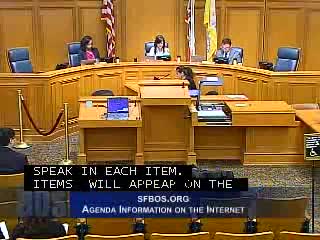
The Government Audit and Oversight Committee on Tuesday forwarded with a positive recommendation an ordinance amending the San Francisco Administrative Code to require prime public-works contractors to pay subcontractors within seven days of receiving payment from the city.
Carmen Chu, chair of the Government Audit and Oversight Committee, said the measure addresses the third phase of prompt-payment concerns: "This legislation seeks to address the third component or the third section," she said, adding the city is already working on other pieces such as invoice submission and processing times. Chu told the committee the existing three-day rule for local businesses would remain in place and the ordinance would codify a seven-day requirement for all other contractors.
The ordinance as presented would impose a 2% enforcement penalty if a prime contractor does not pay and creates a private right of action between contractors; Chu said she would offer an amendment after public comment to clarify that the subsection is "enforceable in a court of competent jurisdiction." The amendment was moved and the committee forwarded the item "with a positive recommendation" without objection.
Supporters at the committee hearing described the ordinance as a straightforward fix to frequent cash-flow problems for subcontractors. George Chang of the Asian American Contractors Association said the association's board backed the measure and noted similar state-level rules have been in effect since "January 1 of last year," when enforcement mechanisms were enacted by the state. Lloyd Crayle, a small-business consultant and LBE member, called it "a wonderful, first step" and urged the city to consider additional measures to benefit micro local-business enterprises.
Chu and other supervisors emphasized the ordinance does not resolve all prompt-payment issues: the city must still work on getting prime contractors to submit invoices promptly and on standardizing how the city measures and reports invoice-processing times. The committee also noted the city has an ongoing task force and other executive directives aimed at improving the payments process.
The committee did not record a roll-call vote; members moved the amendment and the underlying item forward by unanimous consent.
The ordinance will appear on the Board of Supervisors agenda and return for further consideration by the full Board.