Get Full Government Meeting Transcripts, Videos, & Alerts Forever!
Get email alerts on the Public Transit topic
No spam. Unsubscribe anytime.
Grand jury urges Muni to stop routine 'switchbacks'; SFMTA says tactic needed for major delays
Summary
A civil grand jury found that SFMTA's use of 'switchbacks' — turning vehicles short of advertised terminals — undermines rider trust and urged their elimination except for emergencies. SFMTA defended the practice as a recovery tactic and offered data and operational steps to reduce rider impact.
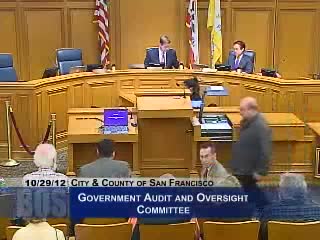
A civil grand jury told the Government Audit and Oversight Committee on Oct. 29 that San Francisco Municipal Transportation Agency (SFMTA) managers have routinely used ‘‘switchbacks’’ — instructing passengers to disembark before the advertised route end so a vehicle can be redeployed — and that the practice breaks riders’ trust and should be limited to unavoidable emergencies.
Sharon Gadbury, chair of the grand jury’s Muni investigative committee, said jurors gathered rider accounts and cross‑jurisdiction interviews showing switchbacks were used routinely in San Francisco and left riders stranded or waiting in poor conditions. ‘‘Announcing that Muni has no obligation whatsoever to follow the routes that it has advertised to riders is a brazen statement disavowing the moral and legal obligations of the transportation system,’’ Gadbury said.
Why it matters: The jury reported that tens of thousands of passengers were affected by switchbacks in 2011–12 and argued that peer systems use turnarounds only in emergencies, not as a traffic‑smoothing tactic. The jury asked Muni to adopt alternative practices from other jurisdictions, implement the Transit Effectiveness Project (TEP) recommendations more fully, and conduct routine rider surveys that include switchback impacts.
SFMTA officials disputed the finding that switchbacks are a routine operational choice made without regard to rider welfare. John Haley, director of transit operations, said switchbacks are a service‑recovery technique used when a line suffers significant delays or vehicle breakdowns and that the agency strives to minimize rider impact by making announcements, improving signage, and ensuring a following vehicle usually arrives within five minutes. Haley said Muni logs switchbacks monthly and provided an example month with 182 switchbacks (less than 0.05% of service in that month) and argued many occurred during extraordinary infrastructure problems.
The grand jury said it surveyed other transit systems (Boston, Seattle, Oakland's AC Transit, parts of the Paris system and Santa Clara Valley) and found they reserve turnarounds for emergencies and rely on scheduling adjustments, passenger information, and technology to reduce bunching. Jack Saroyan, a grand jury member who led peer interviews, said most peers called the practice an ‘‘insult to the rider’’ and that scheduling and technology solutions were more effective.
Board response and next steps: Supervisors acknowledged competing aims — overall reliability versus the immediate inconvenience to some passengers — and recorded mixed responses to the jury’s recommendations. The board said several recommendations are within SFMTA authority and therefore noted jurisdictional limits: the Board recorded partial agreement on many findings, asked the controller to continue audits of Muni funds, and urged the agency to implement TEP priorities and publish regular rider satisfaction surveys.
SFMTA agreed to expand communication, provide data about switchback occurrences, and consult peers. The committee tabled further action on item 3 to allow follow‑up with the grand jury and MTA about comparative evidence and empirical studies that address whether switchbacks measurably improve system performance.
Sources: Civil grand jury presentation by Sharon Gadbury, Jack Saroyan and Jack Toomey; SFMTA response by John Haley and operations staff; Board discussion and public comment during Oct. 29 special meeting.