Get Full Government Meeting Transcripts, Videos, & Alerts Forever!
Get email alerts on the Street Artist Program topic
No spam. Unsubscribe anytime.
Street artist program debate: artists urge remaining with Arts Commission; small business office willing to collaborate
Summary
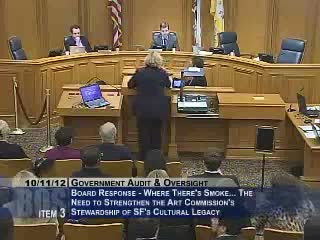
Street artists and program managers told supervisors they want the Street Artist Program to remain within the Arts Commission; the civil grand jury recommended moving it to the Office of Small Business, a step the Board asked be studied further after sizable public comment.
A contentious part of the hearing centered on the fate of the Street Artist Program, which the civil grand jury suggested would be better managed by the Office of Small Business because many street artists operate as sole proprietors.
Mike Adario, a former liaison committee chair, described the program—s origins and said artists are struggling economically, contending the program has been mismanaged. "We pay the arts commission $300,000," Adario said, arguing revenues and costs do not support current oversight.
Paula Dadish, an artist who testified about her long experience in the program, recounted administrative problems and a legal case that led to 45 days in the San Francisco County Jail. "I spent 45 days in the San Francisco County Jail," Dadish said, tying her account to what she called management failures by program staff.
John Tunui, the current manager of the Street Artist Program, presented petitions and a survey he said showed 248 signatures from street artists who want the program to remain at the Arts Commission. "248 people signed... leave the street artist program alone," Tunui said, urging supervisors not to privatize or reassign the program.
Regina Dickendresi, Director of the Office of Small Business, told the committee her office had been asked to comment and said while she did not take a final position, her office "would be an appropriate place for the program to land" if the Board and Arts Commission chose that route and emphasized willingness to work with the Arts Commission in either model.
The Board did not decide to transfer the program. Instead, supervisors asked for further analysis and asked the Arts Commission to consult with the Office of Small Business and return with findings in six months. The committee recorded a mix of public testimony: several street artists favored staying with the Arts Commission while others urged a move to a business-focused office to improve management and services to artists.