Get Full Government Meeting Transcripts, Videos, & Alerts Forever!
Get email alerts on the Muni Performance topic
No spam. Unsubscribe anytime.
Supervisors press Muni to fix $420M in deferred maintenance as $6.7M ridership grant draws debate
Summary
At a committee hearing, Supervisor Scott Wiener urged Muni to dedicate Regional Transit Performance Initiative funds to vehicle rehabilitation and maintenance, citing roughly $420 million in deferred fleet repairs. MTA Director Ed Ryskin said most of the $6.7 million grant would go to LRV rehabs but defended allocating a portion to a 12‑month low‑income youth fare pilot.
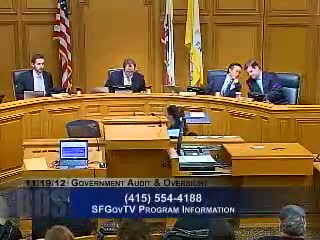
Supervisor Scott Wiener convened the Government Audit and Oversight Committee hearing and urged an urgent shift in how the San Francisco Municipal Transportation Agency spends limited capital and operating dollars. "Muni has $420,000,000 in deferred maintenance on its fleet," Wiener said, arguing that investment in rehabilitation and spare vehicles is the most direct way to improve reliability for transit‑dependent San Franciscans.
The MTATransportation Director Ed Ryskin told the committee his agency has been mapping a long‑term capital program to restore the system to a ‘‘state of good repair’’ and identified roughly $250 million a year in mission‑critical investment needs. He said the MTAhas updated procurement approaches and is accelerating rehab work on LRVs and buses. "This level of core funding will have a significant impact on muni performance," Ryskin said, while acknowledging the city faces many competing priorities.
A focal point of the hearing was a $6.7 million allocation from the Metropolitan Transportation CommissionTransit Performance Initiative (TPI). Wiener and others warned that dedicating the money to a free‑fare pilot for low‑income youth could reduce funds available for vehicle rehabilitation. Ryskin said the MTAproposal would direct roughly three‑quarters of the funding to long‑term capital needs and about 23% toward a 12‑month pilot for low‑income youth, which he said was intended to boost ridership and productivity.
Supervisors pressed MTA staff on the assumptions behind the pilot. Ryskin said the short‑term budget included $1.6 million this fiscal year and a proposed allocation next year to cover the remainder of a 12‑month program. He also said the MTA budget assumes the pilotwould be largely offset by reduced farebox revenue, not by adding new service capacity. "We put the balance into what we determined to be one of our highest priority needs," Ryskin said of the LRV overhaul funding.
Public comment at the hearing was extensive and divided. Dozens of speakers backed a youth fare pilot, saying the expense can be a barrier to school and after‑school programs for low‑income families; advocates pointed to a decline in youth FastPass sales after fare increases as a proxy for falling youth ridership. Others said a new fare program should not come at the expense of vehicle repairs and reliability, and urged that any grant be spent on maintenance first.
The committee ultimately voted to forward the matter to the full Board with a committee recommendation that the Board review the allocation and monitoring plan. The final funding decision and any changes to the pilot or to maintenance prioritization will be made by the MTA Board and the Board of Supervisors in subsequent hearings.