Get Full Government Meeting Transcripts, Videos, & Alerts Forever!
Get email alerts on the Tenant Protections topic
No spam. Unsubscribe anytime.
Committee recommends ordinance to limit ‘phantom’ GO bond pass-throughs to tenants
Summary
The Rules Committee voted unanimously to recommend a change to the administrative code that recalculates how landlords pass general obligation bond costs to tenants, tying pass-throughs to the tenant’s move-in-year tax-rate change (or 2005) and expanding tenant hardship relief.
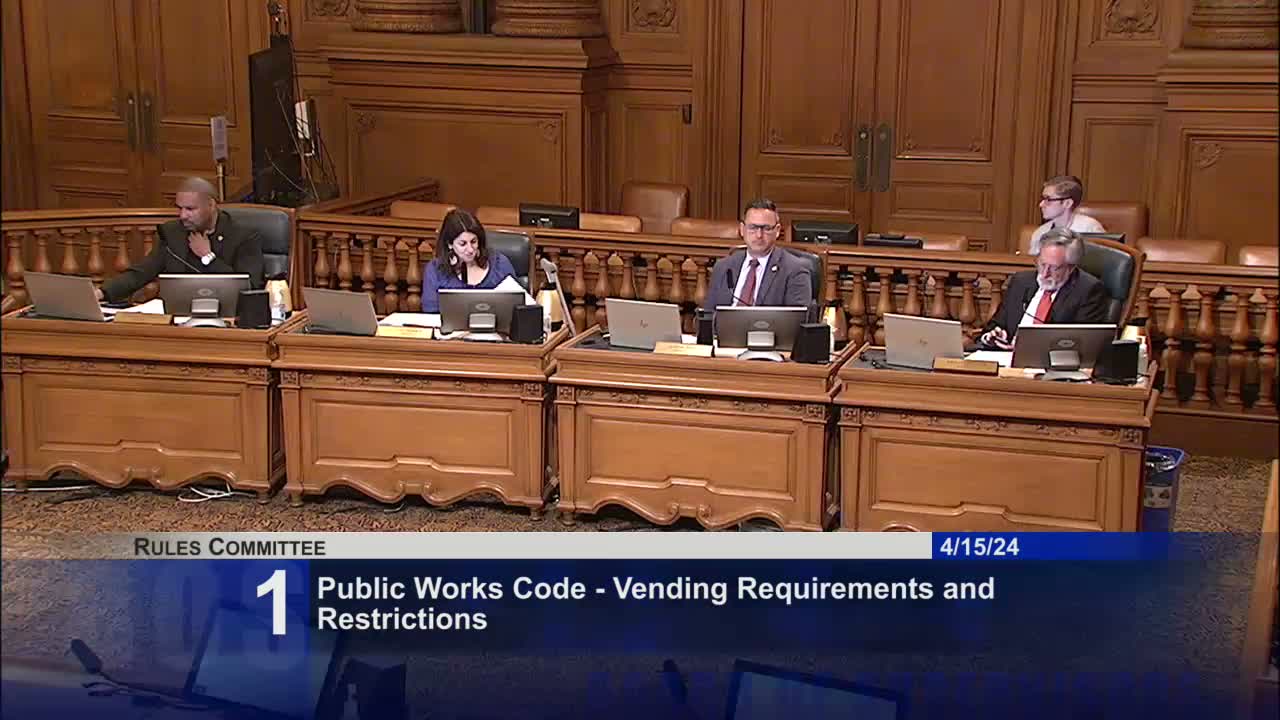
The Rules Committee on April 15 recommended an ordinance that would change how landlords calculate tenant pass-throughs for general obligation (GO) bonds, with sponsors and tenant advocates saying the rule will stop some landlords from charging tenants for bond-related costs that have not actually raised property tax rates.
President Aaron Peskin, a cosponsor, said the ordinance uses the tenant’s move-in date (or 2005, whichever is later) and the specific issuing entity’s tax-rate change to compute a tenant-level pass-through. "This ordinance...catches us up," Peskin said, citing the city’s capital-plan practice, adopted in 2005, that has generally kept the city’s GO bond-related marginal tax rate flat.
Deepa Varner of the Rent Board described existing hardship relief: tenants receiving means-tested public assistance, tenants whose rent exceeds 33% of household income with assets under $60,000, or tenants with exceptional circumstances can seek deferral of pass-throughs. Varner said the rent board had processed 107 applications with 56 granted, about 32 pending, and noted an average landlord charge of approximately $20.66 per month for GO bond pass-throughs and average deferred amounts near $2.12.
Jamie Whitaker from the budget office explained how the controller’s office currently computes aggregate pass-through rates and how the ordinance would change calculations to account for move-in date and the eligible bonds by issuance entity. Whitaker said the proposed change would reduce the pass-through in many cases by isolating increases attributable to bond issuances after a tenant moved in.
Public comment included long lines of tenants and tenant advocates who called the practice a loophole used by some corporate landlords to extract additional rent; several tenant advocates urged the committee to act. Representatives of landlord groups and some property managers urged caution, citing administrability concerns for small owners and the long-standing compromise embedded in the current law. President Peskin offered a minor "approved-as-to-form" amendment and the committee voted to send the ordinance to the full Board with a positive recommendation.