Lifetime Citizen Portal Access — AI Briefings, Alerts & Unlimited Follows
Rules Committee backs SFMTA plan to fast-track automated speed enforcement pilot
Loading...
Summary
The Rules Committee voted unanimously to recommend an ordinance that would waive certain contracting requirements so SFMTA can use a single vendor to design, build, operate and maintain a five-year automated speed enforcement pilot under new state law (AB 645). SFMTA estimated under $10 million total cost and plans a 60-day warning period after each camera is activated.
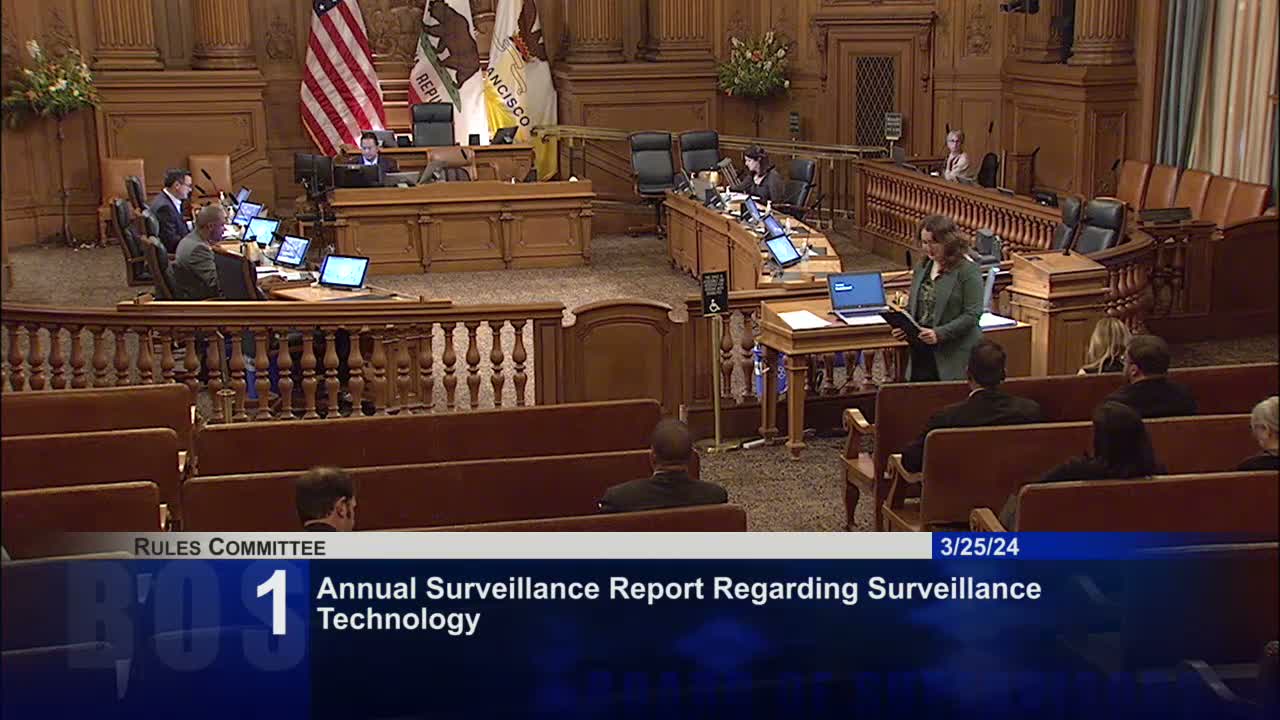
The San Francisco Rules Committee on March 25 voted to forward to the full Board an ordinance waiving certain contracting requirements to allow the Municipal Transportation Agency (SFMTA) to procure design, construction, operation, maintenance and related services for a five-year automated speed enforcement pilot.
Shannon Hake, speed safety camera program manager at SFMTA, said the authorization would let the agency use a single design-build-operate-maintain (DBOM) contract to speed deployment. She cited Assembly Bill 645, effective Jan. 1, 2024, which allows six California cities to run five-year pilot programs that target high-end speeding (vehicles traveling 11 miles per hour or more over the posted speed limit).
"Speed is the number one cause of serious and fatal collisions on San Francisco streets," Hake said. "Every mile per hour that we can slow a vehicle, the chance of survival for anyone involved in the collision rises." Hake said SFMTA identified about 80 candidate locations that met statutory and local criteria and, after 24-to-48-hour pneumatic-tube speed counts, narrowed the list to 33 locations representing every supervisor district.
Hake estimated the total program cost over five years would be less than $10 million and said SFMTA expects to use operating funds to pay a flat monthly rate per camera covering equipment, processing and citation mailing. She said SFMTA expects to release an RFP in May and return to the Board in June with the system-use policy and system-impact report that will include proposed camera locations and an outreach plan.
Supervisors asked about outreach and budget oversight. Supervisor Asha Safaie requested a citywide map of potential camera locations and details on community engagement; Hake said SFMTA will present locations and an education plan when it returns for the system-use policy. Supervisor Shamone Walton asked about potential misidentification of drivers; Walton raised the concern that a citation could be issued to a vehicle owner even if someone else was driving. Hake and SFMTA staff said the program design and subsequent Board materials will address procedural details.
Under Hake's proposal the first two months a camera operates would be a warning period with no fines issued; initial fines in the lowest range would also include waivers as the program begins. Hake said state law requires that any program revenue be used for traffic-calming improvements.
Chair Ronan moved to forward the ordinance to the full Board with a positive recommendation and to be listed as a cosponsor; Vice Chair Walton and Supervisor Safaie voted aye and the motion passed without objection. The committee adjourned following the vote.