Get Full Government Meeting Transcripts, Videos, & Alerts Forever!
Get email alerts on the Disabled Placards topic
No spam. Unsubscribe anytime.
Civil Grand Jury Urges Stronger Action on Disabled‑placard Abuse; MTA Proposes State and Local Changes
Summary
The civil grand jury reported large revenue losses tied to disabled‑placard misuse and urged legislative and enforcement changes. SFMTA staff proposed seeking state legislative flexibility, charging for some disabled parking with discounts for low‑income drivers, increasing accessible 'blue zones,' and enhanced enforcement; supervisors asked for follow‑up.
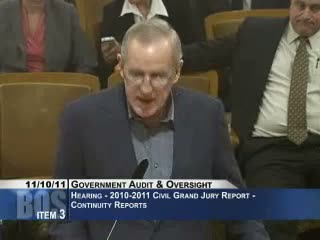
The committee received the civil grand jury’s continuity report, which follows up on prior jury recommendations. Terrence Flanagan, chair of the continuity committee, summarized key findings, focusing on disabled‑placard misuse, pension practices and retiree health liabilities.
The grand jury highlighted two figures from SFMTA documents: $19,250,000 cited as annual loss to the city tied to placard exemptions from posted time limits and meter fees, and a second estimate (described in the report) of roughly $8,470,000 lost annually specifically attributed to placard fraud. The report recommended the San Francisco MTA request that the state legislative delegation review disabled‑placard issuance and use and consider updating the law, and it suggested establishing a disabled parking review panel and strengthened local enforcement protocols.
SFMTA staff told the committee they had completed a best‑practices study and recommended a two‑pronged approach: pursue state law changes to allow local flexibility, and in the interim reduce the financial incentive for fraud by assessing parking fees for drivers with placards while offering a significant discount (for example, 50%) to low‑income disabled drivers. SFMTA staff also recommended doubling the number of designated accessible ("blue zone") spaces to improve access for genuinely disabled drivers and continuing enforcement, but they stressed administrative limits on enforcement under current state law and the role of the DMV in issuing placards.
Supervisors expressed concern about the length of time since earlier reports and pressed SFMTA for faster, concrete action; they requested follow‑up briefings and suggested the agency return with implementation plans and more precise revenue estimates. The committee voted on a package of responses to the grand jury’s findings: it rejected certain pension findings and recommendations and supported findings related to GOEBACH and some disabled‑parking findings while declining some specific grand jury recommendations that the committee considered impractical without state action.
SFMTA said it will pursue legislative sponsors and undertake outreach; staff also said aggressive local attention to the issue would increase now that the program resides under SFPark.