Get Full Government Meeting Transcripts, Videos, & Alerts Forever!
Get email alerts on the Police In Community Loan Program topic
No spam. Unsubscribe anytime.
Supervisors Hear That Police Loan Program Is Underused; Officers and HR Urge Changes
Summary
Supervisor Mark Farrell convened a hearing on the Police in the Community Loan Program. City housing staff said 14 officers have received $20,000 loans since 2008; police union leaders and HR staff said the $20,000 grant is unlikely to change long-term behavior and urged expanding and increasing assistance.
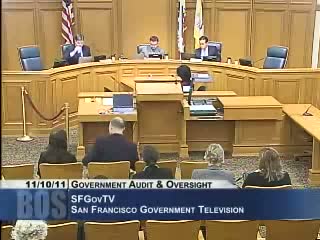
Supervisor Mark Farrell opened a committee hearing to review the Police in the Community Loan Program and asked city staff and union representatives to explain how it is working and whether changes are needed.
Brian Chu, director of community development in the Mayor’s Office of Housing, said the program was created in 2008 under an MOU with the Police Officers Association and makes up to $225,000 available in an MOU reserve. The program provides secured loans of $20,000 for down payment or closing costs; borrowers must be full‑time officers in good standing who have never owned a primary residence in San Francisco, and the purchased dwelling must be owner‑occupied. Chu said the city has approved 14 purchase loans and that loans are forgiven if the officer remains with the department for five years (or immediately upon a line-of-duty death or permanent disability). He reported averages for the 14 loans: purchase price about $510,000, borrower contribution about $36,000 and an initial mortgage around $456,000.
Department of Human Resources staff briefed the committee on residency patterns for first responders. The department reported roughly 24.7% of police officers live in San Francisco, with firefighters and deputy sheriffs at higher but still limited residency rates; adding nearby San Mateo County raises the share of reachable first responders in a major emergency. Staff noted the city cannot require residency under the California Constitution and therefore relies on incentives and recruitment efforts.
Gary Delaney, president of the Police Officers Association, told supervisors the $20,000 loan is usually not sufficient to change long‑term housing decisions in a market as expensive as San Francisco. “When you’re talking about a $600,000 house, $20,000 ain’t doing it,” Delaney said, urging either substantially larger assistance or interest‑rate concessions and suggesting removal of the first‑time‑buyer restriction to help current officers move to larger homes in the city.
Supervisors raised operational questions — whether unused program dollars roll to the general fund (they do), whether condos qualify (yes), and how applicants progress through the program (website application, homebuyer education, lender underwriting, then MOH assistance). Committee members asked staff to explore higher loan amounts, broader eligibility to include other emergency personnel and teachers, and potential lender partnerships to reduce interest rates for participating officers.
Chair Campos and Supervisor Farrell said the hearing was intended to start a broader discussion about workforce housing for first responders and related city employees; Farrell moved to table Item 1 to allow staff and the committee to develop follow‑up work. The motion to table was taken without objection.
The committee requested additional information and follow‑up hearings to examine whether target amounts, eligibility rules and private‑sector lender involvement could make the program more effective.