Get Full Government Meeting Transcripts, Videos, & Alerts Forever!
Get email alerts on the Hunters Point Shipyard topic
No spam. Unsubscribe anytime.
Civil grand jury presents Hunters Point Shipyard report; supervisors question cleanup oversight and workforce promises
Summary
The Government Audit and Oversight Committee heard the 2010–11 civil grand jury report "Hunters Point Shipyard: A Shifting Landscape," reviewed departmental responses and agreed to a Board reply that disputes one finding while accepting contingency planning recommendations. Departments defended monitoring and independence while urging continued interagency oversight.
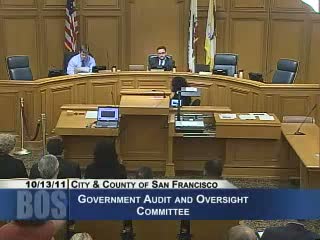
The Government Audit and Oversight Committee on Oct. 25 received the 2010–11 civil grand jury report on the Hunters Point Shipyard, which urged stricter oversight of cleanup activity, closer monitoring of potential conflicts of interest, and stronger enforcement of promised local-hire goals.
Linda Clardy, foreperson for the civil grand jury, and juror Perry Shirley presented the report, highlighting continued concern about environmental cleanup work — particularly plans for Parcel E2 — and emails the jury said showed close coordination among the San Francisco Department of Public Health, EPA and developer representatives. The jury recommended that city agencies rigorously enforce conflict-of-interest guidelines and ensure the city's contract and workforce promises are tracked and enforced.
San Francisco Department of Public Health Director of Environmental Health Rajeev Bhatia told the committee the department reviews cleanup alternatives, posts monthly updates to the project website and enforces a code of conduct. Bhatia said reimbursed funds from the redevelopment agency and, ultimately, the developer are used to hire long-term technical staff whose role is to oversee and evaluate site work, and he rejected the assertion that such funding compromises independent judgment: "The fact that we communicate with and receive funding from the regulated party for the implementation of the regulation does not mean that there's a conflict of interest," he said.
Manish Goyal of the Mayor's Budget Office reiterated the mayor's support for continuing redevelopment and noted legal and financial constraints created by state dissolution and opt-in actions; he said contingency plans are in place should state funding change. Christina Garcia of the Redevelopment Agency reported local contracting and hiring figures for the shipyard infrastructure phase — roughly 52.2% contracting dollars to San Francisco firms and local-hire construction percentages that have exceeded the city's prior 20% benchmark and were around 27.5% mid‑2011.
The committee discussed six findings and seven recommendations in the report. On a Board response prepared for the presiding judge, President David Chu moved that the Board disagree with finding No. 5 (that state actions threatened the project) but agree with the related recommendation calling for contingency planning; the committee supported disagreeing with finding No. 6 and recommendation No. 7 related to workforce enforcement. The committee filed the grand jury report and will forward the amended Board response to the full Board.
Public commenters included labor representatives and community members who thanked the grand jury while urging continued attention to health outcomes and enforcement. The Office of the Controller's and OEWD's differing job estimates were noted in committee discussion: the Controller's office estimate cited a higher jobs figure, while OEWD staff and redevelopment agency representatives offered more conservative numbers and emphasized training funds and workforce partnerships.
Next steps: the committee filed the grand jury report and will send the committee's amended response to the presiding judge and the full Board of Supervisors. Departments committed to ongoing monitoring and to return with further information if the committee requests it.