Get Full Government Meeting Transcripts, Videos, & Alerts Forever!
Get email alerts on the U Csf Parnassus topic
No spam. Unsubscribe anytime.
Supervisors press for more enforcement and time as UCSF seeks Regents approval for massive Parnassus expansion
Summary
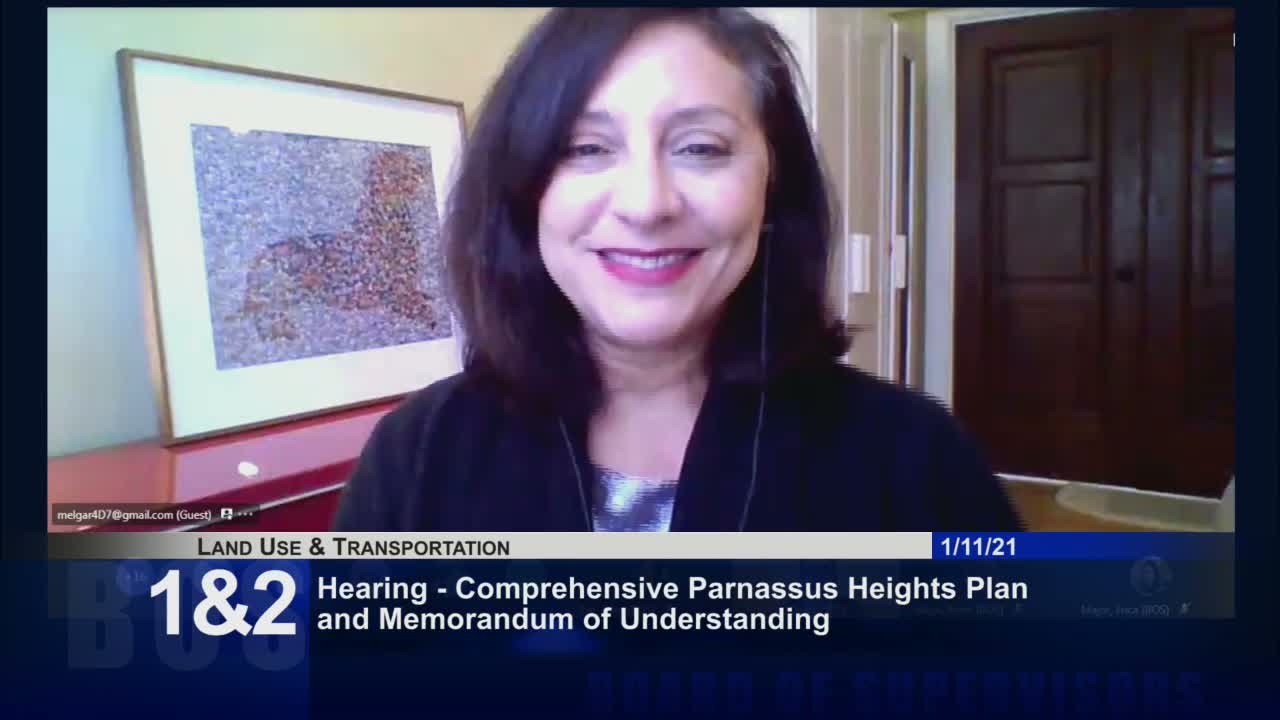
At a Jan. 10 Land Use & Transportation Committee hearing, city and UCSF officials outlined a multi-decade plan to expand Parnassus Heights with a proposed MOU tying UCSF to housing, transit and workforce commitments; city lawyers and supervisors raised questions about the MOU's enforceability and asked the UC Board of Regents to postpone action so outstanding concerns can be addressed.
San Francisco supervisors questioned whether the city had enough leverage to hold the University of California, San Francisco to commitments in a proposed memorandum of understanding (MOU) tied to the campus'wide Parnassus Heights expansion at a Jan. 10 Land Use & Transportation Committee hearing.
The expansion plan would add roughly 2 million square feet of new facilities over about 30 years, including new clinical and research space and what planning staff described as approximately 1,263 net new housing units citywide tied to UCSF's portfolio. Planning staff estimated the buildout could add roughly 8,000 people to the campus daily and said the MOU calls for a transportation contribution set at about $10.58 per square foot (roughly $20 million at full buildout) and a package of mitigation measures including a transportation demand management program targeting a 15% reduction in vehicle trips.
"This is a major expansion that will impact not only this campus and the surrounding neighborhoods but all parts of the city," said Vice Chair Dean Preston in opening remarks, stressing concerns with the timing, the adequacy of workforce housing and how the MOU would be enforced.
City Attorney Charles Sullivan told supervisors the draft MOU, as written, is a "statement of the parties' good faith intent" and is not designed to be a court-enforceable contract. "We have no authority over UCSF," he said, and added that if the parties intended to create a legally enforceable long-term contract (more than 10 years or involving more than $10 million in city revenues), under the city charter it would be subject to Board of Supervisors review.
UCSF and city negotiators described practical levers built around permitting and annual reporting. Jeff Buckley of the Mayor's Office said that the MOU supplements a 1987 agreement and establishes annual reporting to the city and early city review of major building designs; planning staff said the MOU would also require the university to set aside percentages of its total housing portfolio so that, by 2050, 40% of UC'controlled housing in the city would be below-market-rate by the AMI levels described in the agreement.
Chancellor Sam Hawgood emphasized the project's health-care benefits and said UCSF sees the MOU as a meaningful, binding document in practice. "These community investments will pour millions of dollars into the neighborhood," he said, pointing to housing commitments, a roughly $20 million transit contribution and a 30% local hire goal for construction. Hawgood said the Regents will be asked to certify the EIR and approve the Long Range Development Plan amendment; he said UCSF could not accommodate a second major delay to the Regents timetable and warned that additional postponement could jeopardize fundraising and the hospital schedule.
Supervisor Dean Preston said the committee's resolution asks the Regents to move consideration from January to March to allow time for additional review and for more clarity on enforceability, affordability bands and how many affordable units will be delivered on the Parnassus site rather than elsewhere in UCSF's portfolio. Planning staff and UCSF explained that the MOU counts affordable units across UCSF's entire housing inventory (existing and new) and that the 40% figure applies to that portfolio; that construct raises practical concerns, Preston said, because it leaves no guaranteed minimum number of affordable units specifically on the Parnassus site.
The hearing drew a lengthy public comment period that split sharply. Nurses, physicians and research staff urged quick approval so the city can gain a modern, seismically safe hospital; labor and housing advocates pressed for stronger, enforceable protections for low- and moderate-income UCSF workers and asked that more units be set aside at lower AMI levels. Environmental and neighborhood groups raised concerns about Mount Sutro open-space encroachment, building massing and whether a one-time transit payment is sufficient to address long-term impacts on Muni.
The committee voted to forward the planning and MOU items as a committee report to the full Board of Supervisors, after the committee's amendment clarifying the resolution language. The committee also advanced related items on the agenda (a landmark-initiation and interim zoning controls) to the full board for further review.
What's next: The Board of Supervisors will consider the committee's recommendations; the UC Board of Regents will review the EIR and LRDP amendment on its schedule. The committee's resolution asks the Regents to delay consideration to the March meeting so outstanding community questions about enforceability, AMI targets and transit mitigation can be addressed.