Get Full Government Meeting Transcripts, Videos, & Alerts Forever!
Get email alerts on the Clean Power Sf topic
No spam. Unsubscribe anytime.
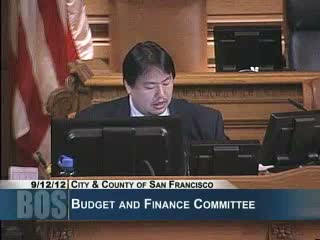
Budget committee forwards Clean Power SF contract, amid debate over costs and consumer protections
Summary
The Budget & Finance Committee voted 2–1 to forward a phased Community Choice Aggregation (Clean Power SF) and a proposed contract with Shell Energy, after presentations from the SFPUC and the Controller’s Office and extensive public comment. Supervisors required added outreach and low‑income discounts.
The San Francisco Budget and Finance Committee voted 2–1 to send to the full Board a resolution and related ordinance authorizing the San Francisco Public Utilities Commission to launch Clean Power SF, a community choice aggregation program, and to execute a supply contract with Shell Energy.
The PUC’s general manager, Ed Harrington, told the committee the program will start in phases with about 30 megawatts of generation serving roughly 90,000 customers. "Program would start with about 90,000 people in it, and the long term goal is to reach everyone because that's what state law says," Harrington said, describing a 4½‑to‑5‑year initial pricing term and a product that will be 100 percent renewable from the outset.
The PUC asked for a $19.5 million startup package: approximately $13 million as collateral, $4.5 million to cover monthly cashflow requirements and $1.5 million as a reserve to mitigate short‑term risks. Harrington said those amounts are intended as safeguards and collateral, not to be spent barring an unlikely financial failure.
The Controller's Office presented an economic impact analysis showing near‑term tradeoffs. Ted Egan said the report assumes the PUC's market research on enrollment and the negotiated contract and concluded the program, under current assumptions, could reduce local economic activity and eliminate “about 95 jobs” annually over the program period, largely because higher consumer electricity bills would shift spending away from the local economy. "Given the assumptions we used, we project a slight negative impact on the City's economy to the tune of about 95 jobs," Egan said.
Supervisors focused on three themes: consumer protection, the opt‑out design required by state law, and the plan to use city funds to secure the startup. Several supervisors pushed for stronger multilingual outreach and for a rate discount for low‑income customers; the PUC said it will include a CARE‑style 20 percent discount in its rate proposals to protect vulnerable households. Harrington described a $1 million marketing budget and said the PUC will partner with community groups for outreach and will phase enrollment to target precincts likeliest to join first.
Public comment ran more than three hours and split sharply. Environmental and labor advocates urged passage as a long‑term pathway to local renewable build‑out and green jobs. Critics — including business groups and tenant advocates — warned a short‑term contract with Shell will not produce new local renewables, risks higher bills for low‑income residents, and asked for stronger consumer protections and clearer commitments to local job creation.
Committee action and next steps: after adopting non‑substantive amendments and additional language directing the PUC to undertake extensive multilingual outreach and to pursue low‑income discounts, the committee voted to forward the items to the full Board. The committee recorded votes as: Supervisor Avalos — aye; Supervisor Kim — aye; Chair Carmen Chu — no. The full Board will consider the items and will have the statutory 30‑day window to review any PUC rate proposal once it is set.