Get Full Government Meeting Transcripts, Videos, & Alerts Forever!
Get email alerts on the Public Health Environment topic
No spam. Unsubscribe anytime.
DPH outlines environmental-health standards; Bayview residents press for accountability over Hunters Point
Summary
At a Board of Supervisors hearing, the San Francisco Department of Public Health described its standards for reviewing land-use projects and enforcement steps; dozens of Bayview Hunters Point residents used public comment to press for investigations and accountability over past shipyard cleanup and alleged staff collusion.
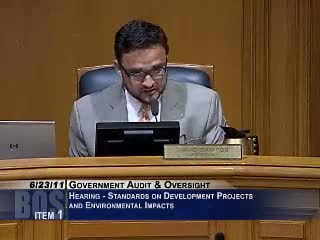
Dr. Rajeev Bhatia, the Department of Public Health’s environmental lead, told the Board of Supervisors that DPH’s role in land-use reviews is advisory and guided by professional ethics and evidence-based judgments. He described three city-specific programs—soils analysis for contaminated sites under a local Maher ordinance, construction dust-control plans (required for projects of a half-acre or greater since 02/2008), and air-quality assessment/ventilation standards for residential infill near high-traffic corridors.
DPH emphasized its advisory role under the California Environmental Quality Act and highlighted cases where public-health input changed planning outcomes. "We want to present the health facts to you straight," Bhatia said, adding that the department uses progressive enforcement—warnings, violation notices, directors' hearings and, if necessary, city-attorney action—to secure compliance. He also pointed to the Healthy Development Measurement Tool, created with community partners, as an example of proactive health analysis.
Public comment focused heavily on the Hunters Point Naval Shipyard redevelopment in Bayview Hunters Point. Multiple residents and community groups cited Freedom of Information Act records and FOIA-released emails they said show Department of Public Health staff and outside agencies discussing how to frame exposure assessments. Jaren Brown of Power, People Organized to Win Employment Rights said the records show attempts "to put together an argument that exposure was low." Several speakers asked the board to re-examine DPH actions and requested independent investigations into staff conduct, naming environmental engineer Amy Brownell and seeking review of decisions and past advice.
Other commenters defended the cleanup process. Al Norman of the Bayview Merchants Association said federal and state agencies have taken tens of thousands of samples and spent hundreds of millions on cleanup, and that multiple reviews have concluded the site "does not pose risk to human health or the environment." Dr. Bhatia acknowledged community concerns and said the department would review staff communications and training to avoid any perception of favoritism, but he declined to comment on active personnel investigations. The board took the item and moved to file the hearing record for follow-up.
The board did not take a substantive policy vote on Hunters Point at the hearing; members directed staff follow-up and discussed training and transparency measures for DPH communications.