Get Full Government Meeting Transcripts, Videos, & Alerts Forever!
Get email alerts on the Construction Debris Policy topic
No spam. Unsubscribe anytime.
Committee advances discussion on permitting C&D transporters; takes amendments and continues the item
Summary
The committee heard an extensive presentation and public comment on an ordinance that would require permits for construction and demolition (C&D) transporters and debris boxes, create tiered fees to fund enforcement, and push more material to certified recovery facilities. Because of complex technical and equity requests (transferability, local-hire and carbon-impact fees), the sponsor took two technical amendments and continued the item to the call of the chair.
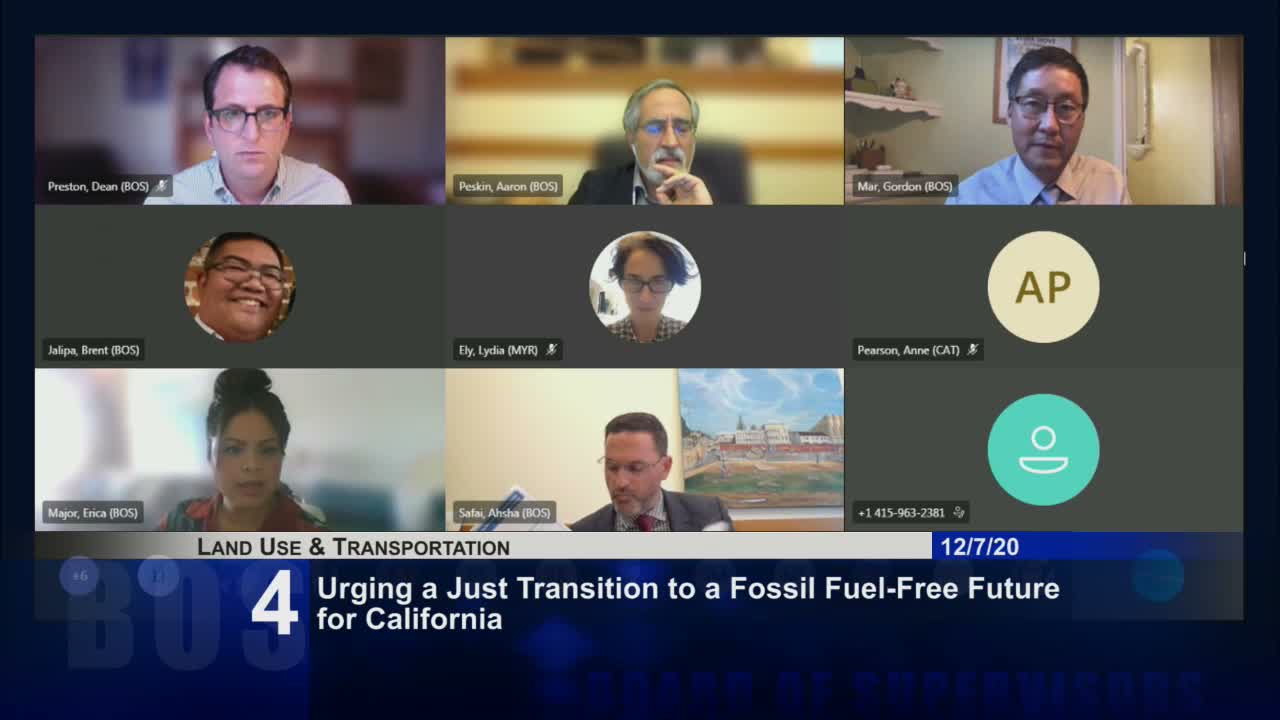
The Land Use and Transportation Committee on Dec. 7 heard a lengthy presentation from San Francisco Environment (SFE) staff and the sponsor about a proposed ordinance that would require temporary or annual permits for vehicles and debris boxes used to haul construction and demolition (C&D) debris.
Sponsor Supervisor Asha Safaei said roughly a million and a half tons of C&D are generated annually in San Francisco and that about 150,000–175,000 tons are still being landfilled rather than recovered. ‘‘For every ton of C&D that we can recycle, we are saving about a ton of carbon dioxide emissions,’’ SFE staff said during the presentation, arguing the permit-and-fee structure would fund enforcement, reduce illegal dumping and level the playing field for compliant haulers.
Jack Macy, presenting for the Department of the Environment, summarized the department’s ‘‘weak-link’’ diagnosis: many transporters operate outside the registration system, mixed debris sometimes bypasses certified recovery facilities, and illegal dumping persists. Macy said the department has identified a dozen recovery facilities (six in or near San Francisco) and proposed four permit tiers aligned to vehicle gross weight and function, with phased-in compliance dates for smaller pickup-based haulers.
Industry and community commenters were broadly supportive but asked for changes. Recycling and processing firms sought transferability of debris-box permits (so a permit can be moved from box to box rather than to every individual container). Community, environmental and worker advocates pressed for stronger equity measures: local-hire or community-benefits language for the Southeast Corridor (where most new development will occur) and a separate per-ton carbon/air-quality impact fee, with proceeds directed to affected neighborhoods and mitigation programs.
Deputy Sheriff Crispin Hollings confirmed the sheriff’s office would perform field enforcement and estimated the sheriff’s work order budget for the program at roughly $200,000–$250,000 (to be billed quarterly to SFE). Committee members pressed for an interagency MOU and more operational detail about deputies’ jurisdiction outside city limits.
Given the policy complexity and numerous public requests for substantive amendments, the sponsor proposed two technical amendments (clarifying how delivered weights are recorded and allowing transferability of debris-box permits only), and moved to continue the item for further work. The committee adopted the two technical amendments and voted to continue the ordinance to the call of the chair so staff can refine fee nexus work and potential carbon impact-fee proposals.