Get Full Government Meeting Transcripts, Videos, & Alerts Forever!
Get email alerts on the Hospital Costs topic
No spam. Unsubscribe anytime.
Experts Tell Supervisors Hospital Consolidation, Not Just Wages, Is Driving San Francisco Prices Higher
Summary
A Board of Supervisors audit hearing on April 28, 2011, heard experts and purchaser representatives who tied San Francisco’s high hospital prices to market consolidation, limited purchaser leverage and lack of price transparency — and proposed tools such as reference pricing, narrow networks and data sharing to hold costs down.
San Francisco supervisors heard a series of presentations on April 28, 2011, concluding that hospital consolidation and opaque contracts are major contributors to the Bay Area’s higher prices for inpatient care.
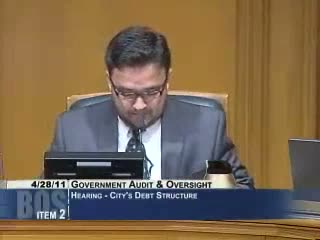
At the opening of the hearing, Chair David Campos framed the fiscal stakes for the city: “we are projected to spend close to half a billion dollars” on employee and retiree health coverage in the coming fiscal year, up from roughly $176 million a decade earlier. That dollar figure set the tone for panelists who argued that unit prices — not only higher utilization — have driven much of recent spending growth.
Why it matters: several presenters referenced press and state data showing a wide gap between what hospitals in San Francisco receive per patient per day and payments in Southern California; a commonly cited comparison in the hearing was roughly $7,349 per patient per day in San Francisco versus $4,389 in Los Angeles. Panelists said that even after adjusting for higher local input costs such as wages, a substantial unexplained gap remains.
What the experts said: Lucy Johns, an independent consultant, separated costs into operating costs (salaries, supplies, debt service) and external drivers (technology adoption, inappropriate or duplicated care, poor quality and physician practice variation). Johns urged supervisors to probe whether specific items are controllable operating costs or external drivers beyond a single provider’s control.
Glenn Melnick of USC and other economists described how consolidation and differentiation can create a “must‑have” provider that command higher prices. “Price increases explain most of the increased spending” in California between 1999 and 2009, Melnick said, and recommended policies to restore competition and force data sharing between providers and purchasers.
Purchasers’ perspective: David Hopkins of the Pacific Business Group on Health and Kathleen Donison of CalPERS described purchaser strategies used to blunt price power. Hopkins highlighted “cost shift” dynamics, where under‑funding by public programs leads hospitals to seek higher commercial rates. CalPERS said it uses a large claims warehouse, narrow networks and regional pricing to reward value and has implemented reference pricing pilots for procedures such as colonoscopy and hips and knees.
City data and constraints: Katherine Dodd, director of the San Francisco Health Service System, told the committee the city collects utilization and cost data and pays roughly $6,500 per enrollee (including dental and vision). She said the city’s purchasing leverage is limited in highly consolidated markets and stressed the need for contractual levers that create incentives for appropriate care.
Policy options discussed: witnesses and staff pointed to practical steps the city and large purchasers can take, including (1) demanding price and quality transparency from insurers and providers, (2) building or requiring interoperable electronic medical records to reduce duplicative testing, (3) piloting reference‑pricing and narrow networks for certain procedures, and (4) using contract language to reward efficiency and sanction inappropriate care.
What wasn’t decided: the hearing did not adopt any new city policy. Supervisors discussed referring the state complaint alleging improper billing practices to the city attorney for review and continued the item for further work.
Next steps: committee members asked staff to continue gathering data and returned the matter to the call of the chair for follow‑up; no formal ordinance or binding city action was adopted at the hearing.