Get Full Government Meeting Transcripts, Videos, & Alerts Forever!
Get email alerts on the Small Business topic
No spam. Unsubscribe anytime.
City officials say Prop H and new online portal are speeding business permitting; supervisors call for broader rollout
Summary
At a Sept. 9 hearing, city staff said Proposition H and a centralized online permitting service shortened review times—reporting a 14‑day average and 100% of online Prop H applications cleared within 30 days—while supervisors requested expansion, demographic tracking, and supports for businesses scaling from pop‑ups to storefronts.
City officials told the Public Safety and Neighborhood Services Committee on Sept. 9 that Proposition H’s reforms and a new centralized online permitting portal are producing faster permit outcomes for entrepreneurs, but supervisors urged broader expansion and supports for businesses outside current Prop H zones.
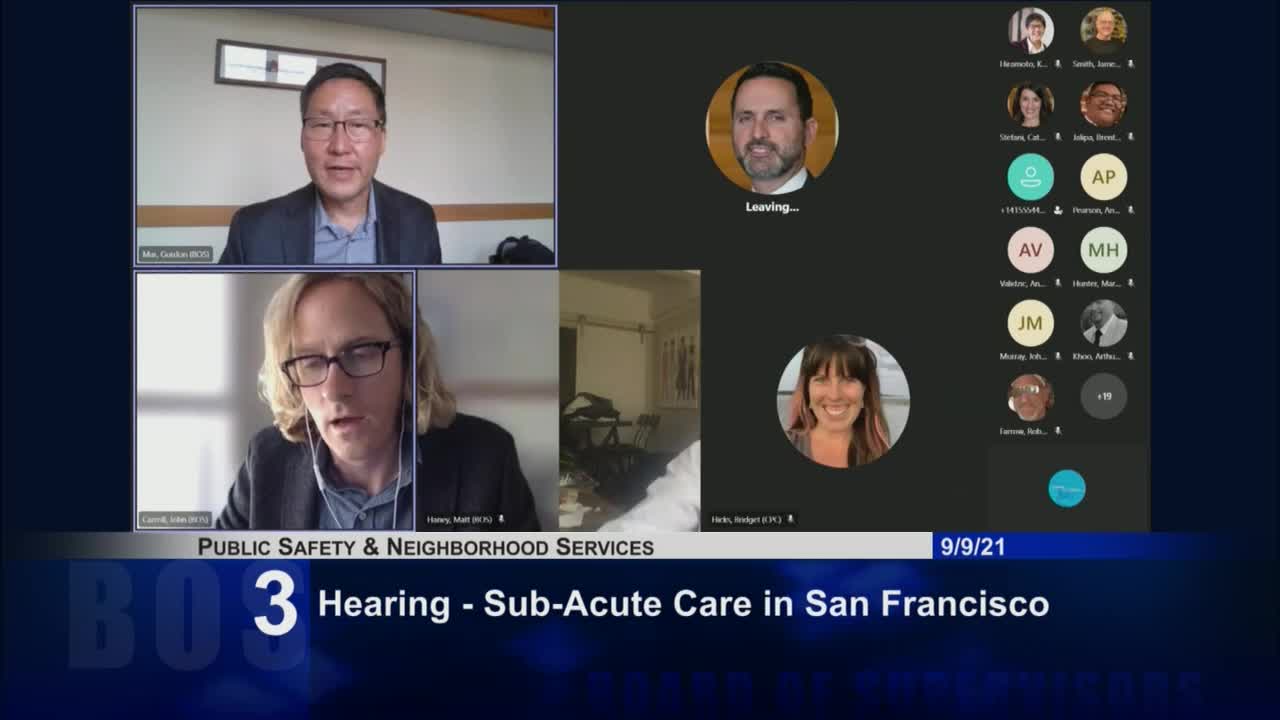
Supervisor Matt Haney, who called the hearing, said the session followed examples of entrepreneurs who face long, costly permitting processes. Laurel Arvani Tibes of the Office of Economic and Workforce Development described the Small Business Recovery Act and Prop H goals to provide 30‑day review turnarounds and more principally permitted uses. Planning Department staff member Bridget Hicks explained a new applicant questionnaire that produces a curated list of required forms, routes materials to multiple departments simultaneously, and issues a single consolidated set of comments.
Hicks told the committee that more than 150 small businesses have used the centralized service and that “100% of the applications received through our online service have been reviewed and approved within 30 days,” with an average review time of 14 days. Office of Small Business staff said they provide one‑on‑one case management in Spanish, Cantonese and Mandarin and that demographic questions in the portal have shown strong participation by minority, immigrant and women/LGBTQ+ applicants.
Supervisors asked how the programs will expand beyond initial Prop H neighborhoods and how the city will help startups transition from home‑based or pop‑up operations to permanent storefronts. Officials said the Small Business Recovery Act includes pending legislation to widen 30‑day turnarounds into more corridors, and OSB described referrals to technical assistance providers and the Small Business Development Center to support business planning and capital access.
Public commenters from neighborhood groups, the Small Business Commission and small business owners praised the reforms but raised public‑safety and vacancy concerns; Chair Marr noted a separate fall hearing will focus on safety in commercial corridors. The committee filed the hearing (roll call: Stephanie, Haney, Marr — 3 ayes).