Get Full Government Meeting Transcripts, Videos, & Alerts Forever!
Get email alerts on the Homelessness Response topic
No spam. Unsubscribe anytime.
SF committee backs community‑led CART resolution, urges further interagency planning
Summary
The Public Safety and Neighborhood Services Committee voted to send a resolution supporting a 24/7 Compassionate Alternative Response Team (CART) to the full Board with a positive recommendation, while urging further coordination with fire, EMS and dispatch to resolve training, triage and budget questions.
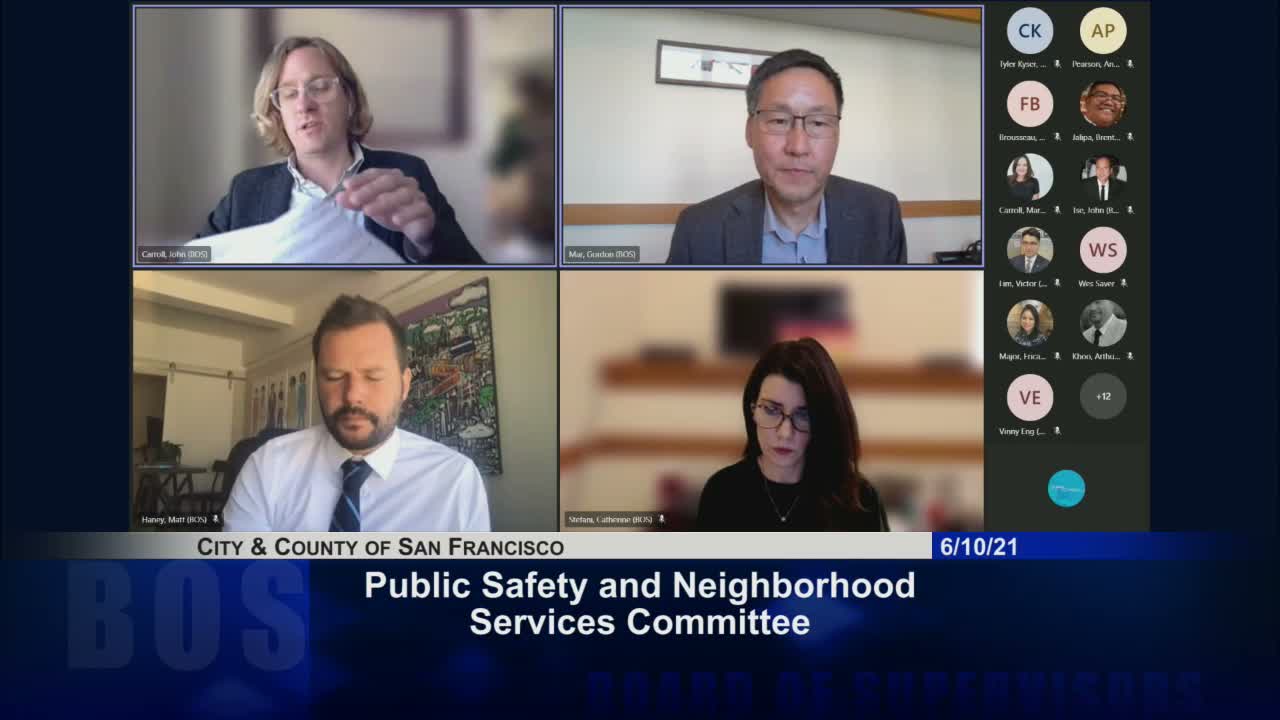
The Public Safety and Neighborhood Services Committee voted June 22 to send a resolution supporting a 24‑hour, 7‑day‑a‑week Compassionate Alternative Response Team (CART) to the full Board of Supervisors with a positive recommendation.
Supervisor Matt Haney, who sponsored the measure, said CART would create a non‑police dispatch to respond to homelessness‑related calls and provide a separate hotline for community reporting. "If we're gonna get people into permanent supportive housing, if we're gonna get people into shelter, we have to make sure that we are sending folks out on our street who are trained, who are professional, who are compassionate," Haney said.
Why it matters: Supporters say CART redirects calls now handled by police to peer‑based teams trained in de‑escalation, warm handoffs and referral to services; opponents and some city officials warned the model needs detailed operational plans to avoid gaps in medical triage and emergency response.
Presenters from the CART coalition described a two‑pronged model: immediate field response by trained teams and sustained investment in community service capacity. Coalition members estimated an initial annual cost in the range of $6,825,000 and described hiring preferences for people with lived experience and a training program of roughly 500 hours.
Fire and emergency medical officials participated in the hearing and raised specific concerns about scope and oversight. Section Chief Scott Pang and Chief Nicholson said the city’s community paramedicine and street crisis teams already perform many related functions and cautioned that EMT‑level or medical responses are highly regulated. Chief Pang described a recent field incident he said illustrated how uncoordinated responses can delay care.
CART presenters said the proposal builds on national models such as CAHOOTS and on local pilots, and that the coalition had consulted the Department of Emergency Management and street crisis teams during development. Wesley Saver of Glide highlighted racial equity concerns, citing reports from university and United Nations experts about harms from policing homelessness.
Public comment was strongly pro‑CART. Dozens of callers, including neighborhood groups and homelessness service providers, urged supervisors to fund and implement the model and to reallocate law‑enforcement resources.
The committee’s action: Supervisor Haney moved to forward the resolution with a positive recommendation; the roll call recorded three ayes and the resolution will move to the full Board.
What comes next: Committee members and department chiefs agreed to continue detailed operational conversations offline to define dispatch protocols, medical oversight, integration with existing street wellness teams and exact budget and staffing arrangements.