Get Full Government Meeting Transcripts, Videos, & Alerts Forever!
Get email alerts on the 5150 Paramedic Authority topic
No spam. Unsubscribe anytime.
Committee forwards ordinance to allow designated SFFD paramedics to place 5150 holds to full Board
Summary
The committee recommended to the full Board an ordinance authorizing designated San Francisco Fire Department paramedics and rescue captains to initiate involuntary psychiatric holds (Welfare & Institutions Code §5150), citing an effort to shift many hold initiations from police to trained medical responders; the committee approved forwarding the ordinance with a 3-0 vote.
The San Francisco Public Safety and Neighborhood Services Committee on July 8 voted to forward to the full Board of Supervisors a bill authorizing designated, certified paramedics and field rescue captains from the San Francisco Fire Department to initiate temporary involuntary psychiatric holds commonly known as 5150s under state law.
Sponsor Supervisor Safaie framed the ordinance as part of a broader shift away from policing responses to behavioral‑health crises toward public‑health trained responders. “Allowing the fire department paramedics and EMTs to have this ability helps to introduce an additional tool in the toolkit of the street crisis, the wellness, the paramedics that are out there,” the sponsor told the committee.
Deputy Chief Simon Pang (San Francisco Fire Department) told the committee the department plans to designate community paramedics and rescue captains who will receive training to place 5150 holds and conduct continuous quality improvement. He cited an internal figure that the San Francisco Police Department initiated roughly 3,043 5150 holds in an operational year and noted the department expects to field roughly 26–30 community paramedics or rescue captains in service per day during initial rollout.
Dr. Angelica Almeida, a clinical psychologist with the Department of Public Health, clarified data limits: fiscal‑year 2019–20 reports suggest roughly 9,051 5150 placements in the system (a duplicated count across multiple initiating parties and hospitals), and private‑hospital reporting gaps complicate a full tally. DPH will oversee training and quality‑management work if the ordinance is adopted.
Adrienne Sims of Local 798, the firefighters’ union, spoke in support, saying uniformed police presence can be triggering for people of color and that trained paramedics can reduce escalation. Vice Chair Supervisor Stephanie raised concerns about EMT safety after reports of verbal and physical assaults on responders; Assistant Deputy Chief Sandy Tong said the department is tracking increasing assaults and is coordinating with the City Attorney to address staff safety and liability questions.
Deputy Chief Pang said the department will begin by training paramedics attached to the Street Crisis Response Team, EMS6 and the Street Wellness Response Team and will reassess volume and resources as the program scales. The sponsor and department emphasized data sharing and centralized recordkeeping to reduce the city’s cycle of repeated holds for the same individuals.
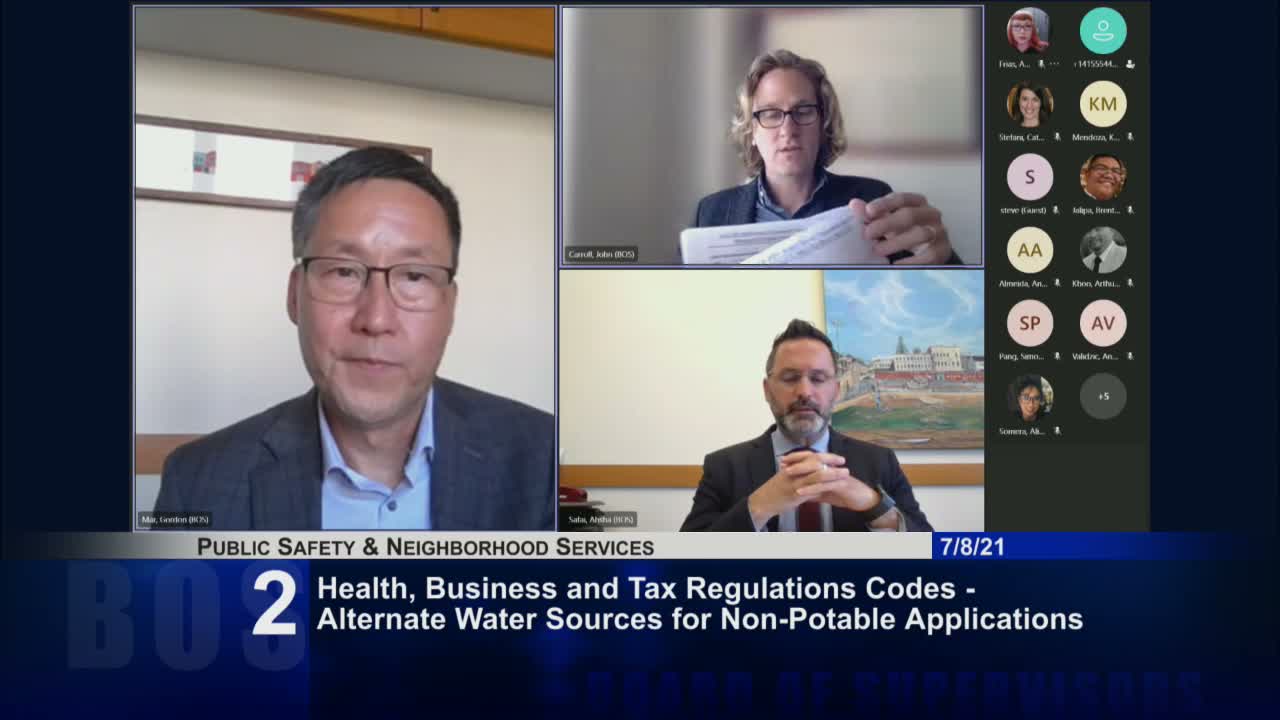
The committee recorded a motion from Member Safaie to recommend the ordinance to the Board; Vice Chair Supervisor Stephanie, Member Safaie and Chair Marr voted Aye, and the item will be placed on the Board’s July 20 agenda with a positive recommendation.
If the Board approves the ordinance, the city plans to implement designation, training and quality‑assurance steps and to expand resources as needed to support additional paramedic responsibilities.