Get Full Government Meeting Transcripts, Videos, & Alerts Forever!
Get email alerts on the Budget Roundup topic
No spam. Unsubscribe anytime.
Budget and Finance Committee advances most analyst recommendations, defers several policy and staffing disputes
Summary
The Committee accepted the budget analyst's recommendations for many departments but left several policy questions and staffing disputes (library hours, fire materials and attrition, DEM FirstNet funding, OCC investigators, adult probation, HOPE office) for follow-up or separate votes.
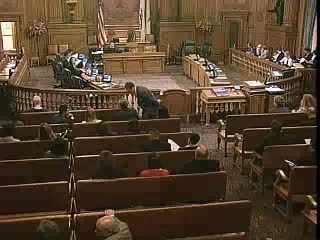
The Budget and Finance Committee of the San Francisco Board of Supervisors met in a special session to consider the Mayor's proposed fiscal 2012—13 and 2013—14 budget. Chair Carmen Chu opened the hearing, named attending supervisors and clerical staff, and called Items 1 and 2: the budget and the annual salary ordinance.
Committee members and department representatives reached agreement on the analyst's recommendations for many departments, and the chair pressed motions accepting those recommendations where departments concurred. Departments that reported full agreement included the Health Service System and Juvenile Probation. Several departments, including the public library, the fire department, Department of Emergency Management (DEM), the police/OCC, adult probation, Human Services Agency (HSA) and the Department of Public Health, reported partial agreement and flagged policy or staffing items for discussion.
Where departments disagreed, the committee used a mix of remedies: (1) accept the analyst's numeric recommendations while deferring policy items (for example, some grant-to-general-fund conversions); (2) ask the department CFOs to work directly with the budget analyst to reconcile data discrepancies (fire department materials and supplies and attrition figures); and (3) place limited funding on budget committee reserve pending additional information (DEM FirstNet equipment/site work). In several cases the committee approved the analyst's recommendations "without objection" after clarifications.
Several individual items drew sustained debate: Supervisor Kim moved to reserve $226,000 of general-fund support for a federal public-safety communications project pending federal clarification; the committee negotiated placing half of that amount ($113,000) on budget committee reserve to allow limited real-estate and technology work to proceed. A motion to accept a budget-analyst classification (Manager 1) for an emergency-services coordinator position failed in roll call (Avalos and Kim voted aye; Cohen, Weiner and Chiu voted no). The Office of Citizen Complaints requested two investigators to reduce caseloads to an audit-recommended level; analysts recommended one. The committee allowed one investigator now and agreed to revisit staffing in a year.
The committee asked the Controller's Office and the mayor's budget team for updated revenue projections and state-impact analysis; the mayor's office reported an initial estimate of roughly $10 million in state impacts, primarily child-care reductions and some public-health adjustments, and the Controller said updated revenue numbers would be provided to the committee in writing later that day. The meeting recessed until the next day at 1 p.m. for follow-up on outstanding items.
What happens next: staff were directed to reconcile specific numeric disagreements (fire materials and supplies; DEM attrition lines; adult probation temporary-salary accounting) and to return with revised figures. Several policy items were deferred for later action or scheduled for reconsideration after additional information is received.