Get Full Government Meeting Transcripts, Videos, & Alerts Forever!
Get email alerts on the Farmers Market Audit topic
No spam. Unsubscribe anytime.
Audit finds governance, compliance and facilities gaps at Alemany/Alameda Farmers Market; Real Estate commits to CAC and repairs
Summary
A performance audit found the Alameda Farmers Market lacks a clear mission and consistent management, has governance and compliance gaps, and needs facilities and training investments; the Real Estate Division agreed and outlined near-term steps including forming a community advisory committee and capital requests.
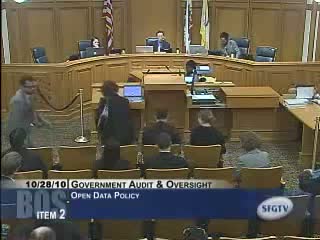
A Budget & Legislative Analyst performance audit presented Oct. 28 urged immediate reforms at the Alameda (Alemany) Farmers Market, concluding the market lacks a clear mission, has unstable management, inconsistent compliance with state and local codes, and inadequate facilities and planning.
Dan Goncher, who led the audit, told the Government Audits & Oversight Committee the study focused on management, market finances, governance and legal compliance. He said Alameda is the oldest certified farmers market in California and the only city-operated market in San Francisco. The audit found the Real Estate Division does not follow a formal process for long‑term management and financing and that the market has not consistently complied with state and city administrative codes; those problems were partially attributable to a lack of training and inadequate tools for staff.
Key numbers cited in the audit: the Alameda market hosts about 110 certified farmers (agricultural producers) and about 20 food and beverage vendors weekly. For FY 2009–10 the audit reported Alameda market expenses around $168,000 and revenues about $336,000; combined site revenues for both markets at 100 Alameda Boulevard were reported at about $760,000 with Real Estate net revenues of about $425,000 transferred to the general fund.
The audit identified management instability (the market has shifted among four departments in seven years), a lack of a mission and governance structure, inconsistent enforcement of market rules, and vendor-selection and fee disparities (food-vendor stall fees ranging from about $35 to $120 for similar stall sizes). The report recommended revising rules and regulations, creating an advisory committee, standardizing fees or adopting tiered fees, and improving training and vendor oversight.
Amy Brown, Director of Real Estate, said the division agreed with most recommendations and is already working on many. Brown pledged to form a community advisory committee (CAC) and to develop a mission statement with community input; she described capital work already completed or underway, including a bathroom remodel funded at about $30,000 and a roof repair budgeted at about $90,000 and now in progress. Brown said her office would seek additional capital funding in the next capital-plan cycle, push to secure adjacent Public Utilities Commission properties for parking, and pursue a street-vacation package and traffic-management plan to improve safety and circulation.
Supervisors pressed staff for a facilities needs assessment and firm timelines. Brown proposed a short-term list of items to address over nine months and said the CAC could be constituted by the end of the calendar year, with code updates, fencing/perimeter work and capital projects planned into 2011. The Department of Public Health was noted to have returned to inspect the market and the Real Estate Division said it is conducting vendor education to address food-safety sampling and storage issues and the need for DPH permits for some vendors.
Vendors and community commenters raised practical concerns: Bobby Yekas, a vendor, described limited on-site sanitation and uneven health-inspection frequency and offered to help train vendors; other commenters urged better winter protections for goods, more advertising, and clearer guidance on fees and stall use. The committee asked Real Estate to return for a mid-cycle check-in to report progress; the item was continued "to the call of the chair."