Get Full Government Meeting Transcripts, Videos, & Alerts Forever!
Get email alerts on the Sro Protections topic
No spam. Unsubscribe anytime.
SF supervisors continue SRO COVID protections after DPH seeks operational changes and time to publish dashboard
Summary
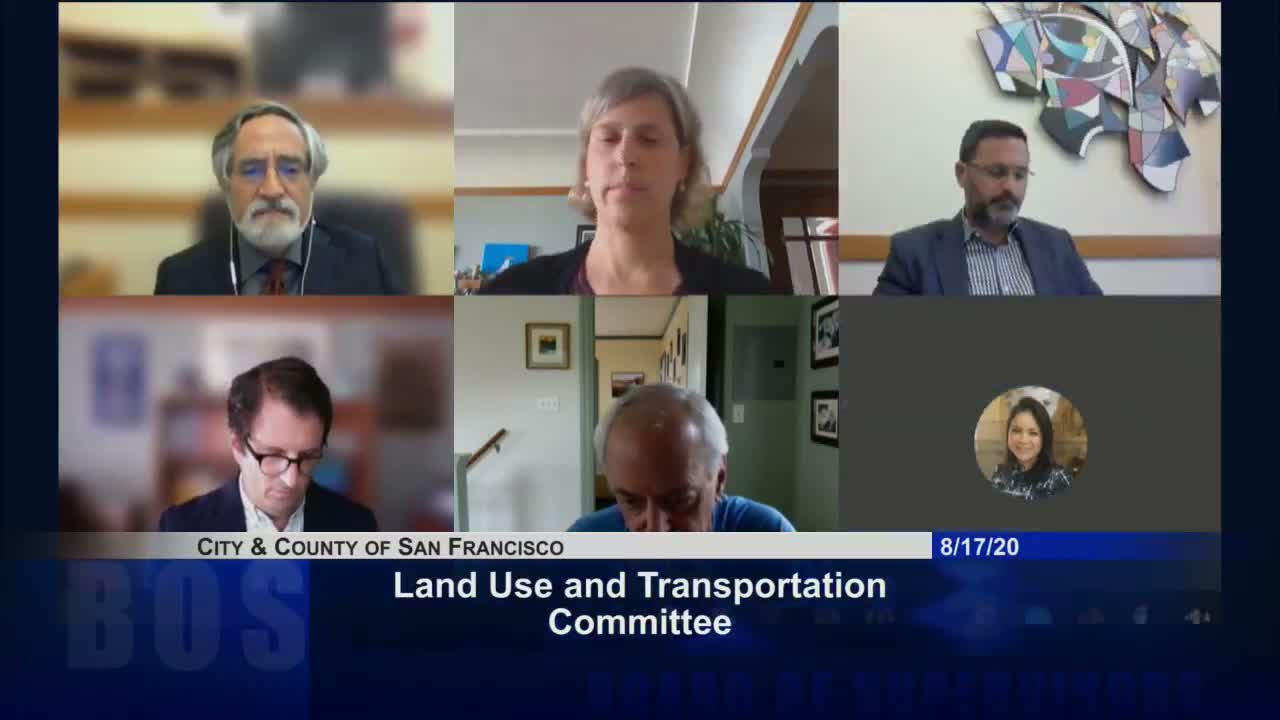
The Transportation Committee paused reenactment of an emergency ordinance protecting SRO residents after SF Department of Public Health requested time to resolve privacy and operational questions, revise two rapid-response requirements, and launch an SRO dashboard; the committee voted 3-0 to continue the item to the call of the chair.
Chair Supervisor Aaron Peskin moved to continue consideration of a reenacted emergency ordinance that would protect occupants of residential hotels (SROs) during the COVID-19 pandemic after Department of Public Health officials asked for more time to clarify operational and privacy issues.
The request followed a presentation by Dr. Stephanie Cohen, the medical-epidemiology lead for SFDPH’s COVID-19 SRO response team, who described the department’s surveillance, mitigation and on-site testing strategy for SROs and raised concerns about two time-sensitive requirements in the ordinance. "This approach is not in line with our citywide testing strategy or with CDPH or CDC guidance on cluster and outbreak response," Cohen said, asking the committee to reevaluate the ordinance provisions that call for testing all residents within 48 hours of a single case and delivering face coverings to all SRO residents within 12 hours of a confirmed case.
Cohen outlined the SRO team’s operations—door-to-door mitigation visits, mask and cleaning-supply distribution, partnership with case investigation and contact-tracing teams, referrals to isolation-and-quarantine (I&Q) hotels, and line-list creation for on-site testing. She said the team has visited 44 SROs, reaching an estimated 1,760 residents, and conducted 27 mass testing events at 18 SROs. Cohen reported that 1,310 tests have been linked to SRO residents, including about 1,000 from on-site events, and estimated roughly 45 tests per 100 SRO residents versus 36 per 100 citywide.
Cohen also presented outcomes data: the last SRO resident death was on June 3, 2020, and SFDPH records show five SRO resident deaths out of 502 SRO cases, a case-fatality rate of about 1 percent. She said a public SRO data dashboard is "almost ready" and anticipated a launch on Aug. 28 with a seven-day lag for validated data.
SRO advocates and community groups who testified during public comment urged the committee not to weaken the ordinance. Jen Fujioka of the Chinatown Community Development Center, speaking for multiple SRO collaboratives, said the group was "appreciative of the efforts of DPH staff" but warned that "the testing mandate is [an] essential aspect of the order" and urged DPH not to scale back testing. Anastasia Yovanopoulos of an anti-displacement coalition pressed DPH to clarify who is responsible for cleaning shared bathrooms and kitchens and to reassure residents that using I&Q hotels will not lead to eviction. Other callers raised privacy concerns about contact tracing and the disclosure of positive cases.
Peskin thanked DPH for its work, emphasized the need for transparency and community engagement, and told the committee he intended to continue the ordinance to the call of the chair with the goal of hearing reenactment no later than the committee’s first meeting in September. The committee voted to continue the item on a roll call of 3-0 (Preston Aye; Safae Aye; Peskin Aye).
Next steps: DPH will address the committee’s questions about privacy and operational feasibility, launch the SRO dashboard, and continue engagement with SRO collaboratives before the committee reconvenes to consider reenactment.