Get Full Government Meeting Transcripts, Videos, & Alerts Forever!
Get email alerts on the Overdose Prevention topic
No spam. Unsubscribe anytime.
Committee sends overdose-prevention ordinance to full Board after DPH commits to departmental policies
Summary
Supervisor Matt Haney's ordinance requiring city departments and grantees to develop overdose-prevention policies was sent to the full Board with a positive recommendation after DPH described an implementation timeline and callers urged expansion of harm-reduction and treatment-on-demand services.
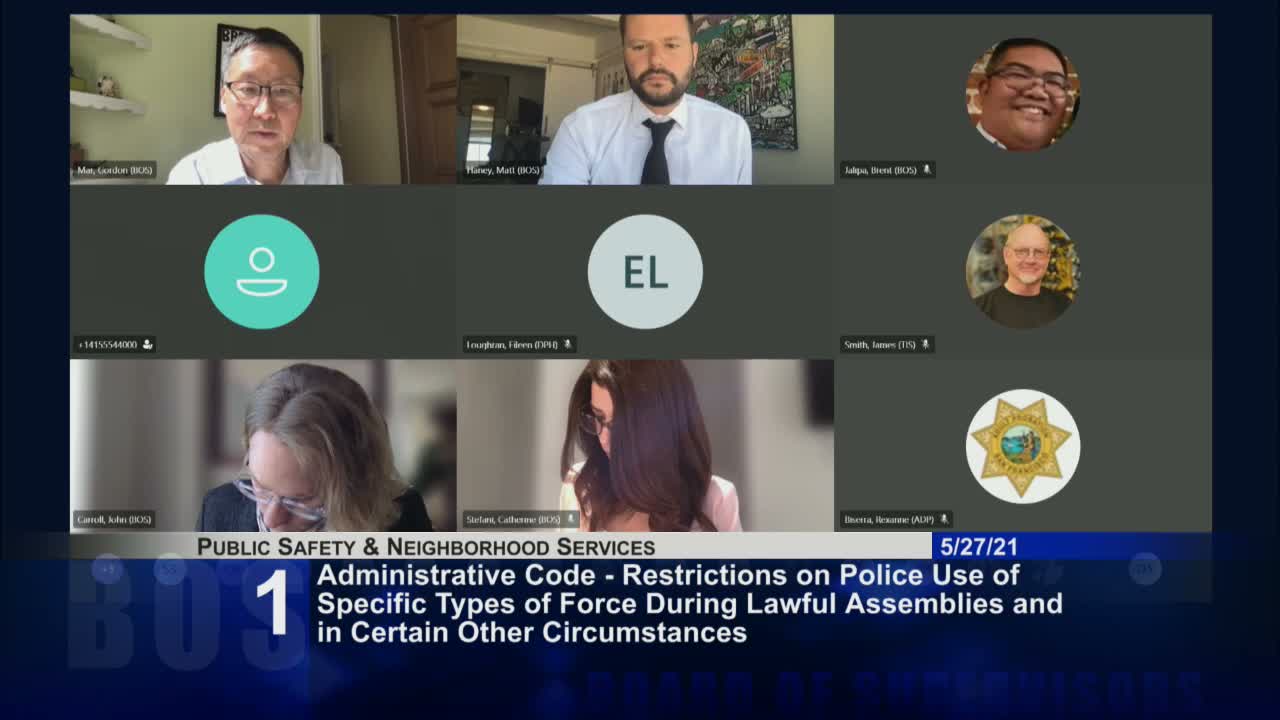
The Public Safety & Neighborhood Services Committee voted on May 27 to forward to the full Board of Supervisors a city ordinance by Supervisor Matt Haney that would require the Department of Public Health (DPH), the Department of Homelessness & Supportive Housing (HSH), the Human Services Agency (HSA), and the Department of Emergency Management (DEM) to develop and submit departmental overdose-prevention policies.
Haney framed the ordinance by citing recent local overdose data and the need for a citywide standard for sites that serve people who use drugs, including shelters, navigation centers and supportive housing. He told the committee that in January and February 2021 there were 146 overdose deaths in San Francisco, an increase from 81 deaths in the same months of 2020, and that an additional 106 deaths occurred in March and April 2021 ("252 deaths in just 4 months"), with 2020 totaling 712 overdose deaths, figures he used to underline urgency for coordinated policies.
Eileen Loughran of DPH said many items requested by the ordinance are already embedded in DPH contract language (posting syringe access schedules, naloxone availability and onsite overdose-response policies). DPH committed to a six-month process to develop a shared vision, identify resource needs and engage stakeholders, and pledged to return to the committee and the Board with an implementation plan and likely budget requirements in December 2021.
Public commenters and harm-reduction advocates supported the measure and urged broader actions: expanding naloxone distribution, adding supervised consumption services, increasing funding for supportive housing and low-threshold drop-in centers and building culturally competent programs that center people with lived experience. Providers and advocates repeatedly asked that policies not rely on policing and that they be paired with housing and treatment-on-demand capacity.
Supervisor Haney moved that the ordinance be recommended to the full Board; the committee (Vice Chair Katherine Stephanie, Member Haney and Chair Gordon Marr) unanimously voted aye. The item will go to the Board of Supervisors with a positive recommendation.
What happens next: DPH has signaled it will work with other departments and community partners to deliver departmental policies and an implementation plan to the Board by December 2021; budget requests for FY22-23 are expected if additional funding is required to implement policies.