
Guam Legislature advances measure to stiffen graffiti penalties, adds signage amendment
Get AI-powered insights, summaries, and transcripts
Subscribe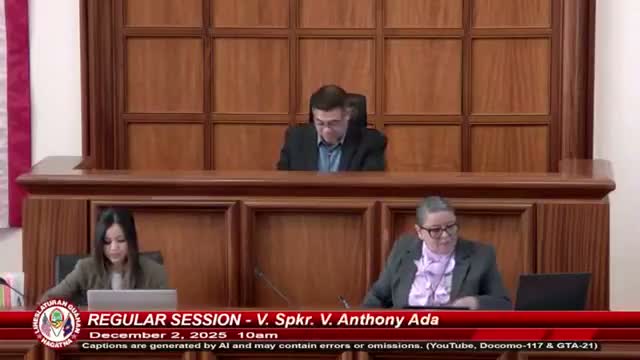
Summary
Lawmakers advanced Bill 167-38 to third reading after debating higher fines, longer jail time, and education signage; supporters cited tourism and cleanup costs while critics pressed for data on enforcement outcomes.
The Guam Legislature advanced Bill 167-38 to third reading on a voice vote after sponsors said the measure would strengthen penalties for graffiti on public and private property.
Speaker Blas, who moved the bill, told colleagues he had counted dozens of graffiti sites on a single stretch of Route 848 and called the measure part of a broader push to ‘‘beautify our island’’ for residents and visitors. The bill would raise the first-offense fine roughly from $1,000 to $2,000, increase fines for repeat offenses to about $4,000 and raise potential jail time for adults from 120 to 180 days, according to remarks on the floor.
Supporters said tougher penalties send a deterrent signal and cited the cost and labor involved in cleanup. The deputy attorney general, whose testimony was summarized by the committee sponsor, said in testimony read into the record that “graffiti is not merely cosmetic, but a crime that undermines public order, respect for property, and Guam’s image.” Senator Gumatoidau quoted Department of Public Works Director Areola’s comment that graffiti was ‘‘sad and unfortunate’’ and described recent instances where DPW crews had been diverted from other projects to paint over vandalism. The senator also cited a 2023 Guam Police Department report noting 1,692 vandalism cases and 144 cleared cases as evidence of enforcement limits.
Senator Perez offered and won a floor amendment to align required signage with the revised penalties, arguing that visible notices and public education are an important complement to enforcement. Several lawmakers urged including restorative options for youth offenders; Senator Duenas described programs that paired juveniles with supervisors to repaint and make restitution.
Opponents and some questioners pressed for better data on convictions and revenue collected under current law; the bill’s sponsor acknowledged definitive conviction figures were not available on the floor. Supporters acknowledged that enforcement and cleanup capacity are separate policy questions and said they would pursue further legislation or administrative actions to ensure penalties translate into timely cleanup and restitution.
With no recorded roll-call opposition, senators approved the motion to send Bill 167-38, as amended on the floor, to third reading and added cosponsors alphabetically. The Legislature took a brief recess following the order.