Get Full Government Meeting Transcripts, Videos, & Alerts Forever!
Get email alerts on the Parks And Recreation topic
No spam. Unsubscribe anytime.
Rec and Park outlines $119 million operating budget, presses for revenue and staffing fixes
Summary
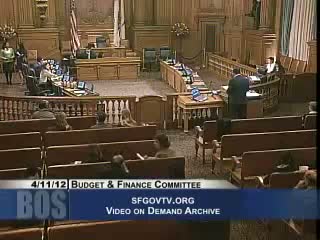
Rec and Park General Manager Phil Ginsberg told the Budget & Finance Committee the department will submit a two‑year budget that balances a roughly $119.4 million operating budget against $1.5 billion in deferred maintenance needs and asked supervisors to consider modest add‑backs for patrol and neighborhood services.
Phil Ginsberg, general manager of the San Francisco Recreation and Park Department, told the Budget & Finance Committee that the department’s 2011–12 operating budget is about $119.4 million and that it faces roughly $1.5 billion in categorized deferred maintenance needs across the park system.
Ginsberg opened the presentation by mapping the scope of the agency’s responsibilities: about 4,000 acres of open space, nearly 220 neighborhood parks, more than 180 playgrounds, roughly 150 tennis courts, nine swimming pools, six golf courses and three stadiums. "Parks play a really, really critical role" in family and community health, he said.
The department expects to meet a two‑year budgeting request from the mayor’s office that included a 5 percent base reduction. Ginsberg said Rec and Park was asked to close a roughly $3.7 million shortfall in year one and $3.1 million in year two through a mix of revenue growth and efficiency. To do that, he described three primary revenue streams: a general‑fund subsidy, the open space fund (about 2.5 cents per $100 in property tax) and earned revenue from fees, concessions, permits and facility rentals.
Ginsberg outlined where the operating dollars go: "We allocate approximately half of our operating budget to maintaining our parks," he said, adding that about 27 percent funds recreation programming and 12 percent supports structural maintenance. He also said the department currently budgets about 3 percent of operating dollars for park patrol — "one of the functions that I believe, we have significant underinvestment" — and plans to propose an administrative leadership position for park patrol in the coming budget to separate field work from management duties.
On scholarships and access, Ginsberg highlighted expansion of financial assistance for program participants: "Three years ago, the Recreation and Park Department gave out $80,000 for the entire year in scholarships. This year, we will hit, exceed $600,000." He said the department links scholarship eligibility to the school district’s free and reduced‑lunch list and has increased community outreach and online registration to boost access.
To grow earned revenue, Ginsberg said the department expects continuing lease and concession gains and cited recent revenues tied to Candlestick events: playoff games produced nearly $2 million in additional revenue. He also previewed forthcoming legislation to allow variable pricing for golf fees, estimating about $100,000 in added revenue from pricing changes.
On efficiencies, the department plans pilots such as centralized trash staging to reduce Recology stops; Ginsberg said the pilot could conservatively save about $50,000. He closed with a list of targeted add‑backs the department argues would produce concrete services: for example, $65,000 annually would open one rec center on Sundays; $320,000 would add four arborists; $132,000 would fund a plumber to address irrigation breaks.
Supervisors pressed on park patrol staffing, overtime and coverage. Ginsberg estimated the department has 18 park rangers and routinely schedules two officers on duty systemwide, with more deployed for special events. "It is a 24‑hour, 7‑day function," he said, defending limited overtime as a tool when full‑time equivalents are unaffordable.
Public commenters urged the committee not to accept additional cuts to parks and opposed commercialization and increased fees in park spaces. Eric Brooks of the San Francisco Green Party warned against "the plasticization of the park" and asked supervisors to preserve public commons; Matt O’Grady of the San Francisco Parks Alliance said further cuts would run counter to strong voter support for park funding.
The committee continued the item to the call of the chair so staff can supply requested follow‑up information.