Get Full Government Meeting Transcripts, Videos, & Alerts Forever!
Get email alerts on the Healthy Buildings Ordinance topic
No spam. Unsubscribe anytime.
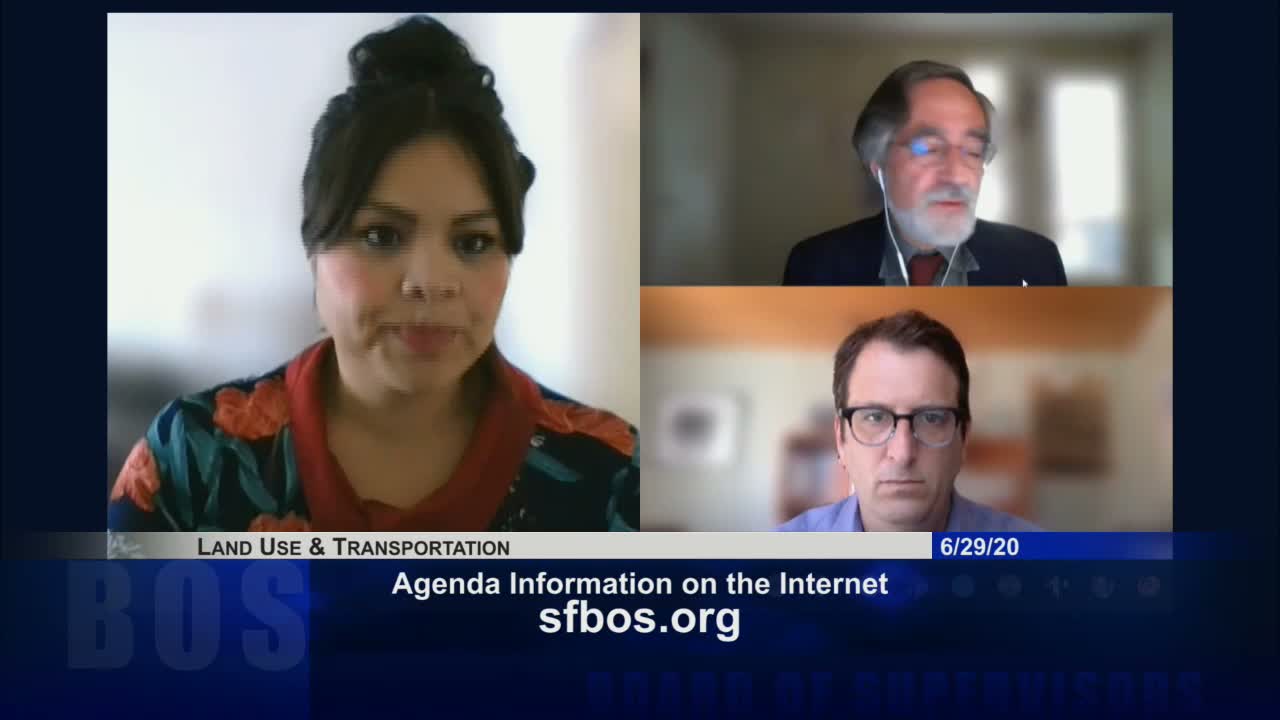
SF committee backs 'Healthy Buildings' cleaning rules and forwards ordinance to full Board
Summary
The Land Use and Transportation Committee voted unanimously to forward an amended emergency ordinance setting hotel and large-office cleaning standards to the full Board of Supervisors, after hours of public comment that split labor and health advocates from hotel industry leaders.
San Francisco's Land Use and Transportation Committee on Monday voted to send an amended emergency "Healthy Buildings" ordinance to the full Board of Supervisors with a positive recommendation, after a long public-comment period that sharply divided labor and hotel-industry witnesses.
The ordinance, carried by Committee Chair Supervisor Erin Peskin, would require tourist hotels and large commercial office buildings to establish, implement and maintain written cleaning, disinfecting and disease-prevention standards consistent with guidance from the California Department of Public Health and the state Department of Industrial Relations. Peskin said the measure is intended to protect low-wage and frontline workers and to restore traveler confidence as the city reopens. "This is all about, money," Peskin said in reference to industry opposition, arguing the measure puts "public health and visitor and worker safety first."
Why it matters: Supporters said enforceable cleaning standards are necessary to protect workers who are disproportionately low-wage and people of color and to reassure travelers that hotels are safe. Unions and many hotel employees said that clear, city-enforced requirements will help bring guests back and speed rehiring. Opponents from hotel ownership and management argued the ordinance goes beyond public-health guidance, would increase staff contact with guests and could delay hotels' reopening or make operations financially infeasible.
What the committee did: Supervisors approved a package of amendments that narrowly revised technical language and removed a requirement for single-use sealed linen bags. Amendments clarified that the Department of Public Health will set specific cleaning frequencies by regulation (changing an earlier draft's "every 30 minutes" language to "multiple times daily" where appropriate), added a compliance-log requirement, required employer-paid testing if recommended by the Department, and directed employers to notify employees and bargaining representatives about exposures or advisories. The committee then voted by roll call to forward the ordinance to the full Board with a positive recommendation; Supervisors Preston, Safaee and Peskin each recorded "aye."
Public comment: The record showed sharply divergent views. Unite Here Local 2 and many hotel workers told the committee that daily cleaning and stronger disinfecting standards are essential to worker safety and to restoring customer confidence. "The Healthy Buildings Ordinance does exactly that," said Anand Singh, president of Unite Here Local 2. Several workers described job loss, fear of returning without stronger protections, and disproportionate impacts on communities of color. By contrast, hotel associations and many general managers argued the ordinance would override CDC- and brand-based protocols, increase close contact between staff and guests, and impose unsupportable costs. "Mandating that staff enter guest rooms daily only increases the risk to both the staff entering the room and the guests," said Kevin Carroll, president and CEO of the Hotel Council of San Francisco.
Key clarifications in the amendments: Chair Peskin said the draft mirrors parts of existing SRO hotel legislation and that the ordinance will be enforced, where applicable, by the Department of Public Health. The committee removed the single-use linen-bag sentence after hearing testimony on environmental and cost concerns; it also directed the city attorney and DPH to finalize a small-exception language for designated refrigerators to store breast milk.
Next steps: The ordinance, as amended and recommended, is scheduled to appear on the Board of Supervisors' agenda on July 7 for further consideration. If approved by the Board, the Department of Public Health would adopt implementing regulations and enforce the requirements described in the ordinance.
Details and context: Peskin told the committee the ordinance was developed with input from the Department of Public Health and industry and that the legislative digest frames the requirements as consistent with state COVID-19 industry guidance for hotels and lodging. The amendments also include a provision that violations of the standards in Section 4 would be considered a nuisance under health code section 581.
The Land Use and Transportation Committee adjourned after forwarding the item.