Get Full Government Meeting Transcripts, Videos, & Alerts Forever!
Get email alerts on the Sro Census Access topic
No spam. Unsubscribe anytime.
Committee approves ordinance clarifying census access to San Francisco SRO hotels
Summary
The committee approved an amendment to the administrative code clarifying that census workers, including city-contracted census outreach organizations, may access single-room-occupancy (SRO) hotels between 9 a.m. and 8 p.m. and must show identification or city documentation.
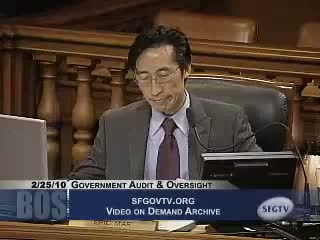
The Government Audit and Oversight Committee of the San Francisco Board of Supervisors approved an amendment to the administrative code to ensure census workers can access single-room-occupancy (SRO) hotels for census outreach.
Jeremy Pollock, representing the ordinance’s author, told the committee that SRO residents are frequently left out of the count and urged explicit access to SROs so the city does not lose federal funding. “We need to be extra vigilant to make sure they have access,” Pollock said, noting the city has an estimated 500 SROs totaling about 20,000 units. Rick Mishke, field operations supervisor for the Census Bureau’s San Francisco East Office, said the Bureau’s group-quarters enumeration begins March 19 and urged support “in order for us to ensure that everyone is actually counted the best we can.”
The committee’s amendment clarifies that ‘‘census activities’’ include encouraging SRO occupants to participate in the census and distributing surveys, handbills, door hangers and flyers, and it defines a ‘‘census worker’’ to include official Census Bureau employees and organizations contracted by the city and county of San Francisco to perform census outreach and education. The amendment specifies hours for access — 9 a.m. to 8 p.m. — and requires bureau employees to present bureau-issued identification and city-funded outreach employees to present documentation from the Office of Civic Engagement and Immigrant Affairs confirming their contract status.
Several SRO residents and community organizations testified in favor of the amendment. Latonya Jones, an SRO tenant, said she had lived in an SRO for three years and had never been counted: “If we are not counted, we’re not here,” she said. Representatives of the Tenderloin Neighborhood Development, Chinatown Community Development Center and the Mission SRO Collaborative urged the committee to include city-funded outreach contractors so community groups conducting door-to-door outreach can enter buildings where managers have historically denied access.
Others raised privacy and procedural concerns. Thomas Picariello, an SRO tenant, said he supported the goal of counting residents but opposed expanding access to nonprofits over privacy and re-noticing concerns, arguing that adding categories might require additional public notice.
After committee members clarified that the amendment’s examples of outreach materials refer to census-related materials and confirmed the scope of ‘‘census activities,’’ the committee moved the amendment and approved it without objection. The ordinance, as amended, will proceed to the Board of Supervisors agenda for further consideration.
The committee’s action now instructs the Rent Board to amend its uniform visitor policy consistent with the ordinance language and allows city-contracted census outreach organizations to present city documentation to gain access for census-related outreach during the specified hours.