Get Full Government Meeting Transcripts, Videos, & Alerts Forever!
Get email alerts on the Housing topic
No spam. Unsubscribe anytime.
Land-use committee adds school exemption to ordinance limiting corporate rentals
Summary
The committee advanced an ordinance creating an Intermediate Length Occupancy (ILO) category that tightens prohibitions on corporate rentals in rent‑controlled housing, directs a Controller study and imposes building‑size caps; members unanimously added an exception allowing tax‑exempt educational institutions to house teachers.
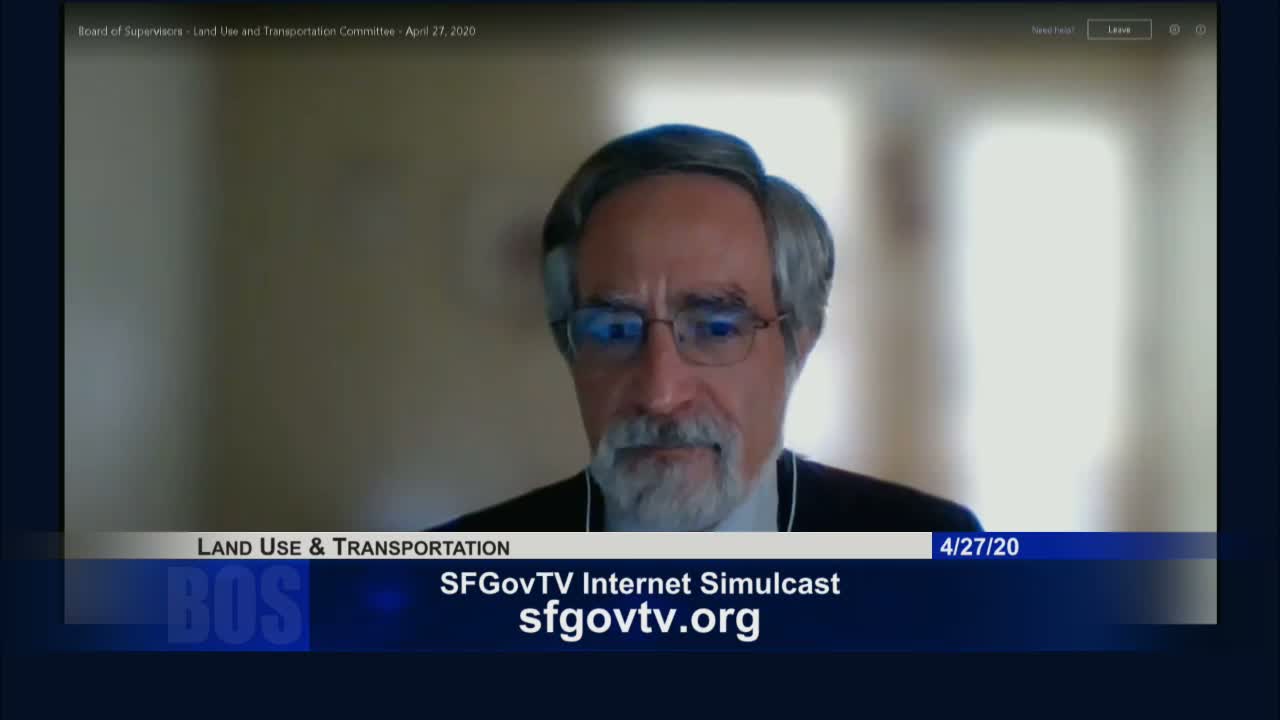
SAN FRANCISCO — The Land Use and Transportation Committee on Monday passed an amendment to an ordinance intended to regulate intermediate length occupancy (ILO) units in the city, adding language to exempt tax‑exempt educational institutions that provide housing for teachers.
Chair Aaron Peskin, the bill’s lead sponsor, said the ordinance is meant to clarify and strengthen the city’s restrictions on corporate rentals in rent‑controlled housing while creating a ‘‘middle bucket’’ of housing that is covered by tenant protections and a conditional‑use process. ‘‘First, we’re clarifying strengthening the law around the prohibition of corporate rentals in rent controlled housing stock,’’ Peskin said during the committee hearing.
The draft ordinance would create an ILO residential use, direct the Controller’s Office to study impacts of new ILO units, and set implementation limits: Planning would have two years to approve up to 1,000 conditional uses for permitted ILOs, and buildings above 10 dwelling units could permit up to 20 percent of units as ILOs pending the Nexus study. The legislation maintains tailored exemptions spelled out in earlier amendments.
Deputy City Attorney Anne Pearson told the committee the current draft ‘‘would make it unlawful to use a rental unit as a non‑tenant use,’’ a category that covers renting to corporate entities or housing reserved for an employer’s employees, licensees or contractors. Pearson said the city could add a limited exception for organizations with tax‑exempt status that provide housing ‘‘in furtherance of its primary mission of education by providing housing to teachers.’’ The committee agreed that language could be added to the Administrative Code without re‑referral to the Planning Commission.
Public comment reflected a range of views. Andrew Long, an owner‑occupier of a three‑unit building, argued the ordinance ‘‘is a solution looking for a problem’’ and said shorter leases can meet needs for students and traveling medical staff. By contrast, Michael Walker, head of San Francisco Day School, thanked supervisors for the amendment and said it would allow his school to offer apartments to two teachers immediately.
Supervisor Asha Safaei moved the amendment to add the educational exception; by roll call Supervisors Dean Preston, Safaei and Peskin voted aye and the committee approved the amendment and then voted 3‑0 to forward the ordinance, as amended, to the full Board with a recommendation.
The measure also directs the Controller’s Office to conduct a study to inform future controls and any monetization of ILO developments. The ordinance includes detailed rules for small buildings (ILO units are not permitted in buildings with three or fewer units; buildings of four to nine units may allow 25 percent ILOs) and an overall cap tied to Planning and the Nexus study. The full Board will consider the ordinance at a later meeting.