Get Full Government Meeting Transcripts, Videos, & Alerts Forever!
Get email alerts on the Muni Fares Resolution topic
No spam. Unsubscribe anytime.
Committee urges SFMTA to pause fare increases during pandemic; committee adopts resolution 3–0
Summary
The committee passed a resolution urging the Municipal Transportation Agency to refrain from Muni fare increases for fiscal 2021–22, after hearing SFMTA staff present alternatives that freeze cash fares but shift costs to monthly or electronic fares and noting projected shortfalls and potential federal relief.
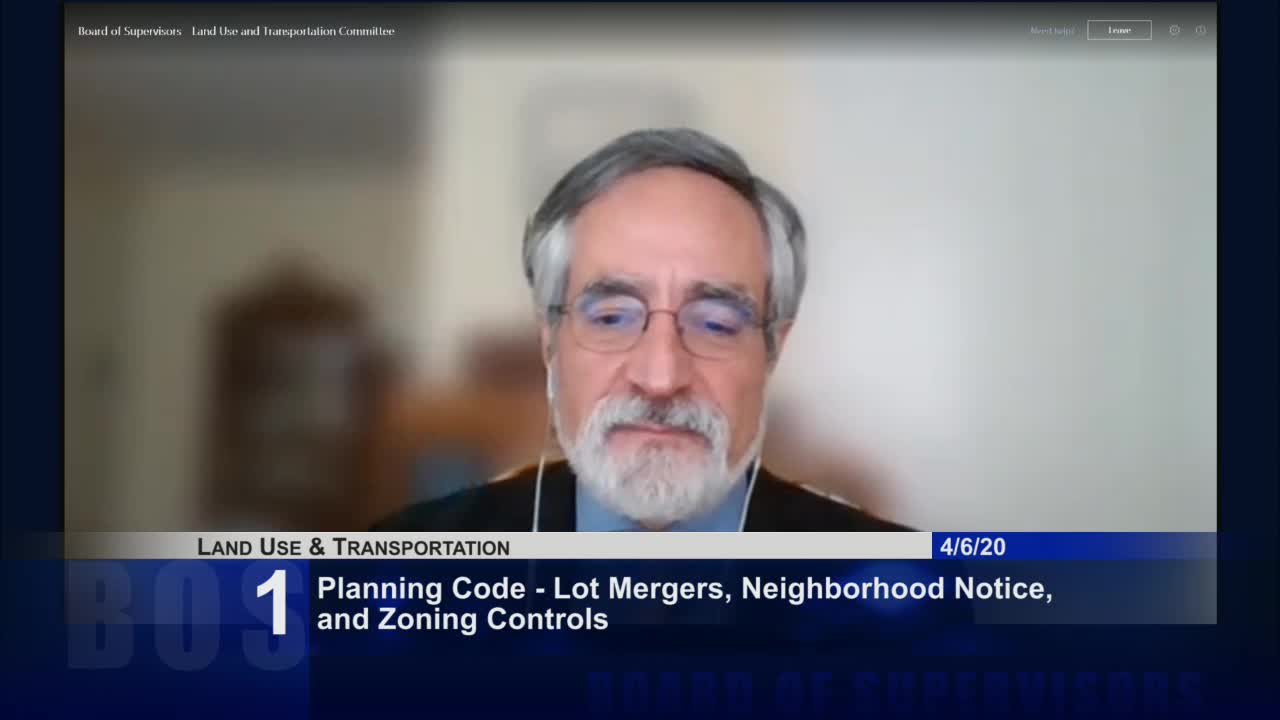
SAN FRANCISCO — The Land Use and Transportation Committee unanimously adopted a resolution urging the Municipal Transportation Agency (SFMTA) to refrain from any Muni fare increases during the fiscal 2021–22 budget cycle, saying now is not the time to add costs to riders amid the COVID‑19 economic emergency.
Supervisor Dean Preston, who sponsored the resolution, thanked Muni operators and emergency workers and argued a fare increase would add hardship for residents facing job and income loss. "We are in a period of particularly extreme financial uncertainty," Preston said, arguing that fare hikes would disproportionately affect riders during the pandemic.
SFMTA staff, represented in the meeting by Jonathan Ruers, outlined two alternatives developed after public outreach: an "equity monthly" option that spreads costs onto monthly‑pass holders, and an "equity Clipper" option that narrows the differential between cash and Clipper electronic fares while keeping cash fare steady. Ruers said both options keep the cash fare unchanged and include a recommendation to move toward free Muni for youth (up to age 19) and free passes for people experiencing homelessness. "The cash fare across both recommendations does not increase," Ruers said, adding the agency is trying to balance equity and fiscal stability.
Ruers also described the agency's fiscal situation: preexisting structural deficits (roughly $66–77 million), updated recession scenarios projecting $100–210 million in revenue losses and a current‑year shortfall approaching $200 million. He said the CARES Act (HR 748) includes $25 billion for transit and that local allocations could yield roughly $150–200 million for the region in two tranches, which would help offset the gap. Ruers cautioned that the proposed fare changes would raise about $15–17 million — "not going to make a major difference in the budget," he said — and that revenue reductions translate into service risk without alternative funding.
Supervisors pressed on who would be affected; Ruers said the Title VI analysis indicates many riders are minority and low‑income and estimated roughly half of fare products could be affected depending on the option, while noting that some riders already receive free programs. He also estimated that a $25 million revenue loss could translate into a 5–8% service reduction (equivalent in his estimate to about 200 operators out of operations), and that the $15–17 million in proposed fare revenue would be the equivalent of roughly 120–140 operators.
Public commenters supported the resolution. Anhaka Koganden of SamKen said the agency's proposal shifts costs to monthly‑pass users and working‑class riders and delivered evidence of broad rider opposition.
Supervisor Preston read non‑substantive amendments reflecting the city's state of emergency and updated SFMTA materials; the committee voted to adopt the amendments and then approved the resolution as amended on roll call, Supervisors Preston, Safaee and Peskin voting aye (3–0). The resolution will be transmitted to the SFMTA Board and the agency for consideration ahead of their April budget deliberations.