Get Full Government Meeting Transcripts, Videos, & Alerts Forever!
Get email alerts on the Testing Contracting topic
No spam. Unsubscribe anytime.
Committee reviews testing contracts, RFPs and budget after months of pandemic scaling
Summary
At a compressed Oct. 22 hearing, DPH outlined testing priorities, site types and contracting history, reported roughly $58.9 million budgeted for testing in FY21 (about $17M spent since July), and described an RFP process to replace emergency contracts; public commenters raised transparency concerns about contracting and payment timing.
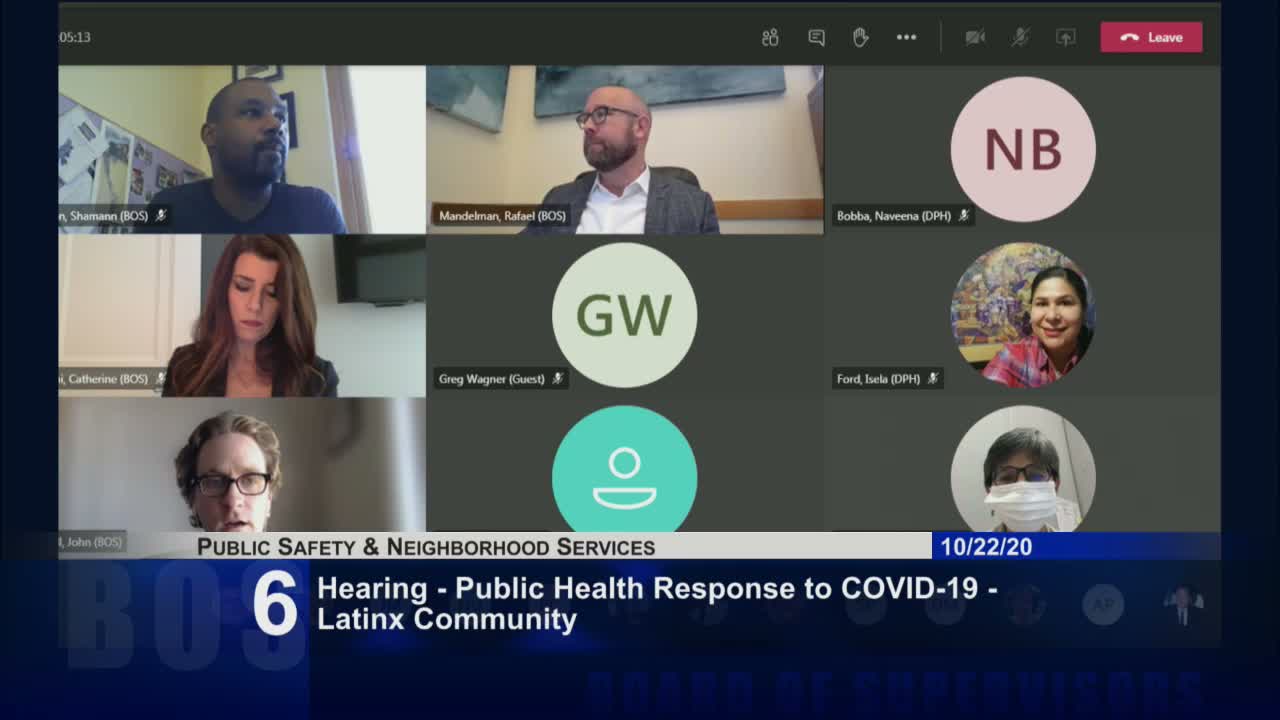
The Public Safety and Neighborhood Services Committee heard an overview Oct. 22 of San Francisco’s COVID‑19 testing strategy, third‑party contracts and budgetary approach as the city shifted from emergency ad hoc contracts to a competitive procurement.
DPH officials described a testing portfolio that includes fixed high‑volume City Test sites, clinical safety‑net sites, contracted mobile pop‑ups and a state asset deployed in the Southeast quadrant. DPH reported the city runs roughly 31 testing sites and has performed hundreds of thousands of tests; city programs provided approximately 50–60% of total testing in the region. DPH said the adaptive test‑and‑respond model uses positivity data to shift mobile and pop‑up sites to neighborhoods with higher case positivity.
Deputy Finance Director Drew Morel said the FY21 testing budget is approximately $58.9 million and that the department has incurred roughly $17 million in testing expenses since July; DPH is seeking to increase billing capacity in contracts to capture insurer reimbursements when appropriate. DPH also noted it had issued an RFP on Sept. 1 seeking competitively sourced testing services to continue operations past emergency amendments; scoring was underway and an award was expected in October but timing was under pressure because of the number of responses.
Public callers expressed concern about contracting transparency and whether certain providers (Color and others) had been favored in early emergency procurements; one speaker asked whether small hospitals such as Chinese Hospital had been paid for earlier testing work. DPH staff said payments were being processed and that contract transitions and enhanced billing provisions were priorities for the new procurement.
Chair Mandelmann moved to file the item after the compressed presentation and public comment; the committee voted to file the hearing (3 ayes). DPH said it will return to supervisors with additional details on contracting, awards and billing.