Get Full Government Meeting Transcripts, Videos, & Alerts Forever!
Get email alerts on the Workplace Safety Covid topic
No spam. Unsubscribe anytime.
Supervisors hear frontline workers, unions and health staff on PPE, sick leave and testing access
Summary
The committee held a hearing on the working conditions of public‑ and private‑sector frontline workers during the COVID‑19 crisis. Labor leaders described PPE shortages, deaths among members and barriers to sick leave; OLSE and DPH described complaint intake, outreach and outbreak response. The committee continued the hearing to the call of the chair for further follow‑up.
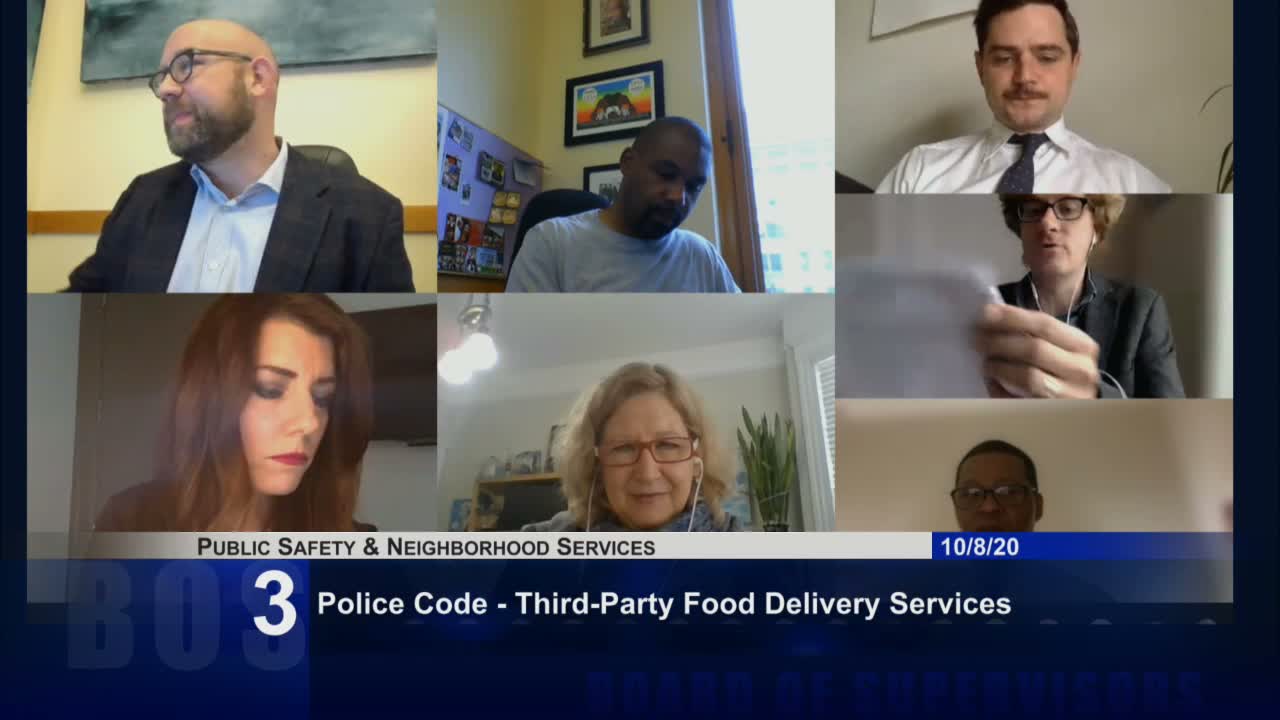
San Francisco supervisors convened a hearing Oct. 8 on the working conditions and protections of frontline workers during the COVID‑19 pandemic, drawing union leaders, delivery drivers and public‑health officials to testify about PPE access, sick‑leave enforcement and contact‑tracing capacity.
Supervisor Safaei opened the hearing and said the goal was to surface both private‑ and public‑sector workers’ experiences and racial disparities in exposure. Pat Mulligan, director of the Office of Labor Standards Enforcement, described OLSE enforcement as primarily complaint‑driven, with an intake assessment typically within one business day and a business‑wide audit period of up to three years when investigations proceed. Mulligan told the committee OLSE has issued more than $8 million in restitution during the state of emergency.
Jessica Bloom, a physician working with the Department of Public Health’s Community Mitigation Branch, outlined the department’s workplace response: case investigations and offers of technical assistance, outreach to employers after a positive case, and outbreak follow‑up (using the California Department of Public Health definition of a workplace outbreak as three or more cases within 14 days). Terrence Hong (environmental health) described on‑site inspections, language access for multilingual operator outreach and steps that may escalate to a city‑attorney referral when operators fail to comply.
Union leaders and workers provided firsthand accounts. Olga Miranda (SEIU Local 97) said janitors often have to provide their own gloves and masks and related that the union has lost members this year; she urged stronger contract protections and employer accountability. A UFCW representative said grocery workers report PPE is provided in many stores but training and consistent implementation are uneven; he also urged public education so employees know and can assert their rights. Fast‑food workers described pressure to work while sick, retaliation for reporting, and problems with ventilation and distancing in small kitchens. A gig‑driver representative criticized platform companies for delayed or inadequate support and for spending heavily on a ballot campaign to alter labor rules.
Supervisors pressed DPH and OLSE on enforcement paths and practical remedies: whether inspectors should document on‑site supply inventories, the process for reporting employers who deny PPE or paid leave, and the city’s contact‑tracing reach. OLSE said it maintains dedicated complaint lines and has conducted extensive outreach to employers; DPH said workplace hub staff reach more than 80 percent of people who test positive and that environmental health follows up on food‑preparation facilities with 2+ cases.
Committee members concluded they were hearing a mix of urgent worker reports and agency descriptions of complaint‑driven enforcement. The committee voted to continue the hearing to the call of the chair and to follow up with worker groups and agencies on steps to improve complaint reporting, PPE distribution logistics and outreach.