Get Full Government Meeting Transcripts, Videos, & Alerts Forever!
Get email alerts on the Overtime And As Needed Workers topic
No spam. Unsubscribe anytime.
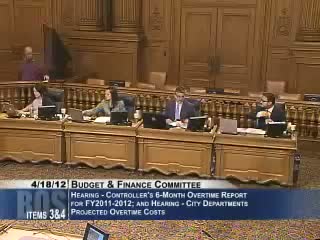
Controller warns of $167M overtime projection; dozens of workers press city on long-term "as‑needed" jobs
Summary
At a joint hearing, the city controller projected roughly $167 million in overtime this fiscal year and departments described staffing and maintenance drivers; public testimony featured extensive testimony from as‑needed workers and unions pressing for conversion pathways and protections.
The Budget and Finance Subcommittee heard the controller’s six‑month overtime report and received detailed department responses and extensive public testimony on the city’s growing reliance on overtime and temporary "as‑needed" workers.
Controller Ben Rosenfield said a straight‑line projection using first‑half spending puts citywide overtime at about $167 million for the fiscal year — roughly $47.2 million (≈39%) over the overtime budget — with about 88% concentrated in five departments (MTA, Fire, Police, Department of Public Health and Sheriff). Rosenfield told supervisors that 252 employees had already exceeded an administrative‑code limit that caps individual overtime at 25% of scheduled hours and that many more could do so if current use continued.
Supervisor Campos framed the hearing around whether better staffing and hiring could reduce overtime. "If the trends continue, the departments here in the city are projected to spend approximately $167,400,000 on overtime," he said, citing the controller’s findings and urging departments to evaluate staffing and use of "as‑needed" labor.
Department witnesses gave varied accounts of drivers and remedies. Fire Chief Joanne Hayes‑White said headcounts have declined substantially in past years and the department is looking to hire a recruitment class of 42 firefighters to reduce mandatory overtime; the department proposed a seasonally adjusted reallocation of existing salary lines into overtime. MTA Director Ed Reiskin cited vehicle maintenance, special events and legacy hiring freezes as causes and outlined hiring and capital fixes to reduce overtime over multiple years. Police Deputy Chief Jim Dudley attributed recent spikes to Occupy‑related operations and dignitary visits; Sheriff CFO Maureen Gannon said the Sheriff projects lower overtime than the controller’s straight‑line projection because first‑half spikes from Occupy and elections are not expected to continue. DPH CFO Greg Wagner said overtime pressures at San Francisco General and Laguna Honda are tied to 24/7 operations, leave coverage and revenue declines that require supplemental appropriations.
Department of Human Resources Director Callahan (DHR) described the city’s temporary "as‑needed" (temporary exempt) categories, noting that while ~21% of headcount fall into temporary‑exempt classifications by class, only ~13.8% were active on the most recent payroll and as‑needed hours make up about 7.3% of SEIU miscellaneous unit hours. Callahan explained that as‑needed workers are limited to 1,040 hours in a 12‑month period for benefits eligibility, receive limited health/retirement benefits until thresholds are met, and that converting as‑needed positions to permanent status requires merit‑system exams and often faces legal and procedural constraints.
The bulk of public testimony — more than 40 speakers — came from current as‑needed workers, union representatives and health‑care staff who described years of repeated short‑term hires, loss of benefits, alleged retaliation when workers testified publicly, and disruptions in continuity of care at hospitals. Marco Serpas, who identified himself as an as‑needed testing technician with 21 years of service, said: "Exempt as‑needed workers are the ugly stepchildren of city and county employment with no Kaiser type health care, no retirement and a limit on the hours we can work." Multiple DPH hospital employees described rotating six‑month cohorts of workers at San Francisco General and Laguna Honda that undermine continuity for patients and for experienced staff.
After departments answered questions and public comment concluded, the committee moved to file both items (the controller’s report hearings) without objection. Supervisors and department leaders signaled interest in pursuing hiring, capital investments, stricter overtime monitoring and further examination of the as‑needed classification in negotiations and administrative reviews.
Next steps: The committee filed the hearings for the record; departments were asked to follow up on hiring plans, overtime‑management measures and details about the conversion of as‑needed positions where feasible.