Get Full Government Meeting Transcripts, Videos, & Alerts Forever!
Get email alerts on the Peak Oil Preparedness topic
No spam. Unsubscribe anytime.
San Francisco task force urges planning for 'peak oil,' lists 91 recommendations
Summary
A volunteer Peak Oil Preparedness Task Force presented a 125‑page report to the Government Audit and Oversight Committee arguing San Francisco must integrate rising oil‑price scenarios into planning and pursue local energy control, transit funding and food security; supervisors asked for follow‑up implementation and public commenters pressed for accountability.
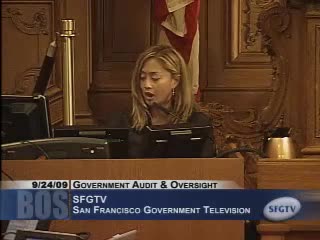
A volunteer task force warned the Board of Supervisors’ Government Audit and Oversight Committee on Monday that San Francisco faces substantial economic and infrastructure risks if it fails to plan for higher, volatile oil and natural gas prices.
"This is a task force that, through legislation that I sponsored and that the board, had passed back in 02/2007, has produced . . . a substantial . . . work product," Chair Ross Mercarimi said as he opened the hearing to receive the task force’s 125‑page report, which contains 91 recommendations.
Jeanne Rosenmeyer, chair of the Peak Oil Preparedness Task Force, told supervisors the report documents local vulnerabilities and proposes practical steps. "We need to consider peak oil when we're planning," Rosenmeyer said, urging scenario analysis, citywide energy audits and measures to strengthen local energy sources and conservation.
The task force's analysis finds San Francisco’s energy use remains heavily dependent on fossil fuels: Rosenmeyer summarized the city’s energy profile as roughly 46% petroleum and 38% natural gas, with wind, solar and small hydro contributing only about 1% (figures presented in the report). The report argues these shares leave the city exposed to price shocks and supply disruptions and recommends integrating rising energy‑price scenarios into budget and planning decisions, improving Hetch Hetchy efficiency, expanding local renewable generation and pursuing feed‑in tariffs or other incentives for distributed power.
Transportation was a central focus. Task force member Ben Lau highlighted ridership increases and declines in vehicle miles driven during 2007–2008, and said the city must expand and diversify Muni funding while planning for regional coordination. Lau cautioned that electrifying passenger vehicles is only a partial solution because of grid constraints: "During the peak hours, California can only really charge about 15% of the fleet," he said, arguing that electrification must be paired with transit, biking and regional planning.
City officials welcomed the recommendations but stressed implementation limits. Jared Blumenfeld, director of the Department of the Environment, called the report "another reason" to accelerate existing city work on local food, energy efficiency and transit, and urged the board to distill the task force's recommendations into clear policy principles or a resolution the city can use when communicating with regional and state agencies. Blumenfeld also noted the state renewable portfolio standard was recently increased and the PUC has begun charging agencies for electricity, both of which affect local strategy.
Ted Egan of the Office of Economic Analysis said his office will consider energy price scenarios in future economic modeling but warned that San Francisco’s economy remains tied to national and global markets. "We will be looking at rising energy prices over the long term," Egan said, adding that local adaptation has benefits but cannot fully substitute for national or international responses.
Public comment ran nearly an hour. Speakers praised the task force’s work and urged concrete follow‑up: calls included expanding food policy and school programs, reestablishing an agricultural coordinator, fast‑tracking Caltrain electrification, using food‑waste digesters, pursuing energy audits of city facilities that pay for themselves, and ensuring biodiesel proposals use sustainable feedstocks. Community groups urged stronger public education so residents understand why policy changes are proposed.
Supervisors signaled interest in further action. Supervisor Eric Marr suggested maintaining a working group to shepherd implementation and to ensure outreach and accountability to low‑income communities; Supervisor Sophie Maxwell emphasized the report’s planning implications for housing and transit. The committee agreed to continue the item for follow‑up and to post the report online; the clerk displayed the report download site as www.sfenvironment.org/peakoil during the meeting.
No formal motions or votes were taken on policy measures at the hearing. Committee members said the next steps would include translating the report into actionable policy items, coordinating with regional agencies, and identifying a staff or community body to track implementation.
The task force report, presenters said, is intended as both a preparedness primer and a call for concrete implementation; supervisors ended the hearing by thanking the volunteer authors and asking staff to return with proposals for follow‑up.