Get Full Government Meeting Transcripts, Videos, & Alerts Forever!
Get email alerts on the Mta Budget topic
No spam. Unsubscribe anytime.
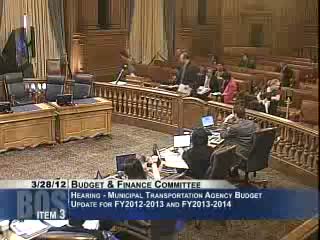
MTA preview: maintenance investments, overtime cuts and a contentious proposal to make Muni free for youth
Summary
SFMTA directors told the committee they propose increased preventative maintenance and a reduction in overtime spending while the board weighs a two-year pilot to make Muni free for youth; staff estimate the universal program would reduce revenue by about $8 million a year, prompting questions about sustainability and trade-offs with maintenance funding.
Ed Ryskin, SFMTA transportation director, previewed an $800 million operating budget and a $400 million annual capital spending profile and described an agenda that emphasizes safety, transit-first policies, maintenance and organizational capacity.
"Our expenditure growth is outpacing revenue growth," Ryskin said, and identified an initial budget gap of roughly $20 million in the first fiscal year and about $34 million in the second year after proposed cuts and investments. To close that gap, the agency is proposing a set of reductions (management cuts already implemented), efficiency measures and targeted investments in maintenance that Ryskin said would reduce breakdowns and improve reliability.
Ryskin described a proposed reduction in overtime from a projected $55–60 million a year to $42 million in the first proposed year and $37 million in the following year, in part through hiring part-time operators enabled by Prop G. He also said the agency is increasing mechanics and maintenance staffing and running focused "campaigns" to improve components that fail most often; on LRVs he cited door and step mechanisms as a focus.
On fare policy, Ryskin summarized a proposal supported by the MTA board to pilot free Muni for youth. He said a universal free program would reduce revenue by roughly $8 million a year; a low-income-only version would reduce revenue by about $4 million. "If we were to make Muni very cheap or free for all ... to undo that in two years would be probably 24 or 25 percent (chance)," Ryskin said when asked about the likelihood of reversing a universal pilot.
Supervisor Wiener and others warned that an unfunded or permanently recurring youth-fare program could pressure maintenance budgets and exacerbate the structural deficit; other supervisors and public commenters including the Youth Commission, advocates and students urged the committee to pilot free youth fares to increase school access and build lifelong transit ridership. Public speakers said they are working to secure permanent funding if the pilot is approved.
Ryskin also outlined revenue options under consideration (citations pass-throughs, expanded meter hours, indexing fare increases, potential vehicle license fees subject to state authorization) and recommended the agency continue targeted pilots and capital investments such as a proposed $150 million geo bond to implement the Transit Effectiveness Program's priority projects.
What happens next: The MTA board will consider the proposed operating and capital budgets and any pilot on youth fares; the Budget and Finance Committee asked the agency to provide further briefings before final action and to return with more detailed implementation and financing scenarios.