Get Full Government Meeting Transcripts, Videos, & Alerts Forever!
Get email alerts on the Dpw Budget topic
No spam. Unsubscribe anytime.
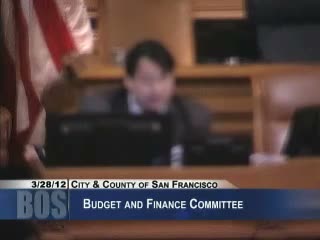
DPW outlines budget cuts, tree relinquishment and bond-funded paving ahead of Prop B work
Summary
Department of Public Works Director Mohammed Nuru told the Budget and Finance Committee the department has trimmed staff and fleet while preserving core street-cleaning services and plans to relinquish about 23,000 street trees over six to seven years; supervisors pressed the department on maintenance, homeowner recourse and staffing funded by the paving bond.
Mohammed Nuru, representing the Department of Public Works, told the Budget and Finance Committee that DPW has prioritized preserving core street services while confronting years of cuts.
"About 70% of the work that goes on in DPW is work orders, bonds, grants and special funds," Nuru said, summarizing the department's revenue mix. He said DPW has reduced general-labor apprenticeship intake and eliminated roughly 47 managerial positions amid four-digit FTE declines since 2008.
The presentation outlined how DPW delivers street cleaning. Nuru said the department operates roughly 46 mechanical sweeper drivers supported by manual crews of about 30 to 40 people; manual crews handle dense neighborhoods and event cleanup where mechanical sweepers cannot operate. He cited legal and neighborhood constraints that limit mechanical sweeping in areas such as North Beach and Mount Davidson.
Supervisors pressed Nuru on the department's tree-relinquishment program. Nuru said San Francisco has roughly 103,000–105,000 street trees, about 40,000 currently under DPW maintenance and about 23,000 proposed for relinquishment over a six- to seven-year plan. "Most of these trees, as you know, when we turn them over, they need to be made whole," he said, adding that trees must meet standards (no sidewalk damage, pruned and acceptable for transfer) and that public hearings are part of the notice process.
Supervisor John Avalos asked what happens if property owners later cannot maintain relinquished trees. Nuru replied that "ultimately it's the property owner's responsibility," but that the department and nonprofit partners run neighborhood events and that an Urban Forestry Council study (funded in part by a California Fire grant) is examining alternative financing and support mechanisms.
Nuru also described workforce plans tied to bond-funded paving: the Prop B street-repaving bond will fund an initial ramp-up to repave roughly 160 residential blocks and create three-year positions to deliver paving, curb-ramp and project management work. He stated DPW has reduced its fleet by about 22 vehicles but still manages "a little over 300" total vehicles, including specialized equipment.
Public comment was brief and supportive of DPW street-cleaning work. The committee continued the item to the call of the chair for follow-up reporting on implementation details of tree relinquishment and the proposed bulky-item pickup realignment with Recology.
What happens next: Committee members requested additional information on the tree-relinquishment rollout, hardship and hearing outcomes, and the department's plans for sustaining apprenticeship pipelines as bond-funded work ramps up.