Get Full Government Meeting Transcripts, Videos, & Alerts Forever!
Get email alerts on the Tourism Improvement District topic
No spam. Unsubscribe anytime.
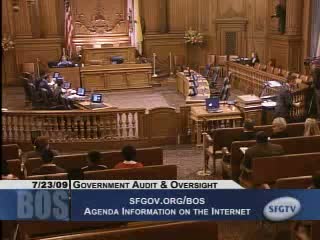
Committee reviews management agreement for San Francisco Tourism Improvement District; chair moves item with recommendation
Summary
The Government Audit and Oversight Committee heard a resolution to approve a management agreement transferring hotel assessment receipts to the Tourism Improvement Districtmanagement corporation; Treasurer's office reported first-quarter receipts of about $3,000,000 and requested a minor amendment to refund interest. Committee moved the item with recommendation; a final vote was deferred.
The Government Audit and Oversight Committee heard a resolution to approve a management agreement between the City and County of San Francisco and the nonprofit owners association that will manage the San Francisco Tourism Improvement District. Chair Ross Mercurimi opened the item and asked staff to present the agreement.
Pauline Marks of the Treasurer and Tax Collector—s Office told the committee the city has begun collecting the district assessments and that "a little more than $3,000,000 came in for the first quarter." She described the office—s role under the proposed agreement as providing collection services including cashiering, mailing, recordkeeping and reconciling, and said the office will supply the district with a list of delinquent accounts but will not begin collecting past-due accounts until a later, mutually agreed time. Marks said the treasurer—s office and the district requested a "very minor amendment" to the collection procedure that would change the interest rate on refunds.
Elise Pagan of the Office of Economic and Workforce Development explained that this tourism improvement district differs from other assessment districts because its assessments are self-reported by hotels and vary as a percentage of each hotel—s revenue; other districts either bill via property tax or a fixed separate bill. That self-reporting structure makes collection more complex, Pagan said.
Supervisors questioned staff about the amendment language and the unique, self-reporting method for hotel assessments. The committee opened the item for public comment and received none. An unidentified committee member moved the amendments and then moved the item "as amended." The committee moved the item with recommendation to the Board of Supervisors; the transcript records the committee action but does not include a roll-call vote or a recorded tally.
Next steps: the committee moved the item with recommendation for referral to the Board of Supervisors. The committee asked to receive a copy of the proposed amendment language prior to final action. The item was not finally adopted at this meeting; further Board consideration is expected as part of the regular referral process.