Get Full Government Meeting Transcripts, Videos, & Alerts Forever!
Get email alerts on the Sf8 Resolution topic
No spam. Unsubscribe anytime.
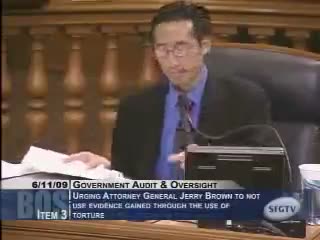
Committee forwards resolution urging AG to reject torture‑based evidence in ‘SF 8’ prosecutions after heated public comment
Summary
The Audit and Oversight Committee voted to send a resolution to the full Board asking the attorney general to reject evidence obtained through torture and drop charges in the San Francisco 8 case; public comment featured strongly divided testimony from police leaders and community human‑rights advocates.
The Governmental Audit and Oversight Committee voted to forward to the full Board a resolution urging California Attorney General Jerry Brown to reject evidence obtained by torture and to drop charges against defendants in the 1971 killing of Sgt. John V. Young — a measure introduced by Supervisor Eric Marr with Supervisors Sophie Maxwell, Ross Miracarimi (name appears with variants in the record) and Chris Daly.
Deputy Chief Kevin Cashman read a June 10 letter from Chief Heather Fong and command staff urging the Board to 'carefully consider' any resolution that touches ongoing criminal proceedings. The letter stated the San Francisco Police Department, the FBI and the California Department of Justice have investigated the matter, that the appropriate venue to evaluate evidence is a court of law, and that budgetary constraints should not affect the commitment to pursue justice for slain officers.
Public comment lasted through many speakers and sharply divided the room. Former SFPD Chief Tony Rivera, Captain David Lazar of Ingleside Station and leaders of the San Francisco Police Officers Association urged the committee not to interpose a legislative statement into an ongoing criminal case, called for deference to the courts, and characterized the resolution as a political intrusion that would be hurtful to officers and victims’ families. The Police Officers Association repeatedly asked the board to allow the criminal process to proceed without legislative interference.
Speakers supporting the resolution included Jay Sophia Elijah (legal adviser to the SF 8 and deputy director at Harvard Law School’s Criminal Justice Institute), Judy Siff and other community advocates who argued the prosecution rests on coerced confessions obtained through torture in New Orleans and elsewhere and that San Francisco should not legitimize torture‑based prosecutions. Speakers who supported the resolution framed it as a human‑rights stance consistent with constitutional and international norms.
Committee members noted the emotional intensity of the panel and that the resolution is non‑binding policy expression rather than law. After hearing both sides, Supervisor Maxwell moved to forward the resolution with the committee’s recommendation; the two committee members present supported the motion and the item was sent as a committee report to the full Board for its June 16 meeting.
The committee action does not change the status of the criminal proceedings; the resolution would be an expression of the Board’s position to the state Attorney General and would not itself vacate charges or direct prosecutorial action.