Get Full Government Meeting Transcripts, Videos, & Alerts Forever!
Get email alerts on the Performance Measurement topic
No spam. Unsubscribe anytime.
Civil Grand Jury Faults City's Performance-Measurement System; Officials Promise Responses
Summary
The civil grand jury released a report finding San Francisco's performance metrics fragmented and poorly managed, recommended a chief performance officer and stronger executive leadership; controller and mayor's office officials acknowledged the report and said they will improve public reporting and issue formal written responses.
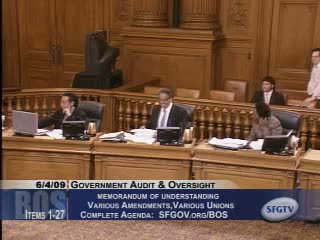
The Government Audits and Oversight Committee heard the civil grand jury's report "The Numbers Have Something to Say. Is Anybody Listening?" which concluded San Francisco's performance-measurement system is fragmented, often lacks external benchmarks and does not provide clear, citywide accountability.
Leonard Kelly, the civil grand jury foreperson, and John Murphy, chair of the grand jury's performance-measurement committee, outlined 15 findings and 15 recommendations. The jury said departments frequently set internally determined targets at achievable levels, adjust targets midyear and omit external benchmarks; it cited the fire department's 8-minute 90%-of-incidents first-unit response target and contrasted that with the National Fire Protection Association's 6-minute benchmark. The grand jury recommended stronger executive leadership, including establishing a chief performance officer to coordinate measures and ensure the database supports both granular management and public roll-ups.
Peg Stevenson, director of the City Services Auditor Division in the Comptroller's Office, thanked the grand jury for its work and outlined the controller's performance tools under Charter Appendix F: a performance-measurement database (now linked to the budget database), annual maintenance standards for parks and streets, citizen surveys and support services for the mayor and board. Stevenson said the controller will roll out a "performance barometer" in the coming fiscal year to present measures more accessibly and acknowledged that public presentation can improve.
Representatives from the mayor's office, including Starr Terrell, said they were drafting a formal written response and described SF Stat, the mayor's accountability matrix and the strategic pillars as tools the executive uses to track departmental performance; they said those tools are being retooled and that SF Stat will continue as a venue for focused problem-solving (the office cited overtime as a recent example).
Controller staff and the grand jury contested some methodology claims: the controller's office said it discourages routine midyear target changes and that many departments enter data at least twice yearly; the grand jury countered that the database often lacks granular inputs that would allow accurate roll-ups and recommended technical and managerial changes, including locating performance leadership outside the controller's audit remit.
Committee members expressed interest in more detail on which departments responded to the grand jury's survey and asked for cost estimates for the collection and reporting tools. The grand jury said it collected responses from a subset of departments and can provide more detail subject to grand-jury rules; controller staff said software costs and key staffing levels were known and that many measurement processes require staff time across the organization.
The committee closed public comment and asked departments and the mayor's office to deliver formal written responses to the grand jury's recommendations. Members signaled they may return for a follow-up hearing to examine implementation and potential legislative refinements.