Get Full Government Meeting Transcripts, Videos, & Alerts Forever!
Get email alerts on the Sro Preservation topic
No spam. Unsubscribe anytime.
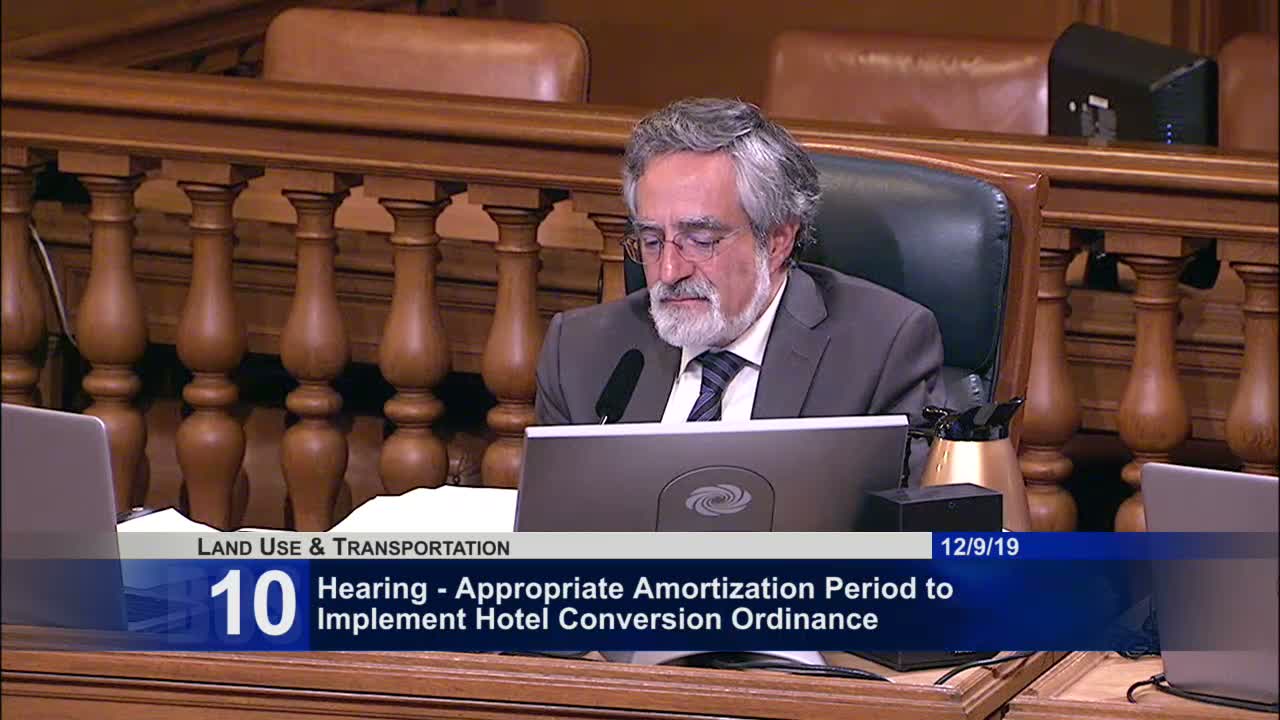
Committee holds informational hearing on hotel‑conversion amortization; continues item for analysis
Summary
Officials held an informational hearing on amortization periods for the hotel‑conversion ordinance (Chapter 41), heard widespread tenant concerns about illegal tourist conversions of SROs, and continued the discussion one week to allow owners, tenants and city staff to provide fiscal and technical information on amortization timelines.
The committee held a prolonged informational hearing on the appropriate amortization period for implementing Chapter 41 — San Francisco’s residential hotel (SRO) conversion and demolition controls — and continued the matter for a follow‑up session.
DBI presented the legal and enforcement history of Chapter 41 (the hotel conversion ordinance), describing its original 1981 purpose to preserve residential guest rooms used as permanent housing, the 2017 amendments and subsequent litigation that changed definitions for tourist or transient use. DBI staff outlined enforcement challenges, including reliance on owner‑submitted unit‑usage reports, falsified or second sets of records, misuse of the temporary conversion exception, vacancy/warehousing of rooms, and limited statutory authority for DBI to initiate conversion enforcement actions without complaints.
Representatives from the mayor’s Office of Housing and Community Development and the Department on Homelessness and Supportive Housing described the city’s small‑sites acquisition program and master‑lease strategies for preserving and converting at‑risk buildings to long‑term affordable housing or supportive housing. MOHCD said the small‑sites program has grown from a $3M pilot to roughly $86M in committed funds and has preserved nearly 35 buildings (290 units) to date, with some SRO preservation projects included.
Tenant advocates, SRO residents and labor groups urged stronger enforcement and an enduring prohibition on converting rent‑controlled residential rooms to tourist use. They cited examples where self‑reported hotel records contradict on‑the‑ground conditions and called for better verification and penalties to stop illegal weekly and short‑term tourist rentals that remove affordable housing from the market.
Hotel owners’ representatives and counsel raised fiscal and legal concerns about amortization: owners said converting to long‑term tenants changes revenue models (short‑term rates can be higher per‑night than monthlies), presents capital and operating cost challenges (staffing, insurance, mortgage obligations), and may require significant time for owners to recoup investments or to sell. Owners’ counsel asked for a stakeholder process to provide amortization analyses that would rely on confidential financial data and warned that public disclosure of sensitive owner financials in committee would be inappropriate.
Given the complexity and confidential fiscal issues, the committee closed public comment and continued the item for one week to allow owners and city staff to provide amortization analyses and other requested information.
What happens next: The committee will reconvene next Monday to review amortization data and discuss potential enforceability changes to Chapter 41; DBI and housing departments were asked to supply further technical and fiscal information.