Get Full Government Meeting Transcripts, Videos, & Alerts Forever!
Get email alerts on the Surveillance topic
No spam. Unsubscribe anytime.
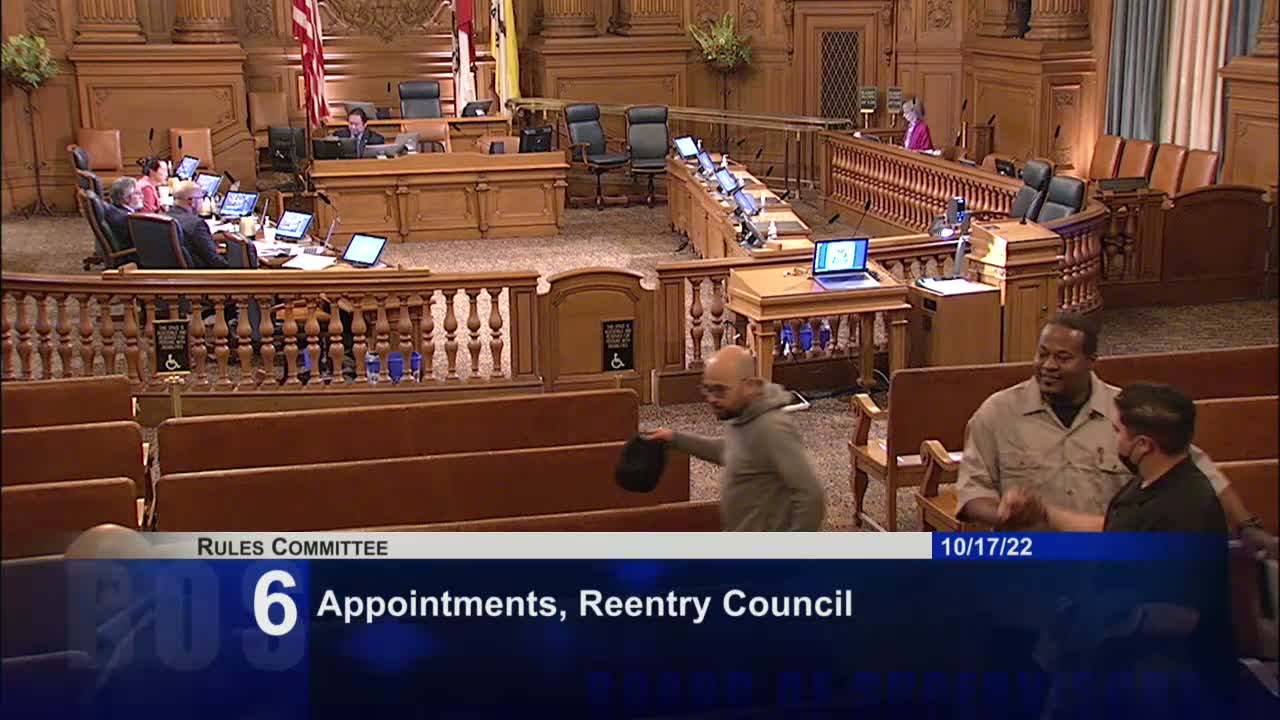
Rules Committee continues surveillance technology and police‑equipment policies after privacy and reporting concerns
Summary
The committee continued an ordinance on surveillance-technology policies (Rec & Parks body-worn cameras, Elections Department and airport cameras) and amended and continued a police equipment policy ordinance after members raised privacy and reporting questions, including concern about a third‑party tennis app mining personal data.
On Oct. 17 the San Francisco Board of Supervisors’ Rules Committee discussed two related sets of items: an ordinance approving surveillance-technology policies for city departments and an amendment package to an administrative-code ordinance requiring Board approval for certain police equipment policies. Committee members voiced privacy and transparency concerns and continued both matters for further work and clarification.
Chair Aaron Peskin summarized red-line amendments sent by departments and asked deputy city attorneys to fold them into the ordinance. He flagged a specific privacy concern about a third‑party tennis reservation application (Spottery) used for Rec & Parks reservations, saying the application’s current permissions could expose private contacts and “friends lists” to third parties.
Deputy City Attorney Anne Pearson told the committee that circulated amendments remained in draft form and were not yet approved as to form; the committee therefore did not take final action and agreed to continue the surveillance item to Oct. 24 for further drafting and review.
Separately, committee members considered an amendment package to the police‑equipment ordinance that would change internal code references (from “96 gs” to “96 h” and related cross‑references). Supervisor Connie Chan said she remains concerned about approving a list of equipment categories that largely reflects the Police Department’s existing inventory and asked for clearer annual reporting on deployments, frequency of use, purpose and outcomes.
After discussion the committee adopted non‑substantive code‑reference amendments on the record and voted to continue the police‑equipment item one week so staff can incorporate clarifications requested by supervisors. Committee members said they expect follow‑up materials, including a draft of the Police Department’s annual report format and clearer policy language about authorized uses and deployment reporting.