Get Full Government Meeting Transcripts, Videos, & Alerts Forever!
Get email alerts on the Ethics topic
No spam. Unsubscribe anytime.
Rules Committee advances ordinance tightening rules on ‘behested’ payments
Summary
The Rules Committee unanimously voted to send to the full Board an ordinance that narrows when solicited charitable donations tied to city contracts or permits create conflicts of interest, citing the controller’s integrity review after the Mohamed Nourou scandal.
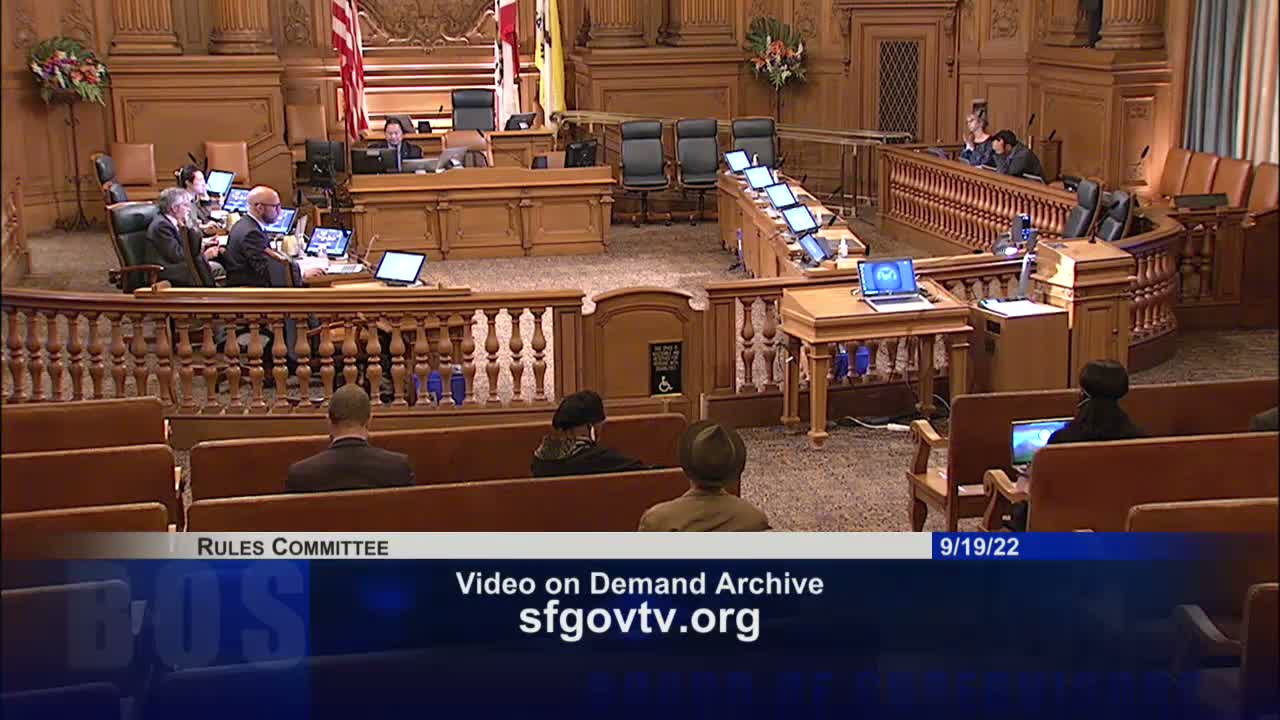
The San Francisco Board of Supervisors’ Rules Committee on Sept. 19 advanced an ordinance that would further regulate so-called “behested” payments — donations solicited at the request of an official — moving the measure to the full board as a committee report.
Chair Aaron Peskin, who introduced the item, said the proposal grew from a public-integrity review by City Controller Ben Rosenfield following the Mohamed Nourou controversy. Peskin said the reforms are intended to narrow abuses while not chilling philanthropy. "It was not meant to chill philanthropic giving, but it certainly was meant to stringently regulate it," he said.
The ordinance, as read into the record by Rules Committee clerk Victor Young, would amend the campaign and governmental conduct code to modify when the acceptance of certain payments or solicitations tied to city discretionary permits or contracts makes a person an "interested party." It also exempts solicitations connected to the city’s acquisition of real property and clarifies other technical applications.
Public commenters expressed a mix of support and concern. Catherine Howard and other callers urged strict limits on undue influence. David Pilpel, who testified remotely, said the file contains proposed amendments that were not incorporated and urged the committee to allow departments and the ethics commission to provide formal analysis before forwarding the measure. "I have no understanding of how this would affect contracts at all city departments," Pilpel said, asking the committee to either adopt the amendments in committee or seek departmental memoranda.
Peskin said the ethics commission had conducted two meetings and prepared analysis that was available in the commission’s file in August; he moved the set of amendments that had been in the file and then moved to send the item as amended to the full board. A roll call recorded Supervisors Connie Chan, Rafael Mandelman and Peskin voting "aye." The motions passed without objection.
The ordinance’s legislative digest and the ethics commission materials are in the public file; the committee’s action sends the amended ordinance to the full Board of Supervisors for consideration.