Get email alerts on the Wireless Permitting topic
No spam. Unsubscribe anytime.
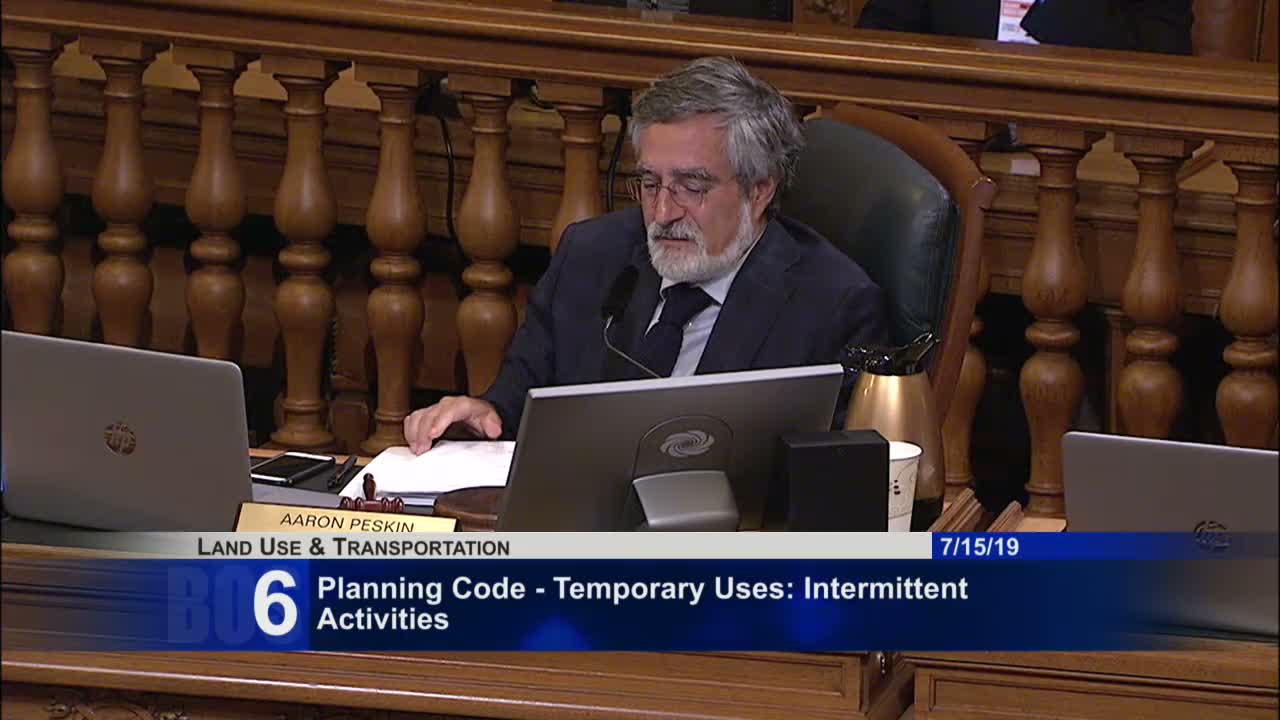
Committee forwards Public Works code changes to speed wireless-permit timelines and add objective design criteria
Summary
The committee advanced amendments to Article 25 of the Public Works Code to shorten wireless-permitting timelines to align with an FCC shot‑clock interpretation, add objective design standards, and streamline agency referrals; Public Works and SFPUC/MTA support the revisions, while some public commenters raised health and safety concerns and objections to PG&E.
Public Works presented proposed amendments to Article 25 that would streamline the process for personal wireless facility permits in the public right of way and incorporate objective, publicly available design standards to comply with a September 2018 FCC interpretation that establishes a permit 'shot clock' (60 days for existing facilities, 90 for new facilities).
Deborah Lutzky of Public Works told the committee the revised process would reduce permit issuance timelines from the current range (90–180 days) to roughly 45–60 days by performing objective design review within Public Works, maintaining SFPUC and SFMTA master license agreements, and reducing referrals. The amendments propose specific process distinctions for PG&E poles (Public Works retains permitting) and for SFMTA/SFPUC poles (those agencies would review under their license agreements).
Lutzky said the objective design standards have been drafted in coordination with Planning and the Department of Technology and that SFPUC and SFMTA support the approach. The proposal would remove the neighborhood protest period while preserving the appeal process.
Public comment included an objector who alleged health risks from wireless facilities near schools and tied broader concerns to PG&E’s equipment and historic wildfires; the committee noted those comments and the Chair referenced prior Board opposition to a PG&E bailout. Deputy city attorney Sanders and staff recommended non‑substantive clerical edits, which the committee accepted; the committee forwarded the item to the full Board with a positive recommendation.
What happens next: the ordinance will be scheduled for Board consideration; staff and involved agencies will finalize objective design standards and any implementing guidance.
AI generated
The text on this page is AI generated. Summaries, highlights, analysis, and video transcripts are all produced from the original source material.
AI can make mistakes, so if you spot one, and we will fix it for everyone.
Note: the source content is unaltered by us. Any content source we link to, be it a video, an audio recording, or a document, is presented exactly as its publisher released it. That publisher is usually a government body, sometimes an individual official or another organisation.