Get Full Government Meeting Transcripts, Videos, & Alerts Forever!
Get email alerts on the Municipal Bonds topic
No spam. Unsubscribe anytime.
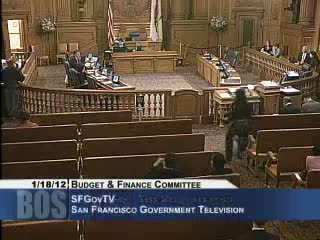
Budget panel advances three bond sales, places $7.7 million parks playfields appropriation in reserve
Summary
The Budget & Finance Committee voted to recommend sales of three general‑obligation bond series for parks, earthquake safety and road repaving, but placed $7,700,000 of the Clean & Safe parks playfields appropriation on committee reserve pending further project details and CEQA review.
The San Francisco Board of Supervisors’ Budget and Finance Committee on Tuesday recommended that the full Board approve the sale and appropriation of three general‑obligation bond series — Clean & Safe Neighborhood Parks (2008), Earthquake Safety and Emergency Response (2010) and Road Repaving and Street Safety (2011) — but voted to hold $7,700,000 of the parks playfields appropriation in a committee reserve.
Chair Carmen Chu opened the presentation and asked Brian Strong, director of the Capital Planning Program, to summarize the proposals. Strong said the combined sale would raise roughly $331 million for park projects, public‑safety facilities and street improvements and estimated the packages would support “about 2,100” local construction and indirect jobs.
The committee heard detailed project lists from Recreation & Park staff for the parks bond, including roughly $63 million for twelve named park reconstructions and enhancements, restroom restorations, trail repairs and the Pier 43 Bay Trail link. Budget analyst Severn Campbell recommended a modest technical reduction to the neighborhood park contingency and noted the sale would add about $14.30 a year in property taxes to a $500,000 single‑family home for the parks tranche.
Public commenters asked the committee to delay funding for portions of the parks measure tied to the Beach Chalet playfields and other sites while environmental review is pending. Tom Radulovich, executive director of Livable City, said the city has at times failed to implement its Better Streets and Complete Streets standards on repaving projects. Nancy Werfel and others argued the $7.7 million earmarked for playfields should be excluded from the sale because CEQA clearance for the Beach Chalet project has not been completed and the Coastal Commission has registered concerns.
Deputy City Attorney Cheryl Adams confirmed the Board may legally authorize bond sales and appropriate funds while CEQA review is pending, but she said departments may not spend money on a project until environmental review is finished. Rec & Park staff said portions of the appropriation are commonly used to fund environmental review and design work (they cited roughly $600,000–$700,000 for environmental review cost estimates), but that final project allocations would be determined by the Rec & Park Commission and philanthropic partners.
After deliberations about oversight and safeguards, Supervisor John Avalos moved to place $7,700,000 of the parks playfields appropriation into a Budget & Finance Committee reserve pending a departmental report and further action; the roll call was Avalos — aye; Kim — aye; Chu — no. The motion passed 2–1. The committee then moved items 1 and 2 (earthquake safety bonds), items 5–7 (road repaving and street safety), and items 3–4 (parks bond and authorizing resolution) forward to the full Board with recommendations.
The roads bond presentation included a list of first‑series work: the department expects to repave roughly 424 blocks, build about 620 curb ramps and complete some 84,000 square feet of sidewalks in the initial issuance. SFMTA staff described approximately $4 million in signal‑priority upgrades tied to paving coordination, including plans to change the California & Powell intersection control to a signal to reduce cable‑car collisions.
The committee’s action forwards the sales to the full Board for final approval and leaves oversight options open: supervisors expressed plans for follow‑up hearings and for requiring departmental reports before any reserved funds are released. The committee emphasized that appropriation does not permit construction to proceed until CEQA requirements are met and any appeals are resolved.