Get Full Government Meeting Transcripts, Videos, & Alerts Forever!
Get email alerts on the Waste Reduction Bag Fee topic
No spam. Unsubscribe anytime.
Committee backs Brown's proposal to raise bag charge to 25¢ and ban plastic pre‑checkout bags, sends amended ordinance to full Board
Summary
Supervisors advanced an updated environmental code that would raise the checkout bag fee from 10¢ to 25¢, ban plastic pre‑checkout bags and define compostable requirements; the committee adopted technical amendments and forwarded the item to the full Board with a recommendation.
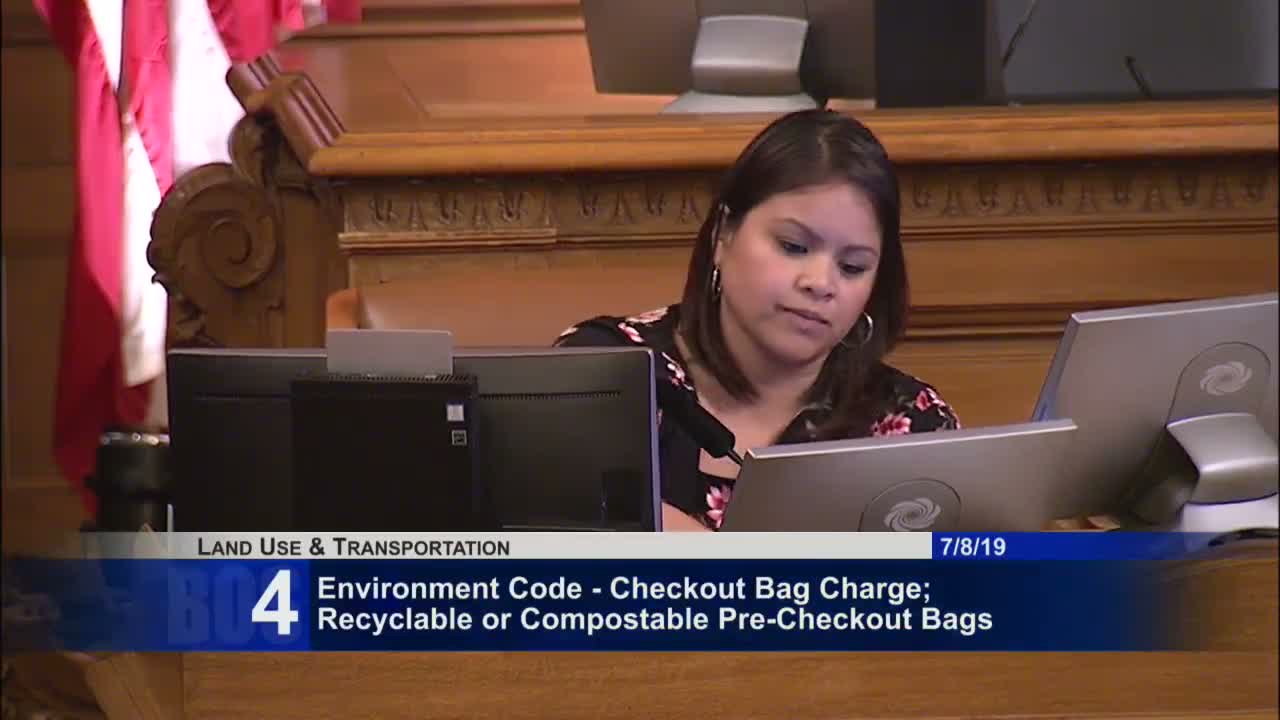
Supervisor Jane Brown introduced an ordinance July 8 to raise San Francisco’s checkout bag charge from 10¢ to 25¢ and to prohibit plastic pre‑checkout (produce) bags, requiring those bags to be paper or meet compostable labeling and ASTM verification standards. Director Debbie Raphael of the Department of the Environment told the committee that many stores now distribute thicker 'reusable' plastic bags that are rarely reused and often contaminate compost streams; department surveys show about 40% of stores offer only plastic checkout bags and a significant share of produce bags are plastic.
Brown and staff argued raising the fee to 25¢ — a level other California cities have adopted — prompts behavior change and, paired with an education and giveaway campaign, should increase reusable‑bag uptake. Staff said they will set baseline data before the ordinance takes effect, target giveaways and outreach to neighborhoods with low reusable uptake, and exempt recipients of public assistance from the fee. Department staff also proposed detailed standards for 'compostable pre‑checkout bags' (color, ASTM certification, minimum width to fit most kitchen compost pails and clear labeling).
Supervisors pressed on distributional effects, enforcement, and oversight of how retailers use the bag fee revenue (it stays with retailers under state law), and asked how gains in uptake would be measured. Planning and environmental staff committed to targeted outreach to corner grocers and to using budgeted funds for strategic reusable‑bag distribution. Public testimony included environmental advocates supporting the measure and industry representatives noting they can supply compliant bags.
The committee approved sponsor technical amendments (including clarifications referencing California labeling law and ASTM D6400 standards and setting visible green coloring and 15‑inch minimum mouth width) and forwarded the ordinance as amended to the full Board with a recommendation without objection.
Next step: item goes to the full Board; department will set baseline data, conduct outreach, and finalize regulations and enforcement mechanisms.