Get Full Government Meeting Transcripts, Videos, & Alerts Forever!
Get email alerts on the Gig Workers Ab5 Hearing topic
No spam. Unsubscribe anytime.
Supervisors hear hours of testimony on Dynamex and AB 5; committee to introduce resolution supporting AB 5
Summary
San Francisco supervisors and labor advocates gathered June 28 for a lengthy hearing on gig‑economy worker classification; city and state labor officials explained the Dynamex/ABC test and the differences with Borello, dozens of workers and unions urged passage of AB 5, and the committee agreed to introduce a resolution supporting AB 5 and to 'hear and file' the record.
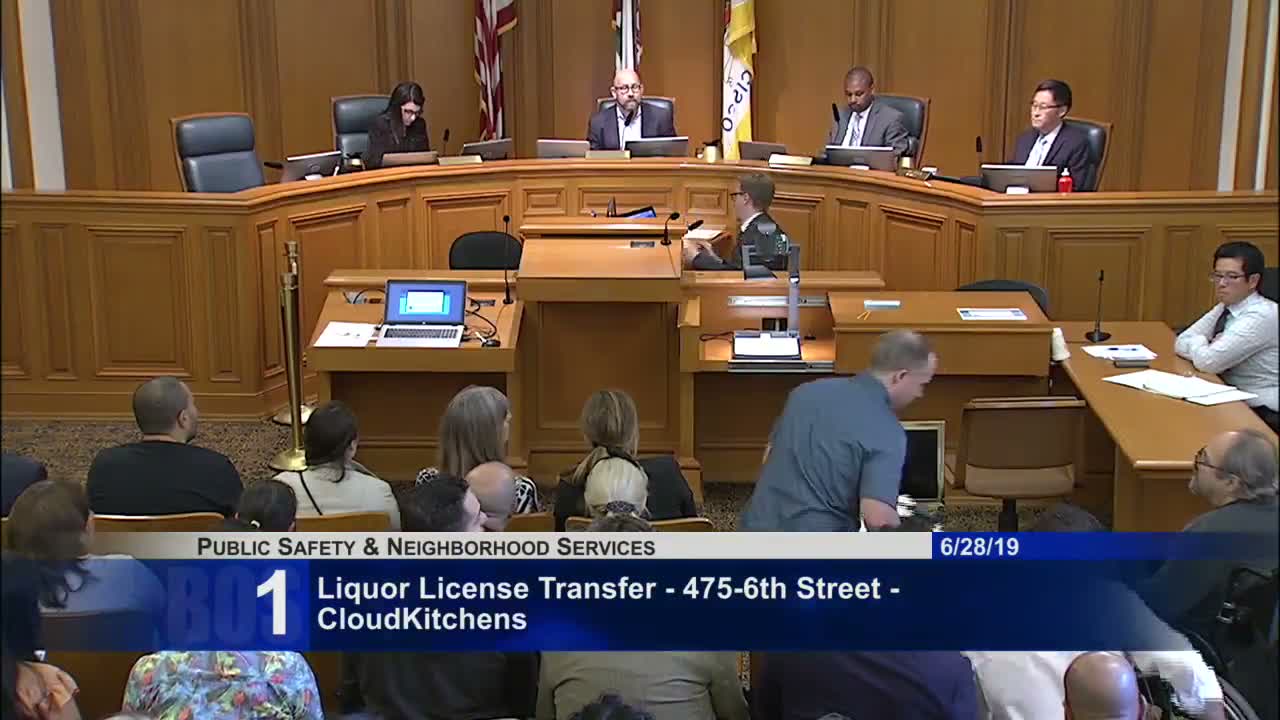
San Francisco’s Public Safety and Neighborhood Services Committee spent the bulk of a June 28 special meeting on a hearing about worker classification in the gig economy, the 2018 California Supreme Court Dynamex decision and California Assembly Bill 5 (AB 5). After presentations by city and state labor officials and researchers, dozens of drivers, domestic workers and labor representatives urged the supervisors to support AB 5 and to use local authority and data to enforce labor protections.
Pat Mulligan of the Office of Labor Standards Enforcement (OLS) told the committee how OLS investigates and enforces local labor laws: intake and assessment, investigative audits (payroll review and site visits), determinations and, where appropriate, settlements or appeals. Mulligan said the office often faces two recurring obstacles in gig‑economy cases — employer misclassification arguments and refusal by companies to provide payment and benefit data needed for audits — and that state legislative clarification would aid local enforcement.
Miles Lockyer, an attorney appearing for the California State Labor Commissioner, explained the legal tests that determine employee status. For wage‑order protections the California Supreme Court’s Dynamex decision endorses the so‑called "ABC" test: a hiring entity must prove all three parts to establish independent‑contractor status; if it cannot prove any one part the worker is treated as an employee for those wage‑order protections. Lockyer contrasted ABC with the older Borello multi‑factor test applied under the Labor Code outside wage orders and said Borello adds litigation complexity and uncertainty.
Ken Jacobs of the UC Berkeley Center for Labor Research and Education addressed AB 5, which would codify Dynamex and extend the ABC test to the Labor Code and unemployment insurance code. Jacobs reviewed earnings studies and cited New York City’s Taxi and Limousine Commission pay‑standard approach as one model for setting minimum on‑platform earnings and accounting for utilization and expenses.
Worker organizers and dozens of public commenters described low net earnings after expenses, deactivation practices, lack of benefits and health and safety concerns. Rebecca Stack Martinez, a leader with Gig Workers Rising who has driven for Uber and Lyft, said after expenses many drivers make under the San Francisco minimum wage; she cited Economic Policy Institute figures and urged supervisors to support AB 5. Union and community groups including SEIU locals, Teamsters, the National Domestic Workers Alliance and the San Francisco Labor Council spoke in favor of the resolution.
Following the testimony, Chair Rafael Mandelmann said the committee will introduce a resolution in support of AB 5 and directed staff to consult with the city attorney and enforcement agencies about local options. The committee moved to have the hearing "heard and filed;" Mandelmann said he expected the resolution would be unanimous when introduced to the full board.
Next steps: the committee will prepare a resolution supporting AB 5 and pursue enforcement and local regulatory options where lawful; AB 5 is pending in the state legislature and any local action will operate alongside state proceedings.