Get Full Government Meeting Transcripts, Videos, & Alerts Forever!
Get email alerts on the Senior Housing topic
No spam. Unsubscribe anytime.
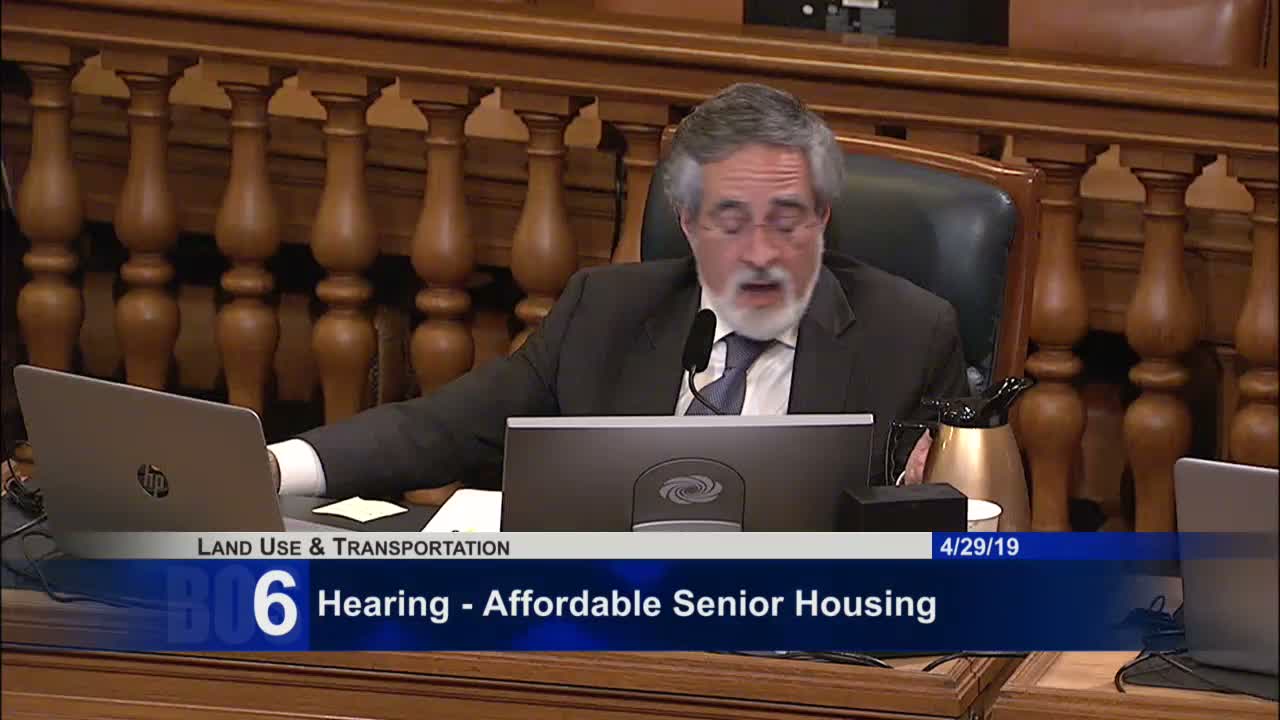
Hundreds testify on senior housing needs; advocates push bond priorities for deeply affordable units
Summary
The committee held a wide‑ranging hearing on the city's senior affordable housing resources. Departmental presenters outlined existing senior set‑asides and pipeline units; dozens of speakers urged the Board to prioritize deeply affordable (≤30% AMI) senior housing, small‑site acquisition, rental subsidies and 750 additional senior units in the upcoming housing bond.
The Land Use and Transportation Committee convened a hearing on April 29 to assess the city’s affordable housing resources for seniors and to gather public input that supervisors said would inform a proposed housing bond.
Shereen McFadden (Department of Aging and Adult Services) and Amy Chan (Mayor’s Office of Housing and Community Development) presented demographic and portfolio data. McFadden said there were roughly 172,450 seniors (age 60+) in San Francisco in the American Community Survey five‑year estimates and that many seniors are rent‑burdened; she noted the department’s in‑home supportive services program serves about 25,000 people annually. Chan said MOHCD manages roughly 5,500 units set aside specifically for seniors—about a quarter of the city’s 100% affordable inventory—with additional HUD‑funded senior units that include rental subsidies. Chan also described a pipeline of nine sites with 778 senior set‑aside units and stressed HUD funding declines have constrained new senior development.
Public testimony filled the chamber. Dozens of speakers—senior advocates, nonprofit providers, tenant organizers and seniors themselves—urged the Board to increase the share of deeply affordable senior housing (30% AMI or lower), prioritize small‑site acquisition and preservation, expand rental subsidies and ensure geographic parity across neighborhoods. The senior housing bond working group recommended adding roughly 750 additional senior units beyond the current pipeline and allowing bond funding for new independent senior housing, residential care facilities and small‑site acquisition.
Speakers included representatives from Senior and Disability Action, Chinatown Community Development Center, the Richmond Senior Center, downtown streets and multiple community service providers. Testimony included personal accounts: a formerly homeless senior living in a van, long waiting lists for senior set‑asides, and cases of seniors who cannot meet minimum income thresholds for current affordable projects. Advocates highlighted that many seniors on SSI or Social Security have median household incomes near $21,900—below common affordable‑housing AMI thresholds used in programs.
Supervisors thanked presenters and the public and emphasized the importance of adding senior priorities to the November bond. The committee voted to file the item; members said they would press to include deeper affordability, preservation and geographic balance in the bond design and other policy work.
Next steps: the hearing record and recommendations will be carried into bond deliberations and additional policy proposals (jobs‑housing linkage fee changes, preservation strategies, and rental subsidies) identified for further work.