Get Full Government Meeting Transcripts, Videos, & Alerts Forever!
Get email alerts on the Sro Policy topic
No spam. Unsubscribe anytime.
Supervisors advance SRO disclosure measure; debate over 30‑day minimum-stay continues
Summary
The committee forwarded an ordinance requiring residential-hotel status reports and buyer disclosure to the full Board with a positive recommendation, while debate continued over a related change to a 30‑day minimum stay for hotel conversions; tenant advocates supported disclosure, SRO operators warned a 30‑day rule risks displacement.
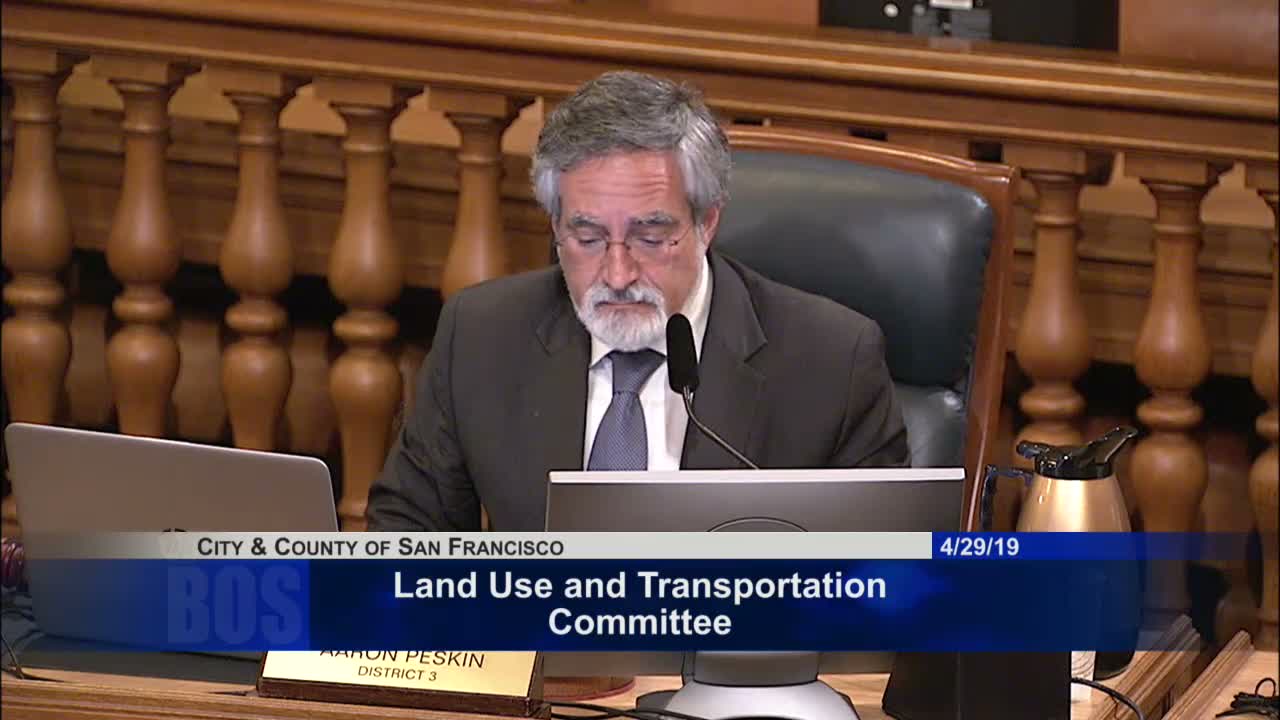
The Land Use and Transportation Committee on April 29 forwarded an ordinance that would require a report on a building’s residential‑hotel (SRO) status and disclosure of life‑safety and habitability violations to a buyer or transferee, aiming to ensure purchasers know the likely costs to bring older buildings up to current codes.
Chair Aaron Peskin said the measure would protect longtime low‑income residents in neighborhoods such as Chinatown, North Beach, the South of Market and the Mission by making any and all life‑safety and health violations transparent before a sale and requiring new owners to cure problems within 12 months. "New owners should know what they're investing in and what will be required for them to keep their residents safe," Peskin said.
Tenant advocates and nonprofit groups testified in support of the disclosure proposal. David Elliott Lewis of the Central City SRO Collaborative said SROs are a vital form of very low‑income housing and urged the supervisors to act "to help preserve and protect this vital form of extremely low income housing." Dionne Roberts, executive director of Mary Elizabeth N. (as stated in the record), also told the committee that full disclosure of building status would help preserve housing for the city's homeless population.
SRO operators and owners strongly opposed a related ordinance change before the committee that would tighten the definition of "tourist or transient use" and shift a 32‑day threshold to 30 days. Ryan Patterson, representing the San Francisco SRO Hotel Coalition, told the committee procedural notice had been inadequate and litigation is pending; he warned that "If you impose a 30 day requirement, you will be taking away their business," arguing many operators rely on weekly rentals to remain solvent and that a month‑long minimum would force rooms off the market and push some occupants into homelessness.
Other operators echoed that view, saying many of their guests cannot afford first‑and‑last month deposits and would not qualify for month‑to‑month tenancies. Supporters of the proposed change, including tenant advocates and members of Chinatown Community Development Center, said the adjustments were needed after a 2017 fire and to ensure safety and affordability.
Procedurally, the committee dispensed with item 1 (the disclosure/report measure) and forwarded it to the full Board of Supervisors with a positive recommendation "without objection." The related ordinance revising the tourist/transient definition (item 2) was continued for one week to allow further review and re‑noticing and to consider city‑attorney amendments.
Next steps: item 1 will appear on the full Board agenda on May 7; item 2 was continued for further consideration.