Get Full Government Meeting Transcripts, Videos, & Alerts Forever!
Get email alerts on the Homelessness During Extreme Weather topic
No spam. Unsubscribe anytime.
Supervisors press city departments on shelter thresholds, sweeps and tent confiscations during extreme weather
Summary
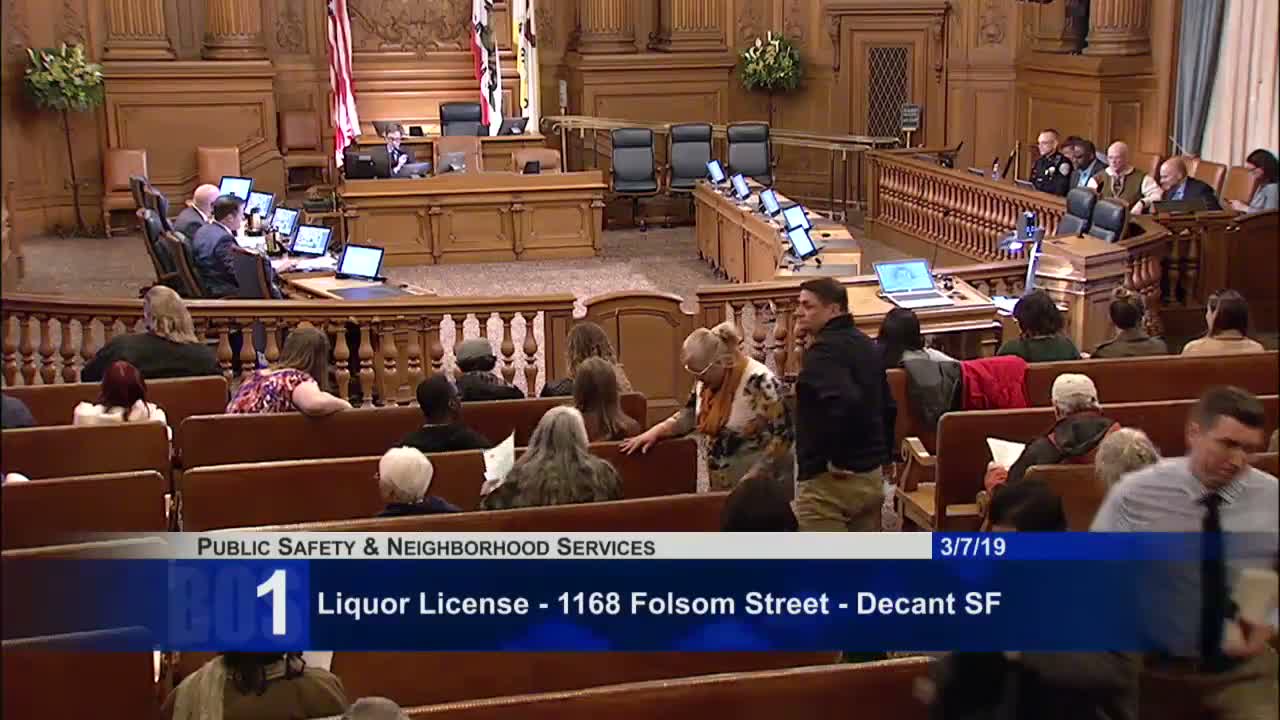
At a March 7 committee hearing, city emergency and homeless services staff described limited shelter expansions during recent storms and urged changes to activation thresholds and communication; advocates demanded a ban on sweeps and cited frequent confiscation of tents and personal property.
San Francisco supervisors and community advocates on March 7 pressed city agencies for clearer, more humane procedures to protect people experiencing homelessness during extreme weather after recent storms exposed gaps between written protocols and street practice.
Supervisor Matt Haney opened the Public Safety and Neighborhood Services Committee hearing by saying the goal was to "seek clarity, to seek consistency, and to seek change" in how the city responds during storms. Haney and other supervisors repeatedly questioned Department of Homelessness and Supportive Housing (HSH), the Department of Emergency Management (DEM) and the San Francisco Police Department (SFPD) about when protocols trigger shelter expansions, how outreach and reservations work, and whether enforcement practices — including citation and confiscation of tents — are compatible with providing humane shelter.
Bijan Karimi, acting deputy director for emergency services at DEM, walked the committee through a recent storm as a case study: the National Weather Service provided forecast updates and a flash flood watch that prompted citywide coordination calls, situation reports and public messaging via AlertSF. Karimi described a 48-to-24-hour ramp-up, coordination of department thresholds and frequent public updates to partners and board members.
Scott Walton, manager of shelters and navigation centers at HSH, said HSH used pre-established thresholds combining temperature, rainfall and wind to decide when to expand shelter capacity. Walton described two sites that can expand by 25 and 50 mats (for a typical expansion of 25—75 mats), and said expansion sites are usually evening-only (roughly 8 p.m. to 7 a.m.) unless 24-hour sites are available. Walton reported recent operational results from December 2018 through February 2019: four expansions, 55 placements into navigation slots, 85 transports to shelter or placements, a two-night pop-up shelter providing roughly 80 sleeping spaces, and distribution of supplies during activations (over 1,100 ponchos, 1,800 emergency blankets and 860 articles of clothing). Walton said HSH sometimes activated before formal thresholds were met and proposed revising the written thresholds to trigger more predictable, earlier responses.
An SFPD representative read Department bulletin 18-137 and a department email stating officers should notify the Healthy Streets Operations Center (HSOC) and attempt to secure shelter when encountering encampments. The bulletin, read into the record, instructs officers to try to get a person into shelter; if shelter is refused and the person is otherwise subject to enforcement for health-and-safety violations, officers may issue a misdemeanor citation and confiscate tents as evidence. The department—s speaker said citation and confiscation were used rarely but acknowledged that some confiscations occurred during storms.
Representatives from the Coalition on Homelessness recommended sweeping changes. Kelly Cutler and Sam Lou urged a ban on sweeps and property confiscation, simpler and lower activation thresholds (their proposal: trigger at 55—6 or a 50% chance of rain), 24/7 shelter access when the protocol is activated, the ability for people to walk directly into an available shelter bed rather than rely on a central reservation point, expansion of winter mats for all populations, pre-designated emergency sites (gyms, churches, drop-in centers) and a robust multilingual communications protocol including text alerts and transit signage.
The hearing—s public comment period ran several hours. More than a hundred speakers, including service providers and advocacy groups (Glide, Saint Anthony's, TNDC, Alice B. Toklas Club and others), and people with direct experience of encampments testified. Common claims: frequent confiscation and destruction of tents and personal property, difficulty retrieving bagged-and-tagged items at DPW facilities, inadequate notification about available shelter beds, and emergency expansions that did not reach those who needed them. Multiple speakers read names of people who had died while unhoused to emphasize the life-or-death stakes. Advocates asked for an immediate moratorium on sweeps and for better data from the controller on shelter offers, accepted placements and enforcement actions; officials said the controller—s office was compiling departmental data via HSOC.
Supervisors Haney and Walton said they supported revising the threshold language to make activations predictable and increasing baseline expansion capacity beyond the roughly 75 mats HSH typically adds. They also pressed departments to improve communication (AlertSF, 3-1-1 accuracy, transit signage), expand 24/7 respite options and reduce reliance on police-led outreach in favor of trained social-work teams. Haney said the committee would continue the matter to the call of the chair and work with advocates and departments on policy changes.
Authorities and data cited in the hearing included SFPD Department bulletin 18-137, HSH operational counts and references to Ninth Circuit rulings discussed in policy context. The Coalition's detailed recommendations and the departments' operational descriptions set out a clear list of possible reforms: lower and simplify activation thresholds, create pre-designated emergency sites, improve outreach and communications, expand 24/7 shelter options during activations, and reform enforcement practices around property confiscation and access to retrieved items.
What—s next: Supervisors requested additional data from the controller—s office on shelter offers, acceptance rates and confiscation/retrieval counts; the committee continued the item to the call of the chair for follow-up work with HSH, DEM, DPW, SFPD and community partners.
Attributions: Direct quotes and detailed operational counts are drawn from presentations by Bijan Karimi (DEM), Scott Walton (HSH) and Coalition representatives Kelly Cutler and Sam Lou, as well as testimony from multiple public commenters.