Get Full Government Meeting Transcripts, Videos, & Alerts Forever!
Get email alerts on the Traffic Enforcement topic
No spam. Unsubscribe anytime.
SFPD traffic unit reports fewer 'white helmets,' lower citations and staffing constraints amid Vision Zero push
Summary
SFPD Traffic Company told supervisors it has 39 motorcycle riders (down from historical levels), has experienced lower citation counts in 2018 linked to staffing and e‑citation rollout issues, and plans to pursue hiring and fleet replacements while coordinating operations with district stations and grant‑funded enforcement programs.
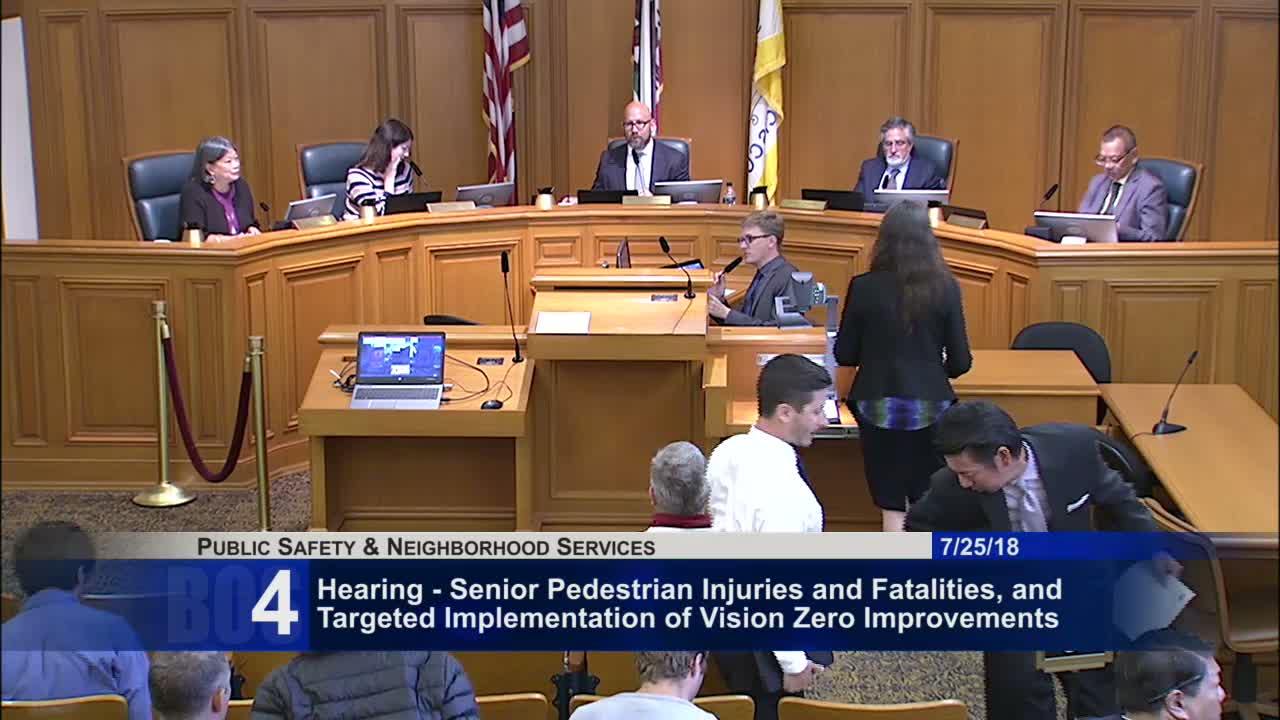
Commander Teresa Ewens and traffic‑company leaders briefed the committee July 25 on staffing levels, enforcement activity and operational constraints.
The Traffic Company reported a current authorized/operational riding roster of 39 officers (two out for serious injury), down from historic peaks and from staffing levels shown in past years. The unit said staffing attrition, injuries and retirements contributed to fewer officers on solo motorcycles and fewer high‑visibility deployments.
Commander Ewens and Lieutenant Luke Martin outlined enforcement data trends: a multi‑year comparison of total citations and the focus‑on‑the‑five violations (pedestrian right‑of‑way, red‑light violations, speeding, stop‑sign violations and failure to yield while turning) showed fewer citations in 2018 compared with prior years. The presentation attributed part of the decline to a challenging e‑citation rollout (connectivity and handheld device reliability), higher use of warnings (1,648 warnings recorded in 2018) and staffing shortages. The unit said IT fixes and adjustments to field practice are underway to restore citation capacity.
Traffic Company staffing and training constraints were highlighted: motorcycle operator classes are resource‑intensive (two sergeants and up to 12 officers per class, roughly two months long) and the unit has not run a class in more than three years. The department’s 2‑year staffing plan calls for 56 officers (ideal staffing cited as 84) with additional motorcycle purchases requested in the budget.
Presenters reviewed targeted grant‑funded operations (school‑bus enforcement, distracted‑driving operations, pedestrian and bike enforcement, red‑lane enforcement focused on TNCs) and the use of overtime to staff special operations so as not to strip district stations. Supervisors and public commenters urged more visible traffic enforcement on high‑injury corridors, faster hiring and clarification of how dignitary escorts and other special duties affect day‑to‑day enforcement presence.
The committee filed the traffic‑company briefing and asked for continued reporting on staffing, training schedules and metrics linking enforcement to high‑injury corridors.