Get Full Government Meeting Transcripts, Videos, & Alerts Forever!
Get email alerts on the Budget Hearings topic
No spam. Unsubscribe anytime.
Supervisors continue budget hearings as departments outline cuts, agreements and realignment risks
Summary
At the second day of San Francisco Budget & Finance Committee hearings, departments from the retirement system to public safety presented budgets and long‑range pressures. Committee and budget analysts agreed on many technical reductions while public safety and corrections raised major concerns about AB 109 realignment and staffing.
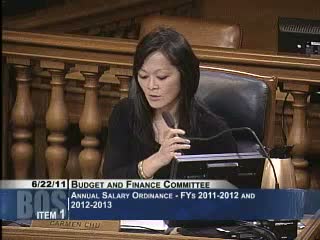
The Board of Supervisors’ Budget and Finance Committee resumed its multi‑day review of the mayor’s 2011–12 proposed budget with department presentations ranging from the city retirement system to public safety and probation. Chair Carmen Chu opened the hearing and noted the committee will continue several items and host a full day of public comment on Friday.
Gary Amelio, presenting for the San Francisco Employees’ Retirement System, told the committee the system now manages more than $15 billion in pension assets and more than $2 billion in 457 accounts and emphasized that “no general fund revenue is utilized for the expenses of either trust,” apart from a $43,818 litigation carryover. Amelio said the plan’s recent audited investment return was 12.55% and that the system has recorded a strong unaudited return this year that should positively affect actuarial results.
Health Service System Director Katherine Dodd said HSS manages about $700 million in benefit spending for roughly 109,000 covered lives and flagged three near‑term priorities: statutory and regulatory compliance stemming from the federal Patient Protection and Affordable Care Act, containment of rising health costs and the PeopleSoft/Emerge transition. Dodd said eligibility audits are already producing savings—an estimated $1.5 million this year and $2.6 million in the coming year—and urged caution about additional analyst cuts.
Several departments reported tentative agreement with the budget analyst’s recommended reductions and pledged to work with analyst staff on remaining disagreements. Mr. Rose, the budget analyst, walked the committee through department‑by‑department detailed recommendations and said the office would continue to negotiate unresolved items with department leaders in the coming week.
Public safety dominated several afternoons of questioning. Fire Department leaders described a $300 million operating budget largely driven by salaries and benefits and said the mayor’s proposal relies in part on labor concessions and potential state changes to ambulance reimbursement (Assembly Bill 210). Fire officials and the analyst debated whether using overtime is cheaper than hiring additional full‑time staff, a point the department said depends on contract provisions and relief coverage.
The Police Department laid out near‑term staffing pressures from retirements and the DROP program, and estimated that a 50‑person academy class costs roughly $5 million (including the academy, field training and partial salary costs). The department said it has deployed 100% of sworn officers on email access and is pursuing a searchable crime data warehouse and single sign‑on access but that many IT projects require additional headcount and COIT funding.
Sheriff Mike Hennessy warned the committee that state criminal‑justice realignment under AB 109 will shift tens of additional sentenced and parole‑revocation inmates to county custody. The sheriff projected an initial surge of people who would have gone to state prison and said the department is budgeting to partially reopen closed San Bruno housing units; he also noted the department’s budget assumes 48 deputies will be returned from hospital and court security assignments if Prop J receives voter approval.
Adult Probation chief Wendy Still said the department expects a rise in post‑custody supervision caseloads and emphasized investments in evidence‑based supervision, reentry programming and IT. Still and district attorney staff stressed neighborhood and restorative justice courts as lower‑cost options for many low‑level cases and said those programs can reduce costs and victimization while keeping cases out of the traditional criminal docket.
The committee continued to press departments and the budget office to produce more precise cost schedules for hiring academies, reinstituting closed jail capacity, and aligning COIT/IT resources with departmental roadmaps. Members directed staff to return next week with updated numbers and to continue working with analysts and department heads to resolve the outstanding technical issues.