Get Full Government Meeting Transcripts, Videos, & Alerts Forever!
Get email alerts on the Cannabis Policy topic
No spam. Unsubscribe anytime.
Committee clears code cleanup letting some medical dispensaries apply to convert to adult‑use retail, with grandfathering and buffer debate
Summary
The committee voted to send a planning-code amendment to the full Board that lets certain medical cannabis dispensaries apply to convert to adult‑use retail (subject to planning de‑partment change-of‑use procedures and neighborhood notification). Supervisors approved a Kim amendment to preserve grandfathering for some pending projects amid opposition over exemptions to the 600‑foot buffer rule.
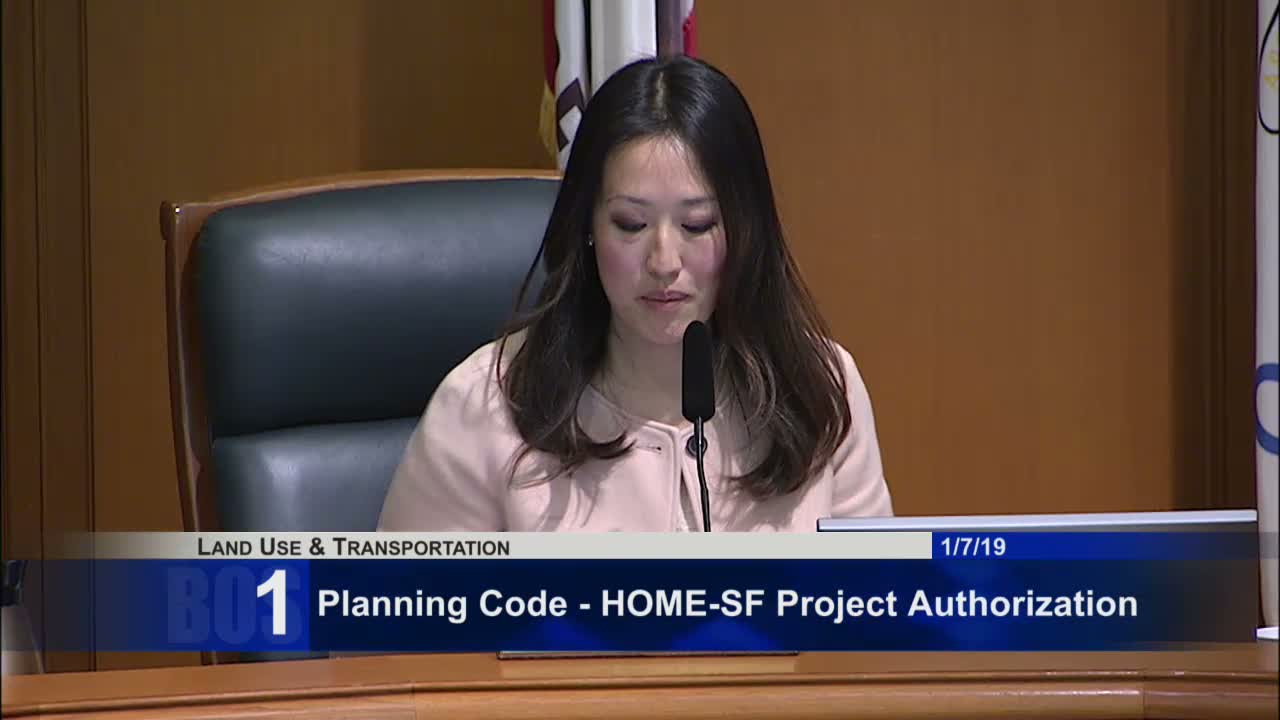
The Land Use & Transportation Committee on Jan. 7 advanced an ordinance cleaning up the planning code so some medical cannabis dispensaries (MCDs) that were approved before the 600‑foot adult‑use buffer can apply to convert to adult‑use cannabis retail.
Planning staff Michael Christiansen summarized the procedural history: the item was considered by the Small Business Commission, then the Planning Commission (which voted 5–1 to recommend approval), and now the committee. Christiansen and Office of Cannabis staff said the change does not eliminate neighborhood notification or outreach: change‑of‑use applications remain subject to Planning Code Section 3.11 notification (property owners and occupants within 150 feet and neighborhood groups receive notice), and licensing requires outreach and a description of how a cannabis business will be "a good neighbor."
Vice Chair Jane Kim offered an amendment to delete a clause that would have prevented some existing MCDs from being grandfathered in to adult‑use retail if a new school opened nearby after their initial approvals. "This amendment would allow those MCDs to be grandfathered into cannabis retail use as intended by this cleanup legislation," Kim said.
Public testimony split. Martin Olive, president of Vaprium, described reopening a medical dispensary and asked the committee to "please vote in favor" of the amendments so long‑standing local operations can convert. Rob Yost, representing a committee of concerned homeowners, opposed exemptions to the 600‑foot buffer, saying the buffer "provides a reason to balance compromise" and that exemptions could exacerbate clustering in District 6.
Planning staff said the pending‑applications language targets projects already under review when the 600‑foot rule was adopted and identified three such sites (443 Folsom, 5 Leland Avenue, and 2057 Market Street). Staff reported 443 Folsom measured about 599.5 feet from the nearest dispensary and would not be eligible without the cleanup amendment; under the amendment the site could apply but would need a conditional‑use authorization and neighborhood review.
After discussion, the committee approved Supervisor Kim's amendment and moved the ordinance, as amended, to the full Board without objection.
Next steps: the ordinance will be considered by the Board of Supervisors; the amendment creates a path for certain pending MCD applications to seek adult‑use conversion while preserving neighborhood notification and a conditional‑use hearing for grandfathered cases.